The short answer
For a lantern that sits in a closet on store-bought batteries, the UST 30-Day Duro 1000 runs on three D cells, UST rates it at up to 30 days on low, and OutdoorGearLab gave it its power-outage award; for a heavy, waterproof light that also charges a phone, the Streamlight Super Siege is rated IPX7 and 1,100 lumens by Streamlight; and on a budget, the Lepro 1000LM Battery Powered Lantern runs on three D cells and OutdoorGearLab timed it at 10.5 hours on high.
Our verdict
Power Outage Lantern Top Picks
When the power goes out, the useful question about a lantern is not how bright it is in a store photo but what keeps it running on the third night. Some lanterns run on D or AAA cells you can keep in a drawer, some carry a built-in battery that has to be topped up every few months while it sits in a closet, and one in this guide adds a solar panel for when there is no outlet at all. The figures makers print for brightness and runtime are not measured the same way either: of the maker pages, guides and listings we could read, only Sofirn’s LT1S manual names a test standard (ANSI/NEMA FL1) for its lumen and runtime numbers.
So this guide sorts eight lanterns by power source first, then sets each maker’s own figures for the exact listing we link (lumens, runtime per mode as the maker states it, battery type and capacity, charging, USB output, water rating, weight with its basis) beside what OutdoorGearLab, Bob Vila and 1Lumen found when they used them or an earlier version, caveats included. We also quote the CDC on candles, gas lanterns and generators, because it advises battery-powered lanterns over anything with a flame.
Lantern finder
Find a lantern for your outage plan
Pick how you want to power your lantern and a price tier. The suggestion is our editorial starting point among the eight lanterns below, drawn from the maker specs and sources cited in each review, not a test result.
Tiers are relative to the lanterns in this guide; live prices are in the comparison table below.
Compare the picks
Compare the 8 Power Outage Lanterns
Every figure in this table is the maker’s own for the listing our link opens, unless the cell says it comes from the Amazon listing. Only Sofirn’s LT1S manual names a lumen and runtime test standard (ANSI/NEMA FL1); none of the other maker pages, guides or listings we could read names one, so read each runtime against its own lantern rather than ranking them; the runtime column gives the modes the maker publishes. “Not published” means we could not find the figure in the maker’s page or user guide.
 UST 30-Day Duro 10003 D-Cell Long RunnerStored batteries, whole room, closet kit1IPX4$43.88 Prime
Evidence: OutdoorGearLab, previous four-mode 30-Day Duro; the linked version adds an amber candle mode
 Streamlight Super SiegeIPX7 Floating 1,100 lmWhole room, phone charging, wet weather1IPX7$149.99 Prime
Evidence: Bob Vila, this exact model
 Sofirn LT1S21700 Tint-Ramp LanternWhole room, phone charging, adjustable tint500 lmIPX8 to 2 m$61.23
Evidence: 1Lumen's 2022 sample (Sofirn-supplied); Sofirn's current manual quotes figures with a 5000 mAh 21700, so the current kit may differ
 Lepro 1000LM LanternBudget Power-Bank LanternWhole room, phone charging, hanging1IP44$31.99
Evidence: Bob Vila, this exact model
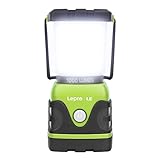 Lepro 1000LM D-Cell LanternBudget D-Cell LanternStored batteries, whole room, closet kit1IPX4$22.94 Prime
Evidence: OutdoorGearLab tested it under the Lighting Ever name; the listing is now branded Lepro (manufacturer Lighting EVER); test date and run not stated
 Coleman 390L Twin LED8 D-Cell Area LightStored batteries, whole room, dimmableListing: 390 lmListing: IPX4$51.59 Prime
Evidence: Bob Vila, this exact model
 Black Diamond MojiAAA Small-Room LightStored batteries, small rooms, optional recharge200 lmIPX4$29.95
Evidence: Bob Vila, this exact model
 LuminAID PackLite MaxSolar Inflatable Power LanternSolar, small rooms, phone charging, packs flat200 lmListing: IP67$59.99
Evidence: OGL's unit is listed at 150 lumens with micro-USB, likely an earlier version; OGL scored it 49/100 overall, 4/10 brightness; it notes solar lights like it 'can take a while to fully charge, even in full sun.'
How We Weighed Battery Type, Runtime and Storage
How this guide was built
built from manufacturer documentation, published third-party reviews and owner reports; we have not tested these products ourselves.
What we checked for each lantern
- What powers it when the grid is down. Disposable cells (D or AAA), a built-in rechargeable battery, or both, and whether the maker lists a non-grid way to recharge it (hand crank or solar).
- Lumens and runtime per mode, exactly as the maker states them, with “standard not stated” where the maker names no test standard (only Sofirn’s LT1S manual names one, ANSI/NEMA FL1). We do not rank runtimes across makers, because most of their test bases are not stated.
- Battery capacity in mAh or Wh for built-in batteries, or the cell count and size for disposable ones, and what the maker says about storing the lantern between outages.
- Charging input and USB output, because a lantern that can top up a phone saves a second device.
- A water rating with its IP code, or “not published”. Storms bring rain, and a lantern may end up on a porch or in a flooded basement.
- Weight with its basis, where the maker states one.
- An independent test by OutdoorGearLab, Bob Vila or 1Lumen, with its caveats, and the exact listing on Amazon, checked on the day of writing, with who was selling it.
Where we tag a lantern “whole room”, it is because the maker rates it at 250 lumens or more, following Bob Vila’s guidance: “While 250 lumens is more than enough to illuminate a room, a lantern with higher lumen output will likely be more useful if you need to move outside for any reason.” Lanterns below that are tagged “small rooms”.
We left out propane, white-gas and kerosene lanterns: none of the ranking power-outage pages picks one, and the CDC advises against gas lanterns indoors (quoted in the buying guide below). This guide is part of our camp comfort section.
Where the evidence comes from, how independent each source is and what r/flashlight posters say about blackout lanterns
Where the evidence comes from
- OutdoorGearLab’s lantern test, which timed each lantern on its highest setting and “spent nights through simulated (and a couple of real) power outages”. It covers earlier versions of the UST 30-Day Duro and the LuminAID PackLite Max 2-in-1, and the Lepro 1000LM Battery Powered Lantern under its Lighting Ever name.
- Bob Vila’s LED lantern test, which “conducted nine hands-on tests on eight different LED lanterns” including drop and water tests. It covers the Streamlight Super Siege, the Lepro 1000-lumen rechargeable lantern, the Coleman 390L Twin LED and the Black Diamond Moji.
- 1Lumen’s LT1s review from 2022, with measured output, runtime and charging tests.
- Maker pages and user guides: Sofirn LT1S manual, LuminAID PackLite Max 2-in-1, UST 30-Day Duro 1000, Streamlight Super Siege, Lepro 1000LM rechargeable lantern, Lepro 1000LM battery-powered lantern and Black Diamond Moji. Sofirn’s LT1S product page and Coleman’s product page refused our reader, so we used Sofirn’s LT1S manual and, for Coleman, the Amazon listing, and we say so where those figures appear.
- Safety guidance from the CDC, Ready.gov, the U.S. Fire Administration and the NFPA.
- The r/flashlight thread that ranks for this search.
How independent each source is
OutdoorGearLab, Bob Vila and 1Lumen earn affiliate commissions but do not sell these lanterns, so we treat them as independent tests; 1Lumen notes that Sofirn sent its LT1s at no cost. Maker pages, maker guides and Amazon listings are not independent, so their figures are quoted as the maker’s claims. Reddit posters are quoted as posters, not owners, unless they say they own the lantern.
What r/flashlight posters say about blackout lanterns
The ranking r/flashlight thread starts from a parent in a hurricane area asking for an indoor lantern. Its top reply argues for disposable batteries: “rechargeable sound great till the power’s gone and you realize you can’t even charge the damn thing at least with batteries you just toss in new ones and it’s back on”. Several posters suggest Sofirn’s larger BLF LT1, which is not one of our picks; one poster who says they have both the LT1 and the LT1S Pro wrote “Definitely the LT1 for sustained/static use.” Another poster disagreed on comfort, naming the LT1S line too: “I find the LT1 and LT1s harsh to look at, despite being a lantern the light coming out is dazzling to look at even at the lower brightness level”. A third suggested bouncing a flashlight off the ceiling instead: “I find this more useful in an outage if I’m inside.” Treat these as opinions, not tests.
Power Outage Lanterns: Detailed Reviews
UST 30-Day Duro 1000, 3 D-Cell Long Runner
People who want a bright lantern to leave in a closet with a pack of D cells and nothing to recharge.
$43.88 from AmazonAs of Nov 4, 09:35 UTCVerdict
A 1,000-lumen lantern that runs on three D cells, rated by UST at up to 30 days on low; OutdoorGearLab measured 33 days on low and nine hours on high from the previous version.
Evidence: Independently reviewed, previous generation. OutdoorGearLab: 30-Day Duro, previous four-mode version.
UST’s page lists the 30-Day DURO 1000 at 1,000 lumens with five modes, “natural light (high) > cool white (medium) > warm white (low) > amber candle light > sos > off”, running “for up to 30 days on Low mode”. UST does not publish per-mode lumens or a test standard on that page; the Amazon listing adds “30 hours on medium, 12 hours on high”. It takes “3 x D Alkaline batteries (not included)”, weighs “1.9 lbs (844 g) with batteries”, and is rated “Water-resistant IPX4 (protected against splashing water from all directions)”. It has no USB port and no built-in battery, so it needs nothing from the grid as long as you keep D cells. The link opens the current five-mode version (model 1156908), sold and shipped by Amazon.com at the time of writing.
OutdoorGearLab gave the Duro its power-outage award: “The Ultimate Survival Technologies 30-Day Duro is a real marathon runner.” It reports that the unit it tested ran for 33 days, against UST’s advertised 30, and that “Even on its brightest setting, it lasted nine hours – one of the best models in our assessment.” Note that OutdoorGearLab tested the earlier four-mode version (high, medium, low and SOS, per its full review); the version we link adds an amber candle mode, and UST’s page does not say whether the runtimes changed. Its caveats: “We found the battery compartment can be hard to access, but ideally, you won’t need to open it often,” and “We didn’t find the glow-in-the-dark feature very bright, and the plastic handle isn’t the best quality.”
UST 30-Day Duro 1000 or Coleman 390L Twin LED Lantern? Both run on D cells and need no charging. The Duro takes three D cells and UST rates it at 1,000 lumens; the Coleman takes eight and the Amazon listing rates it at 390 lumens, with Bob Vila’s long runtime figures on its side. Pick the Duro for fewer cells and a higher lumen figure; pick the Coleman if you want a large, dimmable area light and do not mind buying eight cells.
Specs (linked: UST 30-Day Duro 1000, five-mode version, model 1156908)
Pros
- Runs on three D cells with no charging, rated at up to 30 days on low by UST
- OutdoorGearLab measured 33 days on low and nine hours on high (previous version)
- 1,000 lumens and an IPX4 rating, per UST
Cons
- Disposable D cells to buy and store, not included
- OutdoorGearLab found the battery compartment hard to access and the plastic handle not the best quality
- Rated IPX4 for splashes, per UST, not for submersion
Who should buy it
People who want a bright lantern to leave in a closet with a pack of D cells and nothing to recharge.
- Max output: 1,000 lumens (UST; standard not stated); per-mode lumens not published
- Runtime: up to 30 days on low (UST); 30 h medium, 12 h high (Amazon listing)
- Power: 3 D alkaline cells, not included (UST); no USB
- Water rating: IPX4 (UST)
- Weight: 1.9 lb (844 g) with batteries (UST)
- Modes: high, medium, low, amber candle, SOS (UST)
- Price tier: $ (live Amazon price in the table above)
Streamlight Super Siege, IPX7 Floating 1,100 lm
Homes in storm or flood areas that want a waterproof, rugged rechargeable lantern and will pay more for it.
$149.99 from AmazonAs of Nov 4, 09:35 UTCVerdict
A 1,100-lumen rechargeable lantern rated IPX7 that floats and charges USB devices, per Streamlight; Bob Vila found it tough and heavy, and it sits in the premium tier.
Evidence: Independently reviewed, exact model. Bob Vila: Super Siege, colour not stated.
Streamlight rates the Super Siege at 1,100 lumens for 5.75 hours on high, 550 lumens for 11.5 hours on medium and 125 lumens for 36.25 hours on low, with red modes down to 1 lumen for 348 hours; it names no test standard, and its headline gives “36.5 hours of run time on low” against 36.25 hours in the spec table. It runs on a rechargeable lithium-ion battery whose capacity Streamlight does not publish, works as a “Portable USB Charger”, and is rated “IPX7 waterproof to 1m submersion; 2m impact resistance tested”. Streamlight’s page gives its weight twice, as 1 lb 14 oz (850.48 g) in the spec table and 867.62 g in the feature list, with no basis for either. The link opens the Yellow Super Siege (model 44945), sold and shipped by Amazon.com at the time of writing.
Bob Vila tested it: “Thanks to its heavy-duty high-grade plastic and rubber construction, the Super Siege is designed to take a licking and keep on lighting.” Its runtime figures match Streamlight’s: “The Super Siege’s hefty rechargeable battery provides a runtime of almost 6 hours on high, 36 hours on low, and up to a whopping 140 hours on red,” and “It charged in about 7 hours via the included AC charger”. The caveat: Bob Vila calls it the heaviest lantern in its test and says it is best suited to car camping, cabin life or home use. Bob Vila lists “Rechargeable battery is not replaceable” as a con, while the Amazon listing says “Authentic Streamlight replacement lithium ion battery packs are available from Streamlight.”
Specs (linked: Streamlight Super Siege 44945, Yellow)
Pros
- IPX7 rating, 2 m impact testing and a floating body, per Streamlight
- 1,100 lumens and a USB charging port, per Streamlight
- Sold and shipped by Amazon.com at the time of writing
Cons
- Premium price, and Bob Vila called it the heaviest lantern in its test
- Battery capacity and USB output wattage not published
- Built-in battery needs charging before an outage
Who should buy it
Homes in storm or flood areas that want a waterproof, rugged rechargeable lantern and will pay more for it.
- Max output: 1,100 lumens high, 550 medium, 125 low; red 2.7 and 1 lumen (Streamlight; standard not stated)
- Runtime: 5.75 h high, 11.5 h medium, 36.25 h low; red 140 h and 348 h; SOS 320 h (Streamlight)
- Battery: built-in rechargeable Li-ion, capacity not published (Streamlight)
- USB output: yes, wattage not published (Streamlight)
- Water rating: IPX7 to 1 m; floats; 2 m impact tested (Streamlight)
- Weight: 850.48 g (spec table) or 867.62 g (feature list), basis not stated (Streamlight)
- Price tier: $$$ (live Amazon price in the table above)
Sofirn LT1S, 21700 Tint-Ramp Lantern
Households that want one compact, tint-adjustable rechargeable lantern for the main room that can also top up a phone.
$61.23 from AmazonAs of Nov 4, 09:35 UTCVerdict
A compact aluminium lantern on one 21700 cell that ramps from warm to cool white, adds a red mode and can charge a phone over USB-C, per Sofirn; 1Lumen measured slightly more output than Sofirn’s ANSI figures on its 2022 sample, and longer runtimes on the modes it timed to the end.
Evidence: Independently reviewed, same series. 1Lumen: Sofirn LT1s, 2022 sample sent by Sofirn, cell specced 4000 mAh.
Sofirn’s LT1S manual rates it at 500 lumens on turbo for 2 h 20 min, 150 lumens for 6 hours on high, 50 lumens for 18 hours on medium, 10 lumens for 90 h 3 min on low and 1 lumen for 555 hours on moon, and it is the only maker document we could read for this guide that names its standard: “The above mentioned parameters are based on tests according to international flashlight testing standards (ANSI/NEMA FL1) using one 5000mAh 21700 Li-ion battery in our laboratory.” It uses warm (2700K) and cool white LEDs plus four red LEDs, charges over a “USB-C port, input DC 5V 2-3A”, and its battery indicator works “the same as your power bank”: “it charges your phone if you have C-C cable or C-lightning cable. Neither included”. Sofirn does not publish the output wattage. The manual rates it “IPX-8 (up to 2 meter under water, not for diving)” with 1 m impact resistance, and lists 257 g without the battery. Sofirn’s own product page refused our reader, so these figures come from the manual; the Amazon listing, written by Sofirn’s storefront, gives the included battery as 18 watt-hours. The link opens the LT1S kit with the battery included (model LT1SKIT, Black), sold by Sofirn’s own storefront and shipped by Amazon at the time of writing. It is a smaller sibling of the BLF LT1, not the same lantern.
1Lumen reviewed the LT1s in 2022 on a unit Sofirn sent at no cost: “The lumen output exceeds spec and the runtime significantly exceeds what we’re told to expect and the LT1s inspires confidence that it will just keep ticking in any situation.” It measured 512 lumens at turn-on against the 500-lumen spec, a weight of 337 g with the battery, and a charging current of at most 2.52 A against the 3 A rating. Its caveats: the proprietary interface, no tripod mount, and a stiff base spring that “can cause the threads to feel gritty”. 1Lumen’s cell was specced at 4,000 mAh, while Sofirn’s current manual quotes its figures with a 5,000 mAh cell, so the lantern we link may not match 1Lumen’s sample exactly. In the r/flashlight thread, one poster finds the LT1 and LT1s “harsh to look at” even on low.
Sofirn LT1S or Streamlight Super Siege? Both are waterproof rechargeable lanterns that can charge a phone. Pick the LT1S for its warm-to-cool tint, red mode and swappable 21700 cell, per Sofirn; pick the Super Siege for its higher lumen figure and floating body, per Streamlight, at a higher price tier.
Specs (linked: Sofirn LT1S kit, model LT1SKIT, Black, battery included)
Pros
- Warm-to-cool tint ramping plus a red mode, per Sofirn
- ANSI/NEMA FL1 figures, and 1Lumen measured above them on its 2022 sample
- Removable 21700 cell and USB-C phone charging, per Sofirn
Cons
- 500 lumens, below the four lanterns here rated at 1,000 lumens or more
- 1Lumen found the interface proprietary and the base threads gritty
- One r/flashlight poster finds the LT1 line harsh even on low
Who should buy it
Households that want one compact, tint-adjustable rechargeable lantern for the main room that can also top up a phone.
- Max output: 500 lumens turbo, 150 high, 50 medium, 10 low, 1 moon (Sofirn manual; ANSI/NEMA FL1)
- Runtime: 2 h 20 min turbo, 6 h high, 18 h medium, 90 h 3 min low, 555 h moon (Sofirn manual; ANSI/NEMA FL1, 5,000 mAh cell)
- Battery: 1 x 21700 Li-ion, included (Sofirn manual); 18 Wh (Amazon listing)
- Charging and output: USB-C in, 5 V 2-3 A; charges a phone over USB-C, wattage not published (Sofirn manual)
- Water rating: IPX8 to 2 m, not for diving; 1 m impact (Sofirn manual)
- Weight: 257 g without battery (Sofirn manual); 337 g with battery (1Lumen, measured)
- Price tier: $$ (live Amazon price in the table above)
Lepro 1000LM Rechargeable Lantern, Budget Power-Bank Lantern
Budget shoppers who want a bright rechargeable lantern for each main room and a backup phone charger.
$31.99 from AmazonAs of Nov 4, 09:35 UTCVerdict
An entry-level 1,000-lumen rechargeable lantern with warm, cool and combined light that doubles as a power bank, per Lepro; Bob Vila found it bright and drop-tolerant, and notes that its batteries are not removable.
Evidence: Independently reviewed, exact model. Bob Vila: 1000-lumen rechargeable, colour and pack not stated.
Lepro lists four modes: “Cool White (6000K, 700 lumens, 8 hrs)”, “Warm White (3000K, 300 lumens, 12 hrs)”, “Combined (5000K, 1000 lumens, 6.5 hrs)” and a flash mode, with no test standard named, and an IP44 rating (the Amazon listing says IPX4). It charges with an included Type-C cable from a 5 V adapter and “can also serve as a power bank for smartphone or mobile devices in emergency”; Lepro does not publish the output wattage. Lepro’s page does not publish the battery capacity in the text we could read; the Amazon listing, written by Lepro’s storefront, gives 4,400 mAh and a weight of 550 g with no basis stated. One maker-hosted customer review on Lepro’s page reports a unit that “came with micro USB, not Tupe C”, so check the port on arrival. The link opens the single Green lantern (model 3300008, not the 2-pack), sold by Lepro’s own storefront and shipped by Amazon at the time of writing.
Bob Vila tested Lepro’s 1,000-lumen rechargeable lantern (colour and pack size not stated): “The Lepro LE super-bright lantern runs for up to 12 hours using its two rechargeable lithium-ion batteries—pretty impressive, given how bright it is.” On toughness: “We let it fall from chest height onto our concrete driveway multiple times, and it suffered little more than a few scratches.” Its caveat: “Unfortunately, its batteries are not removable, so you’ll have to replace the whole lantern once the batteries no longer hold a charge.”
Lepro 1000LM Rechargeable Lantern or Streamlight Super Siege? Both are rechargeable lanterns that can top up a phone. Pick the Lepro for its entry-level price tier and warm/cool modes, per Lepro; pick the Super Siege for its IPX7 rating against the Lepro’s IP44, per their makers, at a premium price tier.
Specs (linked: Lepro 1000LM rechargeable lantern, model 3300008, Green, single)
Pros
- 1,000 lumens with warm, cool and combined modes at an entry-level price, per Lepro
- Doubles as a power bank for a phone, per Lepro
- Bob Vila’s unit survived repeated chest-height drops with a few scratches
Cons
- Built-in battery is not removable, per Bob Vila
- Rated IP44 for splashes, per Lepro, not for submersion
- One maker-hosted review reports a micro-USB port instead of Type-C
Who should buy it
Budget shoppers who want a bright rechargeable lantern for each main room and a backup phone charger.
- Max output: 1,000 lumens combined, 700 cool white, 300 warm white (Lepro; standard not stated)
- Runtime: 6.5 h at 1,000 lumens, 8 h at 700, 12 h at 300 (Lepro; standard not stated)
- Battery: built-in, capacity not published (Lepro page); 4,400 mAh (Amazon listing)
- Charging and output: Type-C cable included, 5 V adapter only; power-bank output, wattage not published (Lepro)
- Water rating: IP44 (Lepro); IPX4 (Amazon listing)
- Weight: not published (Lepro); 550 g, basis not stated (Amazon listing)
- Price tier: $ (live Amazon price in the table above)
Lepro 1000LM Battery Powered Lantern, Budget D-Cell Lantern
Households that want an entry-level closet lantern on D cells, or a second one for another room.
$22.94 from AmazonAs of Nov 4, 09:35 UTCVerdict
An entry-level 1,000-lumen lantern that runs on three D cells, which Lepro rates at 12 hours at 1,000 lumens; OutdoorGearLab, which tested it under the Lighting Ever name, timed it at 10.5 hours on high and lists it as heavy for its size, not waterproof and without a USB output.
Evidence: Independently reviewed, same series. OutdoorGearLab: Lighting Ever Camping (OutdoorGearLab’s Amazon link is B0078ZTWP4); production run not stated.
Lepro’s page lists this battery-powered lantern at up to 1,000 lumens with four modes, “daylight white, warm white, full brightness, flashing”, and says: “Powered by 3pcs D alkaline batteries (not included), it can last 12 hours even under 1000 lumen brightness setting. Not rechargeable.” It names no test standard and publishes no runtime for the other modes. Lepro rates it IPX4 (“protected against splashing water from all angle”), and it has a hook on the bottom, a metal handle on top and a removable cover. Lepro’s page does not publish a weight; the Amazon listing gives 400 g with no basis stated and names the manufacturer as Lighting EVER. It has no USB port and no built-in battery. The link opens the single Green lantern (model 3300002, not the 2-pack), sold by Lepro’s own storefront and shipped by Amazon at the time of writing.
OutdoorGearLab tested it as the “Lighting Ever Camping”, and its Amazon link for that lantern opens the listing we link; it does not say which production run it tested. “For a well-priced alternative, we like the brighter, battery-operated Lighting Ever Camping, which is great for car camping or power outages.” OutdoorGearLab reports that it lasted 10.5 hours on its highest setting, the longest in its review, on standard Duracell cells, and sums it up as “A great option if you’re looking to keep a lantern stored in the closet for emergency outages.” Its listed cons, side by side with that praise: “Heavy for its size, not waterproof, lacks USB output.” Lepro’s IPX4 rating covers splashes, not submersion, so the two agree.
Lepro 1000LM Battery Powered Lantern or UST 30-Day Duro 1000? Both run on three D cells and both makers rate them at 1,000 lumens. Pick the Duro for UST’s 30-day rating on low and OutdoorGearLab’s power-outage award; pick the Lepro for its dimming (“Long press the button to adjust brightness up to 1000 lumen”, per Lepro), and because OutdoorGearLab calls it “even more affordable while still offering good performance”. On high, OutdoorGearLab timed the Lepro at 10.5 hours and the earlier Duro at nine.
Lepro 1000LM Battery Powered Lantern or Lepro 1000LM Rechargeable Lantern? Same maker and the same 1,000-lumen figure. Pick the battery-powered one to keep in a closet on stored D cells with nothing to charge; pick the rechargeable one if you want a power-bank output for a phone and will keep it topped up, per Lepro.
Specs (linked: Lepro 1000LM Battery Powered Lantern, model 3300002, Green, single)
Pros
- Runs on three D cells with nothing to recharge, per Lepro
- OutdoorGearLab timed 10.5 hours on its highest setting
- Daylight and warm white modes with dimming, per Lepro
Cons
- OutdoorGearLab lists it as heavy for its size and not waterproof (Lepro rates it IPX4)
- No USB output for a phone
- D cells to buy and store, not included
Who should buy it
Households that want an entry-level closet lantern on D cells, or a second one for another room.
- Max output: 1,000 lumens (Lepro; standard not stated)
- Runtime: 12 h at 1,000 lumens (Lepro; standard not stated); 10.5 h on high (OutdoorGearLab, measured)
- Power: 3 D alkaline cells, not included (Lepro); no USB
- Water rating: IPX4 (Lepro)
- Weight: not published (Lepro); 400 g, basis not stated (Amazon listing)
- Modes: daylight white, warm white, full brightness, flashing; dimmable (Lepro)
- Price tier: $ (live Amazon price in the table above)
Coleman 390L Twin LED Lantern, 8 D-Cell Area Light
Households that want a big, dimmable table lantern for a shared room and will keep a stock of D cells.
$51.59 from AmazonAs of Nov 4, 09:35 UTCVerdict
A large, dimmable 390-lumen lantern that runs on eight D cells, per the Amazon listing; Bob Vila reports up to 85 hours at 390 lumens from one set, with more than 5 pounds of weight loaded.
Evidence: Independently reviewed, exact model. Bob Vila: 390L Twin LED.
Coleman’s own product page did not load for our reader, so these figures come from the Amazon listing, sold by Amazon.com: 390 lumens, “Powered by eight D-cell batteries (sold separately). Water resistant against rain and splashing water”, an IPX4 specification, and an item weight of 1.3 kg with no basis stated. No runtime figure appears on the listing. It has no USB port or built-in battery. The link opens the 390L Twin LED listing (model 2000024375), sold and shipped by Amazon.com at the time of writing.
Bob Vila tested it: “This Coleman LED lantern is ideal for long camping trips, offering up to 299 hours of light at 100 lumens or 85 hours at 390 lumens—over 3 days of continuous use on its highest setting.” It liked the dimmer dial and warm light, and gave the downsides plainly: it “weighs over 5 pounds when loaded with batteries,” and “It has an IPX4 rating, which means it can only endure splashes of water.”
Specs (linked: Coleman 390L Twin LED Lantern, model 2000024375)
Pros
- Runs on eight D cells with nothing to recharge, per the Amazon listing
- Bob Vila reports 85 hours at full output and a dimmer dial with warm light
- Sold and shipped by Amazon.com at the time of writing
Cons
- Eight D cells to buy and store, and over 5 lb loaded, per Bob Vila
- Rated IPX4 for splashes, per the Amazon listing, not for submersion
- Coleman’s own runtime figure was not available to us
Who should buy it
Households that want a big, dimmable table lantern for a shared room and will keep a stock of D cells.
- Max output: 390 lumens (Amazon listing; standard not stated)
- Runtime: not published on the listing; Bob Vila reports 85 h at 390 lumens and 299 h at 100 lumens
- Power: 8 D cells, sold separately (Amazon listing); no USB
- Water rating: IPX4 (Amazon listing)
- Weight: 1.3 kg, basis not stated (Amazon listing); over 5 lb with batteries (Bob Vila)
- Price tier: $$ (live Amazon price in the table above)
Black Diamond Moji Lantern, AAA Small-Room Light
Families who want a small, cheap AAA lantern for each bedroom, bathroom or hallway.
$29.95 from AmazonAs of Nov 4, 09:35 UTCVerdict
A 120 g, 200-lumen lantern that runs on three AAA cells or Black Diamond’s BD 1500 rechargeable pack, per Black Diamond; Bob Vila liked its dimming and wished it were more rugged.
Evidence: Independently reviewed, exact model. Bob Vila: Moji, 200 lumens, 3 AAA.
Black Diamond lists the Moji at 200 lumens with a “Max Burntime: 120 hours”, “Batteries: 3x AAA or BD1500”, an IPX4 rating (“withstands rain and sleet from any angle”) and a weight of 120 g with no basis stated; it names no test standard. Its “Dual-Fuel” design takes alkaline cells or the BD 1500 Li-ion battery (sold separately), and a “Patented digital lockout feature safeguards against accidental use when stored in a pack or pocket.” It has no USB output. One maker-hosted customer review on Black Diamond’s page reads: “We got these to have in various rooms around the house for power outages.” The link opens the Graphite, AAA-powered Moji (not the Moji+ or rechargeable Moji R+), sold by Black Diamond’s own storefront and shipped by Amazon at the time of writing.
Bob Vila tested it: “With its compact design and versatile dimming ability, Moji’s Black Diamond is the ideal choice for overnight camping trips.” Its runtime note differs from Black Diamond’s 120-hour maximum: “its three AAA batteries (not included) will provide up to 10 hours of light on high and up to 70 hours on low.” Its caveat: “We only wish the Moji was a little more rugged.”
Black Diamond Moji Lantern or LuminAID PackLite Max 2-in-1? Both are small lights for a bedroom or hallway. Pick the Moji for AAA cells you can store, per Black Diamond; pick the LuminAID if you want to recharge from the sun and top up a phone, per LuminAID, at a higher price tier.
Specs (linked: Black Diamond Moji Lantern, Graphite, AAA powered)
Pros
- Runs on three AAA cells or an optional rechargeable pack, per Black Diamond
- Digital lockout against accidental switch-on in storage, per Black Diamond
- Bob Vila liked its stepless dimming down to 10 lumens
Cons
- 200 lumens, below the 250 lumens Bob Vila says is enough for a room
- Bob Vila wished it were more rugged; IPX4 splash rating
- Rechargeable BD 1500 pack sold separately
Who should buy it
Families who want a small, cheap AAA lantern for each bedroom, bathroom or hallway.
- Max output: 200 lumens (Black Diamond; standard not stated)
- Runtime: max burn time 120 h (Black Diamond); 10 h high, 70 h low (Bob Vila)
- Power: 3 AAA or BD 1500 rechargeable, sold separately (Black Diamond); no USB output
- Water rating: IPX4 (Black Diamond)
- Weight: 120 g, basis not stated (Black Diamond)
- Price tier: $ (live Amazon price in the table above)
LuminAID PackLite Max 2-in-1, Solar Inflatable Power Lantern
Solar Inflatable Power Lantern
Anyone who wants a light backup lantern that can recharge in direct sun outdoors and top up a phone during a long outage.
$59.99 from AmazonAs of Nov 4, 09:35 UTCVerdict
An inflatable lantern with a built-in solar panel and a 2,000 mAh battery that can charge a phone, per LuminAID; OutdoorGearLab scored what is likely an earlier version low on brightness and notes that solar lights like it are slow to charge.
Evidence: Independently reviewed, same series. OutdoorGearLab: LuminAID PackLite Max 2-in-1 listed by OGL at 150 lumens, micro-USB (earlier version); OGL’s Amazon link is B0CVYMMHJ4.
LuminAID’s page describes the PackLite Max 2-in-1 as a “2-in-1 phone charger and solar lantern” with “a maximum brightness of 200 Lumens” and “50 hours of runtime”, but the technical specs on the same page list “Max Brightness: 150 Lumens”, so it gives both figures; it names no test standard and does not say which mode the 50 hours applies to. LuminAID lists a “2000mAh internal powerbank” that charges “Cell Phones (1 charge)”, a USB-A charging port, a “Solar Recharge Time: 16-20 Hours”, “Storage Life: 2+ Years” and “Waterproof & Floats”. The page also gives the weight as both 8.5 oz and 12.5 oz. The Amazon listing, written by LuminAID’s storefront, adds a “5V, 2.1 Amp output port”, recharging “in 1-2 hours by USB (cord included)”, an IP67 rating and “less than 10 oz”. The link opens the 200 Lumens listing (model 0196-0100, the twist-to-inflate version), sold by LuminAID’s own storefront and shipped by Amazon at the time of writing.
OutdoorGearLab tested a PackLite Max 2-in-1 that it lists at 150 lumens with micro-USB charging, so likely an earlier version than the one we link. It gave it 49 of 100 overall and 4 of 10 for brightness, and wrote: “Collapsible, solar-powered lights like LuminAID PackLite Max 2-in-1 and Goal Zero Crush Light Chroma don’t require any batteries at all. However, these can take a while to fully charge, even in full sun.” A maker-hosted customer review on LuminAID’s page says one was used “in the evacuation center to charge her phone”; a question on the same page, from someone who says they have three about a year old, reports that they “will not solar charge”.
LuminAID PackLite Max 2-in-1 or Lepro 1000LM Rechargeable Lantern? Both have a built-in battery that can top up a phone. Pick the LuminAID if you want to recharge from the sun without an outlet, per LuminAID; pick the Lepro for far more light (1,000 lumens against 150-200, per their makers) at a lower price tier, if you can keep it charged from the wall.
Specs (linked: LuminAID PackLite Max 2-in-1, 200 Lumens, model 0196-0100)
Pros
- Built-in solar panel recharges it without an outlet, per LuminAID
- Charges a phone from its 2,000 mAh battery, per LuminAID
- Packs flat and floats, per LuminAID
Cons
- 150-200 lumens, below the 250 lumens Bob Vila says is enough for a room
- OutdoorGearLab scored what is likely an earlier version 4 of 10 for brightness
- 16-20 hours of sun for a solar charge, per LuminAID
Who should buy it
Anyone who wants a light backup lantern that can recharge in direct sun outdoors and top up a phone during a long outage.
- Max output: 200 lumens (LuminAID overview) or 150 lumens (LuminAID technical specs); standard not stated
- Runtime: up to 50 h, mode not stated (LuminAID)
- Battery: built-in, 2,000 mAh; storage life 2+ years (LuminAID)
- Charging and output: solar, 16-20 h; USB, 1-2 h (Amazon listing; an answer on LuminAID’s page says up to 3-4 h); USB-A output (LuminAID); 5 V 2.1 A (Amazon listing)
- Water rating: waterproof and floats (LuminAID); IP67 (Amazon listing)
- Weight: 8.5 oz or 12.5 oz (LuminAID page gives both); under 10 oz (Amazon listing)
- Price tier: $$ (live Amazon price in the table above)
How to Choose an Emergency Lantern for a Blackout
Battery-operated or rechargeable lanterns for power outages
The r/flashlight thread’s top reply makes the case for disposable cells: once the power is gone, a rechargeable lantern cannot be recharged from the wall. The UST 30-Day Duro 1000 (three D), the Lepro 1000LM Battery Powered Lantern (three D), the Coleman 390L Twin LED (eight D) and the Black Diamond Moji (three AAA) run on cells you can store and swap. The Streamlight Super Siege, Lepro 1000LM Rechargeable Lantern and LuminAID PackLite Max 2-in-1 carry built-in batteries; the Sofirn LT1S takes one removable 21700 rechargeable cell; and the Moji can also take Black Diamond’s BD 1500 rechargeable pack.
Ready.gov’s advice covers both: “Plan for batteries and other alternative power sources to meet your needs when the power goes out, such as a portable charger or power bank.” Four of our picks (Super Siege, LT1S, Lepro 1000LM Rechargeable and LuminAID PackLite Max) list a USB output for a phone, per their makers; if you want more phone charges than a lantern holds, our battery pack guide compares power banks by watt-hours, and if someone at home relies on a CPAP machine, our CPAP battery guide compares batteries for running one while camping.
Keeping a lantern ready in storage
A lantern that sits in a closet for months needs a plan. LuminAID lists a “Storage Life: 2+ Years” for the PackLite Max. Sofirn’s LT1S manual says: “To prevent self-discharge or accidental activation during storage or transportation, unscrew the tailcap by half a turn or remove the battery.” Black Diamond’s Moji has a digital lockout. UST, Lepro and Coleman sell their D-cell lanterns without batteries, so buy the cells when you buy the lantern. For water during an outage, our 5 gallon water jug guide covers containers for that.
Solar charging: what the maker claims
One pick recharges without an outlet: LuminAID gives the PackLite Max 2-in-1 a solar recharge time of 16-20 hours, and the Amazon listing adds “(approximately 2-3 days depending on location and time of year)”. That is the maker’s figure; it names no test method, and real results depend on how much sun you get.
How bright is bright enough?
Bob Vila’s guidance for an outage: “A 100-lumen LED lantern will be enough for campground lighting, while a range of 250 to 550 lumens is appropriate for a power outage.” Six of our picks are rated at 390 lumens or more by their makers or listings; the Moji (200 lumens) and the LuminAID PackLite Max (200 lumens, though LuminAID’s spec list says 150) suit bedrooms and hallways. If you want the brightest lantern on paper, the Streamlight Super Siege’s 1,100 lumens is the top maker figure in this guide, but only Sofirn names a test standard, so the lumen figures are not strictly comparable between makers. Modes matter as much as the maximum: in every per-mode runtime list the makers publish here, a lower setting runs longer than the highest one.
Candles, gas lanterns and generators: what the CDC says
The CDC’s power-outage advice is direct: “Use battery-powered flashlights and lanterns, rather than candles, gas lanterns, or torches to minimize the risk of fire.” The U.S. Fire Administration says the same: “Use flashlights, not candles, if you have a power outage.” If you do light a candle, the CDC says: “If you have to use candles, keep them away from anything that can catch fire. Always stay near lit candles.” The NFPA reminds readers that “a candle is an open flame, which means that it can easily ignite anything that can burn.”
Fuel-burning lights and heaters bring a second risk, carbon monoxide. The CDC says: “Never use a charcoal grill, hibachi, lantern, or portable camping stove inside a home, tent, or camper,” and “Never use a generator, pressure washer, or any gasoline-powered engine inside your home, basement, or garage or less than 20 feet from any window, door, or vent.” Ready.gov adds: “Install working carbon monoxide detectors on every level of your home.” This is general safety guidance from those agencies, not a guarantee; follow your local emergency officials. If you are also weighing a heater for a cold outage, our tent heater guide compares heaters with their makers’ safety features.
Which lantern for which home
For one lantern that recharges and can top up a phone, start with the Streamlight Super Siege for wet or rough conditions, the Sofirn LT1S for adjustable tint, or the budget Lepro 1000LM Rechargeable Lantern. For a closet lantern on stored cells, the UST 30-Day Duro 1000, the budget Lepro 1000LM Battery Powered Lantern or the larger Coleman 390L Twin LED Lantern. For bedrooms and hallways, the Black Diamond Moji Lantern on AAA cells or the solar LuminAID PackLite Max 2-in-1, which can also top up a phone. If you also camp, our camping checklist shows where a lantern fits in the kit.
Picks: UST 30-Day Duro 1000, Streamlight Super Siege, Sofirn LT1S, Lepro 1000LM Rechargeable Lantern, Lepro 1000LM Battery Powered Lantern, Coleman 390L Twin LED Lantern, Black Diamond Moji Lantern, LuminAID PackLite Max 2-in-1
Frequently Asked Questions
Q. What is the best lantern to use during a power outage?
It depends on how you want to power it. For a lantern that runs on stored cells, OutdoorGearLab gave the UST 30-Day Duro its power-outage award, and UST rates the current version at up to 30 days on low with three D cells; OutdoorGearLab also calls the Lepro 1000LM Battery Powered Lantern, which it tested under the Lighting Ever name, “great for car camping or power outages”. For a rechargeable lantern that can also top up a phone, the Streamlight Super Siege, Sofirn LT1S and Lepro 1000LM Rechargeable Lantern list a USB output, per their makers, and the LuminAID PackLite Max 2-in-1 adds a solar panel.
Q. What is the best light source to use during a power outage?
The CDC advises “battery-powered flashlights and lanterns, rather than candles, gas lanterns, or torches to minimize the risk of fire,” and Ready.gov says to “Have flashlights for every household member.” A lantern lights a room hands-free, and a flashlight or headlamp is easier to carry from room to room.
Q. Are rechargeable or battery-operated lanterns better for power outages?
Each has a trade-off. Battery-operated lanterns such as the UST 30-Day Duro 1000, Lepro 1000LM Battery Powered Lantern, Coleman 390L Twin LED and Black Diamond Moji run on cells you can store and swap, but you must keep fresh cells. Rechargeable lanterns need their charge kept up in storage (Sofirn’s LT1S manual advises unscrewing the tailcap half a turn or removing the battery to prevent self-discharge) and lose use once drained unless they have a solar panel, like the LuminAID PackLite Max 2-in-1.
Q. What is the brightest lantern for a power outage?
Of the lanterns here, the Streamlight Super Siege carries the top maker figure at 1,100 lumens, followed by the UST 30-Day Duro 1000 and both Lepro 1000LM lanterns at 1,000 lumens each, per their makers. Only Sofirn’s LT1S manual names a lumen test standard (ANSI/NEMA FL1), so treat the other figures as the makers’ claims. Bob Vila suggests 250 to 550 lumens for a power outage.
Q. What are the top five items you should have if you lose power?
Ready.gov’s power-outage page names several, among them flashlights for every household member, batteries and “alternative power sources … such as a portable charger or power bank”, and carbon monoxide detectors with battery backup on every level of the home. Check ready.gov for its full list.
Q. Is it safe to use a propane or kerosene lantern indoors during an outage?
The CDC says: “Never use a charcoal grill, hibachi, lantern, or portable camping stove inside a home, tent, or camper,” and advises battery-powered lanterns “rather than candles, gas lanterns, or torches.” None of our picks burns fuel.
The bottom line
Final Verdict
For a closet lantern that needs no charging, the UST 30-Day Duro 1000 (check price) is our starting point: it runs on three D cells, UST rates it at up to 30 days on low, and OutdoorGearLab gave it its power-outage award and measured 33 days on low from the previous version. The Lepro 1000LM Battery Powered Lantern (check price) is the entry-level D-cell option, which OutdoorGearLab timed at 10.5 hours on high and found heavy for its size. The Streamlight Super Siege (check price) is the premium, floating, IPX7-rated choice for wet or rough conditions, and the Sofirn LT1S (check price) suits flashlight fans who want adjustable tint, a red mode and a removable 21700 cell. On a budget, the Lepro 1000LM Rechargeable Lantern (check price) adds a power bank, and the Coleman 390L Twin LED Lantern (check price) gives a big dimmable light on eight D cells. For bedrooms and hallways, the Black Diamond Moji Lantern (check price) runs on AAA cells and the LuminAID PackLite Max 2-in-1 (check price) recharges from the sun and can top up a phone. Whichever you choose, keep its cells or charge topped up, and keep candles, gas lanterns and generators out of the house, as the CDC advises.
Product prices and availability are accurate as of the date/time indicated and are subject to change. Any price and availability information displayed on Amazon.com at the time of purchase will apply to the purchase of this product.