The short answer
The Therm-a-Rest NeoLoft Regular Wide is the 4.6-inch, 26-inch-wide air pad for side sleepers who will carry a little more weight for cushion, the Sea to Summit Comfort Deluxe SI Regular (check price) is the 4-inch foam-and-air mat for car camping, and the Big Agnes Divide Insulated Wide Long is the budget wide air pad with taller outer rails.
Our verdict
Side Sleeper Sleeping Pad Top Picks
Lie on your back and your weight spreads across the whole pad. Roll onto your side and most of it lands on two small points, the hip and the shoulder, which is where a thin pad bottoms out and a narrow one runs out of room for a bent knee or elbow. This guide to camp comfort gear compares eight pads on the things that decide side-sleeper comfort: thickness, width, how the pad holds its shape under a hip, and enough insulation that the ground doesn’t draw heat through the compressed spot.
Pad finder
Find a side sleeper sleeping pad
Pick where you camp and what you want to spend. The suggestion is our editorial starting point from the eight pads below, not a test result.
Tiers are relative to the products in this guide; live prices are in the comparison table below.
Compare the picks
Compare the Side Sleeper Pads
Every figure is the maker’s, for the linked size; “not published” means we found none for that size. R-values say whether the maker rates to ASTM F3340.
 NeoLoft Regular WideBest OverallThick, wide, backpacking4.74.6 in$259.95 Prime
Evidence: OutdoorGearLab, Regular; same series, not this Regular Wide
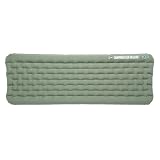 Campmeister Deluxe WRWarmest Thick Air PadThick, cold nights, backpacking73.5 in$215.96
Evidence: owner reports, no independent test
 Exped Ultra 6.5R MediumBest Cold-Weather Air PadCold nights, backpacking6.93.5 in$199.95
Evidence: CleverHiker, Ultra 6.5R; size not stated
 Comfort Deluxe SI RegularBest Car Camping PadCar camping, thick, cold nights7.74 in$249.00
Evidence: CleverHiker, earlier Comfort Deluxe in Large Wide
 Roamer Single WideWidest Car Camping PadCar camping, wide, thick, cold nights74 in$279.95
Evidence: BetterTrail, current Roamer in the Single; we link the Single Wide
 Flyer Cloud Regular WideMost Compact Self-InflaterCar camping, wide, small trunk5.13 in$189.95
Evidence: BetterTrail, this exact model
 Divide Insulated Wide LongBest Value Air PadWide, backpacking, tall sleepers43.25 in$142.77
Evidence: Switchback Travel, Divide Insulated; size not stated, weight given matches the smaller sizes
 ApolloAir LargeBudget Broad-Shoulder PadWide shoulders, backpacking5.24 in$79.99
Evidence: owner reports, no independent test
How We Chose Pads for Side Sleeping
How this guide was built
built from manufacturer documentation, published third-party reviews and owner reports; we have not tested these products ourselves.
What a side-sleeper pad had to offer
- Three inches or more of loft. OutdoorGearLab’s buying advice is that “a side sleeper should consider pads that are 3 inches and thicker” (OutdoorGearLab). Every pick here is 3 inches or thicker by its maker’s figure; six are 3.5 inches or more.
- Room to roll. stepmassive notes that “Most standard pads are 20 inches wide” and that a 25-inch platform “keeps elbows and bent knees from sliding off the edge mid-roll” (stepmassive). Seven picks are 25 inches or wider at the shoulders; the Exped Medium is 20.5 inches, and its review says why we link it.
- Something that holds you on the pad: raised outer chambers, side rails or vertical sidewalls, which keep a shifting hip from rolling to the edge.
- A maker R-value with its basis named. Therm-a-Rest says that under ASTM F3340-18 “all of our pads have received new R-value ratings” (Therm-a-Rest); Big Agnes says its R-values conform to that standard (Big Agnes); Exped and Sea to Summit label theirs ASTM on the product pages. NEMO does not name the method on the Flyer Cloud or Roamer pages, and Gear Doctors says its 5.2 comes from its own internal test.
- Stocked on Amazon in the exact size we link, new, with the seller named in each review.
Sources, overlaps and what we left out and what side sleepers on a canoe-trip forum say
Sources, overlaps and what we left out
Six picks have a published review of the model, though only one of the exact size: BetterTrail used the NEMO Flyer Cloud in the Regular Wide we link. OutdoorGearLab reviewed the NeoLoft in the Regular; CleverHiker covered the Exped Ultra 6.5R (size not named) and an earlier Comfort Deluxe in Large Wide; BetterTrail reviewed the current NEMO Roamer in the Single, not the Single Wide; Switchback Travel reviewed the Divide Insulated in a size other than the Wide Long. The Campmeister Deluxe and the ApolloAir rest on owner reports.
This guide picks nothing from our guide for stomach sleepers, who usually want a flatter, firmer pad rather than deep hip cushioning: none of its ten pads or their series appears here. Three picks share a series with other guides. Our camping air mattress guide picks the NeoLoft in Large and the NEMO Roamer in Double Wide, where we link the NeoLoft Regular Wide and the one-person Roamer Single Wide, and our cold-weather sleeping pad guide picks the Exped Ultra 8R, a warmer sibling of the Ultra 6.5R here.
We checked and left out the NEMO Quasar 3D, the Therm-a-Rest NeoAir Topo Luxe and the Klymit Static V Luxe SL (unavailable on Amazon when we looked), and Sea to Summit’s Camp Plus SI (1.5 inches) and Comfort Plus Insulated (2.5 inches), which are thinner than our 3-inch line. We also dropped the Therm-a-Rest LuxuryMap: CleverHiker’s review of it says “Side sleepers who move toward the edges are less likely to love it.”
What side sleepers on a canoe-trip forum say
In a canoetripping.net thread that ranks for this search, width comes up more than brand. One member “originally went with the standard 20″ wide pads and found they weren’t wide enough”; another “started with a 20″ and upgraded later to a 25″ which I like a lot more.” Firmness is the other theme: one side sleeper over-inflates, lies down and lets air out “until my shoulder almost touches the ground.” Not everyone wants thick: one member went back to a 1-inch Therm-a-Rest self-inflater and says it still supports side sleeping for them, a reminder that comfort varies by body.
The Best Side Sleeper Sleeping Pads: Detailed Reviews
Therm-a-Rest NeoLoft, Best Overall
A side sleeper who wants the most cushion we found in a pad that still goes backpacking.
$259.95 from AmazonAs of Nov 29, 15:13 UTCVerdict
The thickest pad here at 4.6 inches, with a 26-inch taper-free surface and side rails, at a weight a backpacker can still carry.
Evidence: Independently reviewed, same series. OutdoorGearLab: Regular.
Therm-a-Rest lists the Regular Wide at 26 x 73 in and 4.6 in thick, with an ASTM R-value of 4.7 and a weight of 1 lb 14 oz, packing to 11.5 x 6.0 in (Therm-a-Rest). The maker calls the “broad, taper-free sleep surface” ideal for side sleepers, and raised side rails give a sense of the edge. The top is a 50D stretch knit rather than slick nylon, and a TwinLock valve pairs with a high-volume pump sack. OutdoorGearLab’s review opens: “Bringing bedroom comfort into the backcountry is what the Therm-a-Rest NeoLoft is all about,” and says the loft may suit “those who prefer side sleeping, where hip comfort is a non-negotiable.” In its roundup, a tester says: “As a side sleeper, I can’t describe to you just how comfortable my bottom hip is. It never hits the ground.” Both cover the Regular (22 in), not the wider Regular Wide we link; construction and thickness are the same. The trade-offs named there are weight, packed bulk and a lot of air to pump. At the time of writing it was sold by Amazon.com.
Related guide: Best Extra Wide Sleeping Bags of 2026, Compared by Shoulder and Hip Girth
Specs (linked: Regular Wide, 26 x 73 in)
- 26 x 73 x 4.6 in; 1 lb 14 oz; packed 11.5 x 6.0 in (Therm-a-Rest)
- R 4.7, ASTM F3340
- 50D polyester knit top, 75D polyester bottom; pump sack, stuff sack and repair kit
Pros
- 4.6 inches of loft on a 26-inch taper-free surface
- Side rails help keep a rolling sleeper on the pad
- Stretch-knit top feels softer than nylon, per OutdoorGearLab
Cons
- Premium price, and heavier than a typical three-season air pad
- Bulky to pack for its warmth
- Takes many breaths, so plan on the pump sack
Who should buy it
A side sleeper who wants the most cushion we found in a pad that still goes backpacking.
Big Agnes Campmeister Deluxe Insulated, Warmest Thick Air Pad
A side sleeper who camps in cold shoulder seasons and wants a plush top more than the lowest weight.
$215.96 from AmazonAs of Nov 29, 15:13 UTCVerdict
A quilted stretch top over 4.25-inch outer chambers and an ASTM 7, for side sleepers who camp into winter.
Evidence: No independent test; owner reports. r/CampingandHiking thread: size not stated.
Big Agnes builds the Campmeister Deluxe as its “warmest and most luxurious four-season air chamber pad” (Big Agnes): a 3.5-inch pad with 4.25-inch outer chambers that cradle you toward the middle, an R-value of 7 under ASTM F3340, PrimaLoft Silver insulation with a heat-reflective barrier, a 40D nylon-spandex stretch top and a recycled 70D ripstop bottom. The Wide Regular we link is 25 x 72 in. Big Agnes’s page gives 32 oz and a 5.5 x 8 in packed size without naming the size; the Amazon listing gives 36 oz for the Wide Long. We found no independent review yet. Owner reports are early but positive: in an r/CampingandHiking thread, per a search snippet, one owner calls it “quiet, as comfortable as Exped Megamat 10 LW, relatively light,” and an owner review hosted on the REI and Big Agnes product pages (retailer and brand pages, not independent; seen in Google’s snippet) says “I do not feel the ground under me even when sleeping on my side” and adds that it is heavy. At the time of writing it was sold by Ridgeline Insights, shipped by Amazon.
Specs (linked: Wide Regular, 25 x 72 in)
- 25 x 72 in; 3.5 in center, 4.25 in outer chambers (Big Agnes)
- R 7, ASTM F3340
- 32 oz and packed 5.5 x 8 in (size not named by Big Agnes)
- 40D nylon-spandex top, recycled 70D nylon ripstop bottom; inflation sack included
Pros
- Quilted stretch top over 4.25-inch outer chambers
- The highest ASTM R-value among the air pads here
- Tougher 70D bottom than most backpacking pads
Cons
- No independent review yet; owner reports only
- Weight for this size not published by Big Agnes
- More warmth than a summer camper needs
Who should buy it
A side sleeper who camps in cold shoulder seasons and wants a plush top more than the lowest weight.
Exped Ultra 6.5R, Best Cold-Weather Air Pad
A side sleeper who backpacks in cold weather and accepts a narrower pad for the warmth and low weight.
$199.95 from AmazonAs of Nov 29, 15:13 UTCVerdict
A 3.5-inch, 15.5-ounce pad with an ASTM 6.9 and raised side rails, rated by CleverHiker as a side-sleeper favorite.
Evidence: Independently reviewed, same series. CleverHiker: size not stated.
Exped lists the Medium at 72 x 20.5 x 3.5 in and 15.5 oz, packing to 9.1 x 4.3 in, with an ASTM R-value of 6.9 from synthetic microfiber plus reflective foil (Exped). Welded baffles and Comfort Cradle side rails are meant to keep you centered, and separate inflate and deflate valves make firmness easy to fine-tune. CleverHiker names it its best cold-weather pad and writes: “The Exped Ultra 6.5R is another favorite for side sleepers,” adding that its “6.9 R-value, 3.5-inch thickness, vertical baffles, and raised side rails are especially comfortable for side sleepers who find firm winter pads unforgiving.” CleverHiker does not name the size it used. The Medium Wide (25.6 in) is the roomier side-sleeper size; its Amazon listing showed a future ship date when we checked, so we link the in-stock Medium and flag its 20.5-inch width. The 20D fabric needs normal care, per CleverHiker. At the time of writing it was sold by Ridgeline Insights, shipped by Amazon.
Specs (linked: Medium, rectangular, 72 x 20.5 in)
- 72 x 20.5 x 3.5 in; 15.5 oz; packed 9.1 x 4.3 in (Exped)
- R 6.9, ASTM F3340
- 20D recycled ripstop polyester; Schnozzel pump bag, stuff sack and repair kit
Pros
- ASTM 6.9 and 3.5 inches of loft at 15.5 ounces
- Rails, baffles and loft that CleverHiker says suit side sleepers who find firm winter pads unforgiving
- Separate inflate and deflate valves for small firmness changes
Cons
- 20.5 inches wide in the Medium we link, narrow for a sleeper who rolls
- 20D fabric is on the thin side
- More insulation than a warm-weather camper needs
Who should buy it
A side sleeper who backpacks in cold weather and accepts a narrower pad for the warmth and low weight.
Sea to Summit Comfort Deluxe SI, Best Car Camping Pad
Regular Rectangular Wide · R-value 7.7
A car camper who sleeps on their side and wants a thick, warm mat that inflates mostly on its own.
$249.00 from AmazonAs of Nov 29, 15:13 UTCVerdict
Four inches of self-inflating foam and air with vertical sidewalls and an ASTM 7.7, for side sleepers sleeping near the car.
Evidence: Independently reviewed, previous generation. CleverHiker: Large Wide.
Sea to Summit lists the Regular Rectangular Wide at 72 x 25 x 4 in, 66.8 oz, packed 28 x 7 x 7 in, with an “ASTM tested R-Value of 7.7” (Sea to Summit). Its Air Frame construction, a stretch-knit top and a 75D recycled base are aimed at car camping and van life, and the storage sack doubles as a pump sack. The Amazon listing gives 3.9 inches thick; Sea to Summit gives 4 inches (10 cm). CleverHiker’s review says “The Comfort Deluxe’s thick foam padding gives sleepers top-tier cushioning, alleviating pressure points whether you’re a belly, side, or back sleeper.” That review covered the Large Wide of an earlier version, with an all-in-one valve rather than today’s XPEL valve, not this Regular. In an older r/CampingGear thread, per a search snippet, one commenter who tried the earlier Comfort Deluxe in a store thought it “more comfy for side sleeping than the Megamat.” At the time of writing it was sold by Sea to Summit North America, shipped by Amazon.
Specs (linked: Regular Rectangular Wide, 72 x 25 in)
- 72 x 25 x 4 in; 66.8 oz; packed 28 x 7 x 7 in (Sea to Summit)
- R 7.7, ASTM F3340
- Stretch-knit top, 75D recycled polyester base; pump/storage sack
Pros
- Four inches of foam and air with vertical sidewalls
- ASTM 7.7 for cold ground at camp
- Stretch-knit top that conforms around hips and shoulders, per Sea to Summit
Cons
- Heavy and bulky, a car camping pad only
- CleverHiker’s review covers an earlier Large Wide, not this Regular
- Premium price
Who should buy it
A car camper who sleeps on their side and wants a thick, warm mat that inflates mostly on its own.
NEMO Roamer, Widest Car Camping Pad
A car camper who sleeps on their side, moves around at night and wants the widest, flattest bed here.
$279.95 from AmazonAs of Nov 29, 15:13 UTCVerdict
A 4-inch self-inflating mattress, 30 inches wide in the Single Wide, for side sleepers who sprawl and turn at the car.
Evidence: Independently reviewed, same series. BetterTrail: Single, 76 x 25 in.
NEMO lists the Single Wide at 80 x 30 in and 4.0 in thick, with a minimum and packed weight of 5 lb 8 oz, packed 16.0 x 10.0 in, with an R-value of 7 (method not stated) (NEMO). Its Flow Core foam is cut with horizontal and vertical air channels to inflate, deflate and pack faster, a Laylow valve handles small firmness changes beside a one-way dump valve, and the top is a stretch knit. BetterTrail’s review of the current version, in the 76 x 25 in Single rather than the Single Wide we link, says “At 4 inches thick, I never felt the ground beneath me, even when putting my weight into one spot or shifting positions.” It is candid about side sleeping: “Side sleeping was decent but not flawless, though: My shoulder didn’t sink in quite as much as I wanted, though it wasn’t uncomfortable,” and “I never woke up sore.” Its verdict: “While it’s not perfect for dedicated side sleepers, the Roamer’s combination of thickness, support, and space makes it exceptionally comfortable for most sleeping styles.” Pack and Trail tested the earlier 78 x 30 in XL and says “The vertical sides made the top feel very flat and spacious”; its reviewer, a side sleeper, needed a taller pillow but “once I sorted the height, I slept great.” That makes it a pick for side sleepers who want room and a stable, flat top more than deep shoulder sink. At the time of writing it was sold and shipped by NEMO Equipment.
Specs (linked: Single Wide, 80 x 30 in)
- 80 x 30 x 4 in; 5 lb 8 oz; packed 16.0 x 10.0 in (NEMO)
- R 7 (NEMO, method not stated)
- PU stretch polyester top and bottom; open-cell foam; Laylow and one-way dump valves; toggles join two pads
Pros
- 30 inches wide and 80 long, the roomiest pad here
- Four inches of foam and air with vertical sides that kept the top flat on the earlier XL, per Pack and Trail
- Packs smaller than most plush camp mattresses, per BetterTrail
Cons
- BetterTrail’s shoulder did not sink in as far as it wanted on its side
- Heavy at 5 lb 8 oz, a car camping pad only
- R-value method not stated by NEMO
Who should buy it
A car camper who sleeps on their side, moves around at night and wants the widest, flattest bed here.
NEMO Flyer Cloud, Most Compact Self-Inflater
A car camper or short-walk camper who needs a wide self-inflater that fits a small trunk.
$189.95 from AmazonAs of Nov 29, 15:13 UTCVerdict
A 25-inch self-inflating foam pad that packs to 12 x 8 inches, for side sleepers with little room in the car.
Evidence: Independently reviewed, exact model. BetterTrail: Regular Wide.
NEMO lists the Regular Wide at 72 x 25 in and 3 in thick, with a minimum weight of 2 lb 7 oz, packed 12 x 8 in, and an R-value of 5.1 (method not stated) (NEMO). The foam is cored to save weight, a perimeter air baffle adds edge structure, and the stuff sack doubles as a pump. BetterTrail used the same size: “The Regular Wide version I used has a rectangular shape and measures 72 by 25 inches.” Its reviewer says the thickness “kept me fully off the ground,” but found the foam “overly firm and less plush than the market leaders.” On their side, “my shoulders compressed more than I would have liked,” though they could “sleep on my side for extended periods without waking up sore.” BetterTrail sums up its comfort, durability and warmth in one word: “mediocre.” CleverHiker, which also used the Regular Wide, liked the small package but said it could not match four-inch campground mattresses. At the time of writing it was sold by NEMO Equipment, shipped by Amazon.
Specs (linked: Regular Wide, 72 x 25 in)
- 72 x 25 x 3 in; minimum weight 2 lb 7 oz; packed 12 x 8 in (NEMO)
- R 5.1 (NEMO, method not stated)
- 20D recycled fabric; Laylow valve; pump/stuff sack; toggles join two pads
Pros
- Packs to 12 x 8 inches, small for a 25-inch self-inflater
- Foam-and-air build that inflates mostly on its own
- Toggles join two Regular Wide pads for couples
Cons
- BetterTrail found the foam firm enough that shoulders compressed on their side
- Three inches thick, thinner than the 4-inch car camping mats
- R-value method not stated by NEMO
Who should buy it
A car camper or short-walk camper who needs a wide self-inflater that fits a small trunk.
Big Agnes Divide Insulated, Best Value Air Pad
A tall or broad side sleeper on a budget who wants a wide insulated air pad for three seasons.
$142.77 from AmazonAs of Nov 29, 15:13 UTCVerdict
A 25 x 78-inch insulated air pad with 3.5-inch outer rails and an ASTM 4 at a budget tier.
Evidence: Independently reviewed, same series. Switchback Travel: size not stated.
Big Agnes describes a “3.25” thick pad with 3.50” larger outer chambers,” an R-value of 4 under ASTM F3340, vertical I-beam baffles, THERMOLITE insulation with heat-reflective film and recycled ripstop (Big Agnes). The Wide Long we link is 25 x 78 in. Big Agnes’s page shows one 22 oz trail weight on every size, so we treat the Wide Long’s weight as not published; the Amazon listing gives 33 oz. Switchback Travel names it its best budget pad and says “side sleepers will like the Divide’s plush 3.25-inch thickness, and it’s an impressive pad for the price”; its stated weight matches the smaller sizes, not this Wide Long. Switchback says “the consensus is that vertical baffles are less comfortable than horizontal or boxed baffles”; CleverHiker calls them “a matter of preference” and says some side sleepers may prefer a flatter surface or deeper cushioning. At the time of writing it was sold by Roda Express, shipped by Amazon.
Specs (linked: Wide Long, 25 x 78 in)
- 25 x 78 in; 3.25 in center, 3.5 in outer chambers (Big Agnes)
- R 4, ASTM F3340
- Weight not published for this size (Amazon listing: 33 oz)
- Recycled nylon ripstop; inflation sack, storage sack, repair patches
Pros
- Wide and long with taller outer rails at a budget tier
- ASTM 4 for most three-season nights
- Inflation sack included
Cons
- Vertical baffles feel less even than horizontal ones to some sleepers
- Weight for this size not published by Big Agnes
- Thinnest air pad among the backpacking picks
Who should buy it
A tall or broad side sleeper on a budget who wants a wide insulated air pad for three seasons.
Gear Doctors ApolloAir, Budget Broad-Shoulder Pad
A side sleeper on a tight budget who wants a thick, wide air pad and accepts an unverified R-value.
$79.99 from AmazonAs of Nov 29, 15:13 UTCVerdict
A 4-inch, 26.4-inch-wide budget air pad that Gear Doctors itself recommends in Large for side sleepers.
Evidence: No independent test; owner reports. r/Ultralight thread: size not stated.
Gear Doctors lists the Large at 82.7 in long, 26.4 in at the shoulders tapering to 19 in, and 4 in thick, packing to 9.5 x 4 in (Gear Doctors). Its own advice: “Choose Large if you are tall, broad-shouldered, sleep on your stomach or side.” The 5.2 R-value is “based on Gear Doctors’ internal evaluation”, not ASTM F3340, so compare it with the ASTM figures above with caution. The maker gives 25.61 oz, from its store’s variant weight; the Amazon title says 28 oz. There is no independent test of the Large we could find. Owners on r/Ultralight, per search snippets, say “Lots of people side sleep on them. It works for some, not for others” and, in another thread, that it “Seems to be well made, comfortable but narrow” (size not stated; the Normal is 22 in wide, which is why we link the Large). At the time of writing it was sold by GearDoctors, the brand’s Amazon storefront.
Specs (linked: Large, 82.7 x 26.4 in)
- 82.7 x 26.4 in (19 in at the feet) x 4 in; 25.61 oz; packed 9.5 x 4 in (Gear Doctors)
- R 5.2 (Gear Doctors internal test, not ASTM)
- 40D nylon; pump sack, not self-inflating
Pros
- 4 inches thick and 26.4 inches at the shoulders at the lowest tier here
- Packs to 9.5 x 4 inches
- Pump sack included
Cons
- R-value is the maker’s own test, not ASTM
- No independent review of the Large
- Tapers to 19 inches at the feet
Who should buy it
A side sleeper on a tight budget who wants a thick, wide air pad and accepts an unverified R-value.
How to Choose a Sleeping Pad as a Side Sleeper
Thickness
The hip is the problem. On a thin air pad it can push through to the ground, which is why OutdoorGearLab suggests 3 inches and up for side sleepers. More loft buys margin: the NeoLoft (4.6 in), the Campmeister Deluxe’s 4.25-inch outer chambers, and the 4-inch Comfort Deluxe, Roamer and ApolloAir sit at the plush end. Loft is not the whole story; one forum member sleeps well on a 1-inch self-inflater, so treat 3 inches as a starting point, not a rule.
Width and shape
A 20-inch pad is fine for a still back sleeper; a side sleeper’s bent knees and elbow need more. Seven picks are 25 inches or wider. Rectangular pads keep that width at the knees, and OutdoorGearLab suggests a rectangle for “folks who roll around a lot at night”. Check your tent floor before you buy a 25-inch, 26-inch or 30-inch pad for two people.
Construction
Raised outer chambers or rails (Campmeister, Divide, Exped, NeoLoft) cradle you toward the middle, which helps when you turn over. Vertical baffles (Divide, Exped) suit some sleepers more than others, per CleverHiker and Switchback. Self-inflating foam (Comfort Deluxe, Roamer, Flyer Cloud) feels firmer and steadier and keeps some cushion if it leaks, but it is heavier and bulkier for the same thickness: the Comfort Deluxe weighs 66.8 oz, per Sea to Summit, against 1 lb 14 oz for the thicker NeoLoft. Pack and Trail found the earlier 30-inch Roamer XL’s vertical sides kept its top “very flat and spacious.”
R-value
A compressed hip loses heat into the ground faster, so the spot under you matters. Compare ASTM F3340 figures with each other, and treat a maker’s in-house number (ApolloAir) or an unstated method (Flyer Cloud, Roamer) as a guide. For winter, the Campmeister (7), Comfort Deluxe (7.7) and Exped (6.9) are the warm end here; our cold-weather sleeping pad guide covers more winter pads.
Firmness and pillow
Air pads let you tune firmness. The forum trick, inflating fully and then letting air out while lying on your side, often suits side sleepers better than a rock-hard pad. A thicker pad also changes how high your pillow needs to be; our guide on how to sleep comfortably in a tent covers the rest of the setup.
Frequently Asked Questions
Q. What is a good sleeping mat for side sleepers?
One that is at least 3 inches thick and about 25 inches wide, with raised edges and an ASTM R-value for your season. Of the pads here, the Therm-a-Rest NeoLoft Regular Wide is the thickest backpacking pick, the Sea to Summit Comfort Deluxe SI the car camping pick, and the Big Agnes Divide Insulated Wide Long the budget pick.
Q. How thick should a sleeping pad be for side sleepers?
OutdoorGearLab suggests 3 inches or more for side sleepers, against about 2.5 inches for many back sleepers. Pads of 4 inches or more give extra margin on hard ground, though comfort varies by body.
Q. What is the best way to sleep if you’re a side sleeper?
On a pad, lie on your side after inflating it, then let air out until your hip and shoulder sink in without touching the ground. Use a pillow tall enough to keep your neck level, and pick a wide pad so a bent knee stays on it.
Q. Is a wide sleeping pad better for side sleepers?
For most, yes. Side sleepers bend their knees and elbows out, and forum members in the thread we cite moved from 20-inch to 25-inch pads for that reason. The trade-off is weight, packed size and tent space.
Q. Are self-inflating pads good for side sleepers?
They can be. Foam feels firmer and more stable and keeps some support if punctured, which suits side sleepers who stay put. They are heavier and bulkier, so they make most sense for car camping, like the Comfort Deluxe SI and Roamer here.
The bottom line
Final Verdict
Buy the Therm-a-Rest NeoLoft Regular Wide (check price) for the most cushion in a pad that still backpacks, or the Big Agnes Campmeister Deluxe Wide Regular if you want a plush top and an ASTM 7 for cold seasons. For car camping, the Sea to Summit Comfort Deluxe SI is the thick, warm choice and the NEMO Roamer Single Wide the widest one, at 30 inches. On a budget, the Big Agnes Divide Insulated Wide Long (check price) is the wide insulated air pad, and the Gear Doctors ApolloAir Large the thick one with a maker-only R-value.
Product prices and availability are accurate as of the date/time indicated and are subject to change. Any price and availability information displayed on Amazon.com at the time of purchase will apply to the purchase of this product.