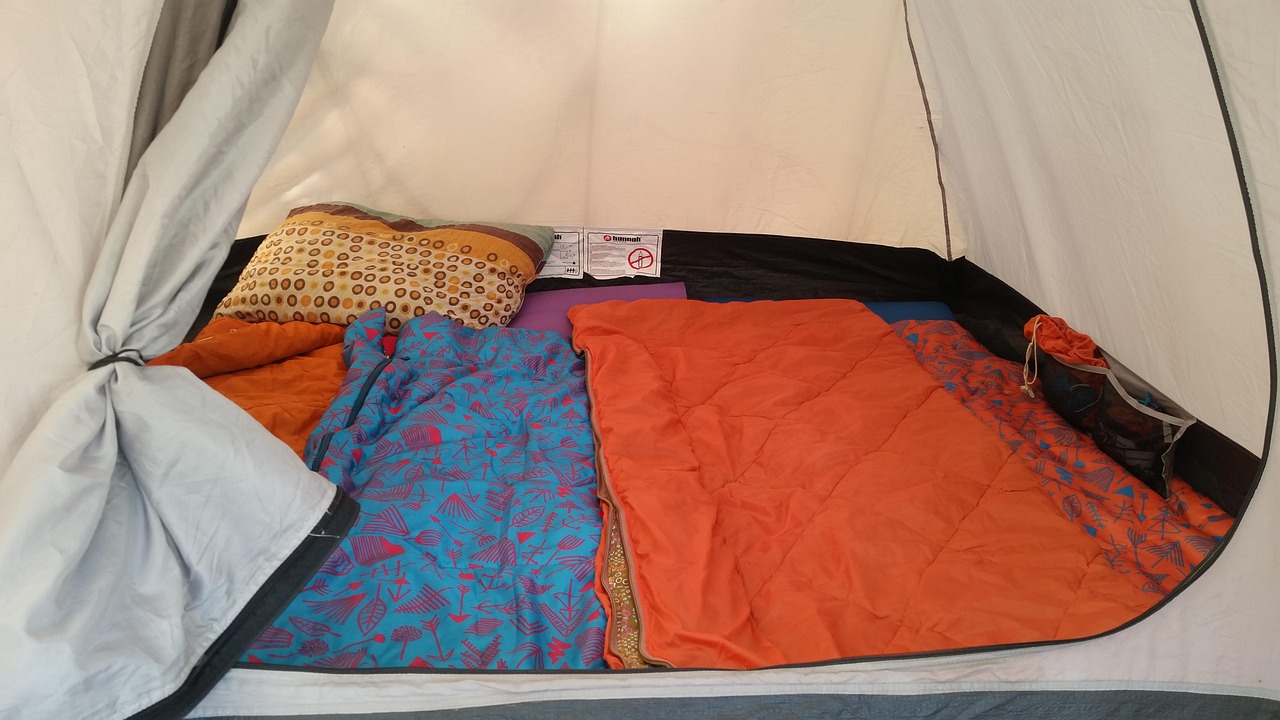
Stomach sleepers get the worst deal in camping gear. Most “best sleeping pad” lists are written for side sleepers who want thick, soft cushioning under their hips, and the pads that win those tests are often the ones that let a front sleeper’s midsection sink and leave them stiff by morning. Sleeping on your front tends to call for the opposite: a stable surface that stays level under the hips and chest, enough width to put an arm under the pillow, and a firmness you can tune.
Related guide: Best 0 Degree Sleeping Bags: 9 Picks Compared
This guide compares ten pads on those terms. We looked at the pads that appear most often in published field tests and in the camper forum threads where stomach sleepers compare notes, then assessed each one on surface stability, thickness and firmness control, width and shape options, noise, insulation, weight and value.
If you only read one line: the Therm-a-Rest NeoAir XLite NXT in the regular wide size is our pick for backpacking stomach sleepers, the Exped MegaMat 10 is our pick for car camping, and the Hikenture R6.2 is the budget option worth trying first.
Our verdict
Our Top Picks at a Glance
All picks
Shop the picks
Sleeping Pad Comparison for Stomach Sleepers
All figures are for the exact size our link goes to. R-values are ASTM F3340-18 ratings where the brand states the standard; where a brand publishes a different figure, we say so.
Verified specs for the linked models
Prices and images above are live from Amazon. The table below holds the specifications we verified for the exact model each link opens.
| Pad | Size (L x W) | Thickness | R-value | Weight | Packed size | Link |
|---|---|---|---|---|---|---|
| Therm-a-Rest NeoAir XLite NXT | Regular wide, 72 x 25 in | 3 in | 4.5 | 1 lb 0 oz | 11 x 4.6 in | Amazon |
| Exped MegaMat 10 | Medium wide, 72 x 25.6 in | 3.9 in | 8.1 | 4 lb 9 oz | 25.6 x 7.9 in | Amazon |
| NEMO Tensor All-Season | Regular wide, 72 x 25 in | 3.5 in | 5.4 | 1 lb 3 oz min, 1 lb 6 oz packed | 10.5 x 4 in | Amazon |
| Therm-a-Rest NeoAir XTherm NXT | Regular wide, 72 x 25 in | 3 in | 7.3 | 1 lb 3 oz | About 11 x 4.6 in | Amazon |
| Sea to Summit Ether Light XR Insulated | Rectangular large, 78 x 25 in | 3.9 in | 4.1 | 1 lb 7.5 oz mat only | 9.3 x 4.7 in | Amazon |
| Big Agnes Rapide SL | Regular, 72 x 20 in | 3.5 in centre, 4.25 in edges | 4.8 | About 18 to 19 oz | About 8 x 4 in | Amazon |
| Therm-a-Rest MondoKing 3D | XX-large, 80 x 30 in | 4.25 in | 7.0 | 5 lb 8 oz | About 31 x 10 in | Amazon |
| Klymit Insulated Static V Lite | 72 x 23 in | 2.5 in | 1.9 ASTM (Klymit’s own figure 4.4) | 19.6 oz | About 8 x 5 in | Amazon |
| Hikenture R6.2 Insulated | Regular wide | About 3.2 in | 6.2 (brand-cited SGS test to ASTM F3340-18) | About 1 lb 8 oz | Not published | Amazon |
| Therm-a-Rest Z Lite Sol | Regular, 72 x 20 in | 0.75 in | 2.0 | 14 oz | 20 x 5 x 5.5 in | Amazon |
Price tiers in each review are relative to the pads in this guide ($ = entry level, $$ = mid-range, $$$ = premium). Live Amazon prices are in the table above; they move by size and season, so check them before buying.
How We Assessed These Pads
How this guide was built
This is a research-based editorial comparison, not a numerical scoring system: specifications come from manufacturers and retailers, performance notes come from named independent tests and owner reports, and we link each source.


What matters for stomach sleepers, and why it varies
Sleeping on your front puts the hips and chest, the two heaviest parts of the body, flat on the pad. On a very soft or bouncy pad the hips can sink first and the lower back arches. How much that matters depends on your build, how much you roll, and what you are used to at home, so treat the points below as fit considerations rather than rules:
- A stable surface. Pads with a few large air tubes or domes shift under the torso. Flat foam, Therm-a-Rest’s triangular matrix, Big Agnes’s offset I-beams and Sea to Summit’s small air-sprung cells all keep the surface more even.
- Thickness you can tune. Many stomach sleepers prefer air pads around 3 inches inflated fairly firm, because there is less air to move away from the hips. Thicker pads work well when they are foam-filled, or when you are happy inflating them hard. Some people prefer softer; the point is to be able to adjust.
- Width and shape. Many stomach sleepers sleep with an arm under the pillow or above the head. A mummy-cut pad can leave that arm on the ground. A 25-inch wide or rectangular pad gives it somewhere to go.
- Noise. Your face is on the pad all night, so crinkly reflective films are more noticeable than on your back.
- Insulation. R-value measures resistance to heat loss into the ground, and it matters by season rather than by sleeping position. Front sleepers press their torso into the pad, so we would not go lower than the usual seasonal guidance.
Where the evidence comes from
Specifications are from manufacturer and retailer listings for the exact size we link. Performance notes come from the published tests at Better Trail, iRunFar, StepMassive and GearLab, and from two camper forum threads where stomach sleepers compare pads directly: one on r/WildernessBackpacking and one on r/camping. We have not slept on all ten pads ourselves, and we say in each review which evidence is a test, which is a manufacturer claim and which is an owner report.
A note on R-values
Since 2020 most major brands test insulation to the ASTM F3340-18 standard, so their R-values can be compared directly. Two pads here are exceptions. Klymit publishes its own in-house figure alongside a much lower ASTM result, and Hikenture cites a third-party SGS test that we could not inspect. We flag both in the reviews and use the ASTM figure for comparison where one exists.
The Best Sleeping Pads for Stomach Sleepers: Detailed Reviews
Therm-a-Rest NeoAir XLite NXT, Best for Backpacking
Verdict
The stable, light pad that stomach sleepers in the backpacking forums name first, in the wide size that gives your arms room.
Specs (regular wide, the size we link)
- Type: Insulated air pad
- Size: 72 x 25 in, 3 in thick
- R-value: 4.5 (ASTM)
- Weight: 1 lb 0 oz (regular is 13 oz, large is 1 lb 1 oz)
- Packed: About 11 x 4.6 in
- Price tier: $$$ (live Amazon price in the table above)
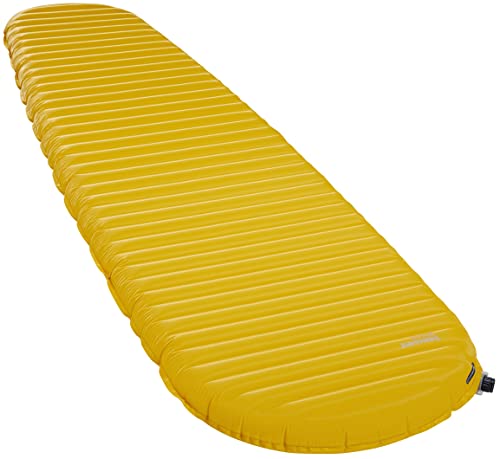
The XLite NXT is the pad named first in both forum threads above. Its triangular matrix divides the pad into many small cells rather than a few big tubes, so the surface stays even under hips and chest, and it inflates firm without feeling like a balloon. iRunFar named it the best overall ultralight inflatable and found it withstood normal use without problems. The NXT revision is noticeably quieter than the older XLite and the WingLock valve inflates and deflates quickly.
We link the regular wide. One forum regular specifically suggested the rectangular NXT MAX for a partner who sleeps with arms up; it costs and weighs a little more and is worth considering if you need the full rectangle.
Pros
- Even, stable surface at 3 inches
- Light even in the wide size
- Quieter than earlier NeoAir pads
Cons
- The 20-inch regular is narrow for arm-up sleepers; buy the wide
- Pricey at list
Who should buy it: Backpackers who sleep on their front and want the most stable surface per ounce.
Stable matrix core, 1 lb in the wide size
The stable, light pad that stomach sleepers in the backpacking forums name first, in the wide size that gives your arms room.
$216.22 from AmazonAs of Nov 5, 04:41 UTCExped MegaMat 10, Best for Car Camping

Verdict
A flat slab of open-cell foam that stomach sleepers in the camping thread describe as being as good as a bed.
Specs (medium wide, the size we link)
- Type: Self-inflating open-cell foam
- Size: 72 x 25.6 in, 3.9 in thick
- R-value: 8.1 (ASTM)
- Weight: 4 lb 9 oz
- Packed: 25.6 x 7.9 in
- Price tier: $$$ (live Amazon price in the table above)
Thick pads can be a poor fit for stomach sleepers, but foam changes the equation. The MegaMat is full of open-cell foam, so there is nowhere for air to migrate when you load the hips, and the surface stays flat to the edges thanks to vertical sidewalls. Two separate commenters in the r/camping thread, both side-and-stomach sleepers, said it is as good as sleeping at home. You can tune it with the included mini pump: slightly under-inflated it is plush, topped off it is firm. Section Hiker and GearLab both rate it at the top of the car-camping category.
At four and a half pounds and the packed size of a sleeping bag, it lives in the car.
Pros
- Flat foam surface that cannot hammock
- R-value of 8.1 covers any season
- Quiet, soft stretch top
Cons
- Heavy and bulky
- Expensive, and the duo sizes cost more
Who should buy it: Car campers who sleep on their front and want a bed-like surface.
Flat open-cell foam, ASTM R-value 8.1
A flat slab of open-cell foam that stomach sleepers in the camping thread describe as being as good as a bed.
$259.95 from AmazonAs of Nov 5, 04:41 UTCNEMO Tensor All-Season, Quietest Air Pad

Verdict
Better Trail’s top backpacking pad, and the quietest air pad here, which matters when your face is on it.
Specs (regular wide, the size we link)
- Type: Insulated air pad
- Size: 72 x 25 in, 3.5 in thick
- R-value: 5.4 (ASTM)
- Weight: 1 lb 3 oz minimum, 1 lb 6 oz packed
- Packed: 10.5 x 4 in
- Price tier: $$$ (live Amazon price in the table above)
Better Trail named the Tensor All-Season the best all-around backpacking pad, and SectionHiker praises its balance of weight and comfort. For stomach sleepers the two draws are NEMO’s Spaceframe baffles, which spread load across the pad rather than letting the hips find the softest spot, and the Thermal Mirror film, which several reviewers single out as quieter than Therm-a-Rest’s. We have not measured noise ourselves; “quietest” here reflects a consistent reviewer consensus rather than a lab figure. At 3.5 inches it benefits from firm inflation.
Pros
- Reviewer consensus on low noise
- Flat, well-supported surface
- R-value of 5.4 covers three seasons
Cons
- Needs firm inflation to keep hips level
- Pricier than the XLite in the same size
Who should buy it: Stomach sleepers who are light sleepers too.
Therm-a-Rest NeoAir XTherm NXT, Best for Cold Weather

Verdict
The XLite’s surface with much more insulation, for front sleepers whose chest gets cold on the ground.
Specs (regular wide, the size we link)
- Type: Insulated air pad
- Size: 72 x 25 in, 3 in thick
- R-value: 7.3 (ASTM)
- Weight: 1 lb 3 oz (regular is 15.5 oz)
- Packed: About 11 x 4.6 in
- Price tier: $$$ (live Amazon price in the table above)
The XTherm NXT has the same triangular matrix core as the XLite with an R-value of 7.3, which StepMassive picked as the best cold-weather backpacking pad and Better Trail rates among the top pads overall. In summer it is more insulation than you need. For shoulder season and winter it is the pad we would carry, and the regular wide gives arm-up sleepers the room they need.
Related guide: Best Cold Weather Sleeping Pads: 9 Picks Compared
Pros
- Among the highest warmth-to-weight of any pad
- Same stable core as the XLite
- Wide and rectangular MAX options
Cons
- More than you need for summer
- Slightly crisper fabric feel than the XLite
Who should buy it: Stomach sleepers who camp in cold months or at altitude.
Sea to Summit Ether Light XR Insulated, Best Rectangular Pad

Verdict
Hundreds of small air cells make a 4-inch pad behave more like a flat one, and the rectangular large has room for both arms.
Specs (rectangular large, the size we link)
- Type: Insulated air pad
- Size: 78 x 25 in, 3.9 in thick
- R-value: 4.1 (ASTM, per Sea to Summit)
- Weight: 1 lb 7.5 oz mat only, about 1 lb 9.5 oz with the pump sack
- Packed: About 9.3 x 4.7 in
- Price tier: $$$ (live Amazon price in the table above; the tapered large costs less)
Sea to Summit’s Air Sprung Cell construction divides the pad into a grid of small, individually springing cells, so pressing the hips down compresses the cells under them without pulling the rest of the pad up around you. A stomach sleeper in the r/camping thread reported being hugely impressed after buying the earlier XT version, and StepMassive rates the XR as its best pick for thickness and comfort. The rectangular large gives a full 25 inches of width along the whole pad, which is why we link it rather than the cheaper tapered version. The R-value of 4.1 is a solid three-season figure.
Pros
- Flat-feeling surface despite nearly 4 inches of thickness
- True rectangle, 78 inches long
- Soft, quiet face fabric
Cons
- Heavier than the XLite wide
- Rectangular sizes cost more than tapered
Who should buy it: Stomach sleepers who want a long, wide, plush-but-stable pad for three-season trips.
Big Agnes Rapide SL, Best Value Backpacking Pad

Verdict
Offset I-beams for a stable surface, from the brand that stomach sleepers in both forum threads mention most.
Specs (regular, the size we link)
- Type: Insulated air pad
- Size: 72 x 20 in, 3.5 in at the centre and 4.25 in at the outer chambers
- R-value: 4.8 (ASTM, 2024 version)
- Weight: About 18 to 19 oz (Big Agnes lists 18 oz for the previous version; the updated version’s regular weight is not confirmed on retailer pages)
- Packed: About 8 x 4 in
- Price tier: $$ (live Amazon price in the table above; the wide sizes cost more)
Big Agnes comes up repeatedly when stomach sleepers compare pads. In the r/WildernessBackpacking thread two commenters use the Q-Core, and in the r/camping thread the top-voted answer, from a stomach-and-side sleeper who had been through many pads, is the Big Agnes Insulated Air Core Ultra in the wide size. The Rapide SL is the current pad in that line. Its offset I-beam baffles stagger the chambers so weight on one does not lift the next, and the raised outer chambers keep you centred. Better Trail and StepMassive both include it.
We link the regular because it is the value pick. If you sleep with arms up, the wide long is often discounted to close to it.
Pros
- Stable offset I-beam surface
- Wide, long and double-wide sizes available
- Good R-value for the price
Cons
- Louder than the NEMO Tensor
- Updated-version weights not consistently published
Who should buy it: Stomach sleepers who want a stable backpacking pad without paying a premium price.
Therm-a-Rest MondoKing 3D, Widest Foam Pad

Verdict
Thirty inches of flat, firm foam. The MegaMat’s main rival, with a clear trade-off.
Specs (XX-large, the size we link)
- Type: Self-inflating open-cell foam
- Size: 80 x 30 in, 4.25 in thick
- R-value: 7.0 (ASTM)
- Weight: 5 lb 8 oz (large, 77 x 25 in, is 4 lb 6 oz)
- Packed: About 31 x 10 in
- Price tier: $$$ (live Amazon price in the table above)
The MondoKing and the MegaMat are both thick open-cell foam with vertical sidewalls, and both cannot hammock under the hips. The differences are the ones to choose on. The MondoKing XX-large is 30 inches wide, the widest single pad here, and reviewers describe it as a little firmer. The MegaMat medium wide is a pound lighter, slightly warmer, and has a softer stretch-knit top. A commenter in the r/camping thread who sleeps on stomach and side uses the MondoKing. If you sleep with both arms out, the extra width is the reason to pick it. GearLab’s test weighed the XXL at 5.3 lb.
Pros
- Widest pad in this guide
- Thick, flat, firm foam
- R-value of 7 for all seasons
Cons
- Heavy and bulky
- One of the most expensive pads here
Who should buy it: Car campers who want the widest, firmest foam pad available.
Klymit Insulated Static V Lite, Budget Air Pad for Warm Weather

Verdict
A cheap, quiet, 2.5-inch pad whose V-chambers hold a front sleeper in place, with an insulation rating that needs explaining.
Specs
- Type: Insulated air pad
- Size: 72 x 23 in, 2.5 in thick
- R-value: 1.9 under ASTM F3340-18; Klymit’s own historical figure is 4.4
- Weight: 19.6 oz
- Packed: About 8 x 5 in
- Price tier: $$ (live Amazon price in the table above)
Klymit’s V-shaped chambers run diagonally across the pad and limit how far air can shift when you load one area, and at 2.5 inches there is little room for the hips to sink. The 23-inch width is wider than most regular pads, and a commenter in the backpacking thread liked its quiet surface.
The insulation needs care. Klymit’s product page shows an R-value of 4.4, but that is the company’s own in-house figure. Klymit’s ASTM F3340-18 result for this pad is 1.9, and GearLab reported it sleeping colder than its headline number suggests. On the standard that every other pad here uses, it is a summer and warm-shoulder-season pad, not a three-season one. We have moved it out of the “best budget” slot for that reason and kept it as a warm-weather option.
Pros
- Thin, firm and wide for the money
- Quiet
- Affordable
Cons
- ASTM R-value of 1.9 limits it to warm weather
- V-chambers are less even than a matrix core
Who should buy it: Budget backpackers who camp in summer and want a quiet, low-profile pad.
Hikenture R6.2 Insulated, Best Under $80

Verdict
Horizontal baffles and a high claimed R-value for the price of a tent footprint, with the caveat that the testing is the brand’s.
Specs (regular wide, the size we link)
- Type: Insulated air pad
- Thickness: About 3.2 in
- R-value: 6.2, which Hikenture states was tested by SGS to ASTM F3340-18
- Weight: About 1 lb 8 oz
- Packed: Not published
- Price tier: $ (live Amazon price in the table above)
Direct-to-Amazon brands have closed the gap on the big names faster in sleeping pads than in most categories, and the Hikenture R6.2 is a good example. It uses horizontal baffles, a sensible geometry for front sleepers because the chambers run across the body, at a thickness that inflates firm with the included pump sack. The R-value of 6.2 would be exceptional at this price. Hikenture says the figure comes from an SGS test to the ASTM standard; we could not find the report or an independent test, so treat it as a manufacturer claim rather than a verified number. Owner reviews are consistent on durability and note some crinkle from the reflective layer.
Pros
- Horizontal baffles at about 3 inches
- Very high claimed R-value for the price
- Pump sack included
Cons
- Insulation rating not independently verified
- Louder than premium pads according to owners
Who should buy it: Anyone who wants to try a proper insulated air pad at an entry-level price, and can accept a brand-tested rating.
Horizontal baffles, brand-rated R 6.2
Horizontal baffles and a high claimed R-value for the price of a tent footprint, with the caveat that the testing is the brand's.
$75.99 from AmazonAs of Nov 5, 04:41 UTCTherm-a-Rest Z Lite Sol, Firmest Option

Verdict
The firmest possible surface, and a useful base layer under an air pad for insulation and puncture protection.
Specs (regular, the size we link)
- Type: Closed-cell foam
- Size: 72 x 20 in, 0.75 in thick
- R-value: 2.0 (ASTM)
- Weight: 14 oz
- Packed: 20 x 5 x 5.5 in
- Price tier: $ (live Amazon price in the table above)
Some stomach sleepers, especially those who sleep on firm mattresses at home, find every air pad too soft and sleep best on foam. The Z Lite Sol is the foam pad of record: accordion-folded egg-crate foam that cannot leak and weighs under a pound. On its own it is firm and thin, which some people love and others find hard. Its other role is as a base layer. Under an XLite or Rapide SL it adds about 2 to the combined R-value and protects the air pad from punctures. It does not change how firm the air pad’s top surface feels; that still comes from inflation.
Pros
- Cannot leak or hammock
- Light and nearly indestructible
- Adds insulation and protection under an air pad
Cons
- Thin and hard on its own
- Bulky to pack
Who should buy it: Stomach sleepers who prefer firm surfaces, and anyone building a two-pad system.
Which Pad for Which Stomach Sleeper
Best backpacking sleeping pad for stomach sleepers
The Therm-a-Rest NeoAir XLite NXT in regular wide. The NEMO Tensor All-Season if noise bothers you, and the Big Agnes Rapide SL if you want to spend less.
Best car camping pad for stomach sleepers
The Exped MegaMat 10 or the Therm-a-Rest MondoKing 3D. Both are thick, flat foam that cannot sag under the hips; pick the MondoKing for width and the MegaMat for weight and warmth. Our guide to sleeping pads versus air mattresses explains why a foam pad usually beats an air mattress for front sleeping.
Best pad for combination stomach and side sleepers
Most stomach sleepers roll partly onto their side during the night. The Big Agnes Rapide SL and Sea to Summit Ether Light XR give enough thickness for the hip on your side while staying stable face-down. For car camping, either foam pad handles both positions.
Best lightweight pad for stomach sleepers
The XLite NXT regular at 13 ounces, if you can live with 20 inches of width. If you prefer foam, the Z Lite Sol small is lighter still.
Best cold-weather pad for stomach sleepers
The NeoAir XTherm NXT for backpacking and the MegaMat 10 for car camping, both with ASTM R-values above 7.
How to Choose a Sleeping Pad as a Stomach Sleeper
Thickness and firmness
For air pads, around 3 inches inflated fairly firm is a sensible starting point, because there is less air to move away from the hips. It is a starting point, not a rule: heavier sleepers, people who roll, and people who are used to a soft bed may prefer more thickness or less air. The useful test is to lie face-down and press a hand under your hip. If you feel the ground, add air. If your lower back feels arched, try adding air first, then try a thinner or foam pad. Thick foam pads behave differently from thick air pads because foam does not migrate.
Baffle design
How a pad is divided decides how it behaves under uneven weight. Flat foam is the most even. Triangular matrix cores, offset I-beams and air-sprung cells are all good. Horizontal tube baffles are acceptable. Large vertical tubes and big air domes tend to let the hips sink between chambers. The comparison table lists each pad’s construction.
Shape and width
Mummy pads save weight by narrowing at the feet and head, which is where a stomach sleeper’s arms often end up. A rectangular pad or a 25-inch wide version costs a few ounces and gives the arm somewhere to rest. Our links go to the wide or rectangular size wherever the review recommends one, and the table lists that size’s weight.
R-value for front sleepers
Use roughly 2 to 3 for summer, 4 to 5 for three-season camping and 6 and above for winter. Compare ASTM F3340-18 figures only; a brand’s in-house number is not comparable, as the Klymit review above shows.
Noise
Air pads use a reflective film to add warmth, and some films crackle. With your face on the pad, that matters. The NEMO Tensor has the strongest reviewer consensus for low noise, the XLite NXT is much improved over the original, and foam pads make none.
Self-inflating foam vs air vs closed-cell foam
Self-inflating pads sandwich open-cell foam inside an airtight shell. They are flat, firm and heavy, and they suit stomach sleepers well when weight does not matter. Air pads are light and packable and depend on baffle design to stay flat. Closed-cell foam is the firmest and most reliable but thin. Many people end up with an air pad for backpacking trips and a foam pad for the car.
Pillows and the arm-under-head habit
A low pillow helps keep the neck straight face-down, and a wider pad lets the arm sit under the pillow rather than off the edge. Several forum regulars buy the long or extra-large size of their pad specifically so they can sleep with arms above the head. Budget for the size, not just the model, and add the pillow to your camping packing list.
What Stomach Sleepers Actually Recommend
The two forum threads linked above agree with each other more than most gear threads do. In the backpacking thread, the original poster was already looking at the NeoAir XLite and every reply confirmed it, with the suggestion to pick the rectangular MAX version for arms-up sleeping. Big Agnes pads came up twice. In the camping thread, a lifelong stomach sleeper called a 3-inch Therm-a-Rest foam pad with an R-value of 6 a game changer and bought the extra-large to hug a pillow with arms overhead. The top-voted reply, from a stomach-and-side sleeper who had tried a whole lot of pads, settled on a Big Agnes Insulated Air Core in the wide size. The Exped MegaMat was recommended twice for car camping, the MondoKing once, and the Sea to Summit Ether Light once. The pattern is the same throughout: stable surface, firm inflation, and buy the wide or long size.
Frequently Asked Questions
Q. What thickness sleeping pad is best for stomach sleepers?
Around 3 inches inflated fairly firm is a common starting point for air pads, because less air can shift away from the hips. Preferences vary with body shape and habit, so adjust from there. Thick foam pads of around 4 inches work well because foam does not move.
Q. Is a firm or soft sleeping pad better for stomach sleepers?
Many stomach sleepers prefer firmer, because a soft pad can let the hips drop below the chest. It is a preference, not a rule. Start firmer than feels natural and let out air in small amounts until the hip is supported without the ground showing through.
Q. Should stomach sleepers use an air pad or a foam pad?
Either works if the surface is stable. Self-inflating foam pads like the Exped MegaMat and Therm-a-Rest MondoKing are the most forgiving for front sleepers but too heavy for backpacking. For the trail, an air pad with a matrix core or offset I-beams, like the NeoAir XLite NXT or Big Agnes Rapide SL, is the usual compromise.
Q. Do stomach sleepers need a rectangular sleeping pad?
Not strictly, but many prefer one. Sleeping with an arm under the pillow or above the head is common face-down, and a mummy pad leaves that arm on the ground. A rectangular pad or a 25-inch wide version solves it for a few ounces.
Q. What R-value do stomach sleepers need?
The same as anyone else for the season: about 2 to 3 for summer, 4 to 5 for three seasons, 6 and up for winter. Compare ASTM-tested figures only.
Q. Why do my arms go numb sleeping on my stomach when camping?
Often because the pad is too narrow and the arm is on the ground, or the shoulder is pressed down into a soft pad. A wider pad and firmer inflation help many people. Numbness has other causes too, and a persistent problem is worth raising with a doctor.
Q. Is the Therm-a-Rest NeoAir XLite good for stomach sleepers?
It is the most-recommended backpacking pad for stomach sleepers in the camping forums we reviewed. Its triangular matrix keeps the surface even and it inflates firm. Choose the regular wide or the rectangular NXT MAX if you sleep with arms up.
Q. Is the Exped MegaMat good for stomach sleepers?
It is the most-recommended car-camping pad in the same threads. The open-cell foam cannot hammock, the surface is flat and the sidewalls stay vertical to the edge. Its weight and bulk keep it in the car.
Q. Can I combine a foam pad with an air pad?
Yes. A closed-cell foam pad like the Z Lite Sol under an air pad adds insulation and protects against punctures. It does not make the air pad’s top surface firmer; that comes from how much you inflate the air pad.
The bottom line
Final Verdict
For backpacking, buy the Therm-a-Rest NeoAir XLite NXT (check price) in regular wide and inflate it firm. For car camping, buy the Exped MegaMat 10 (check price) and stop thinking about sleeping pads. If you are on a budget, the Hikenture R6.2 (check price) gives you the right baffle geometry at an entry-level price, with the caveat that its insulation rating is the brand’s own test. Whatever you choose, get the wide version. The numb arm that sent you looking for a new pad is often a width problem.
Product prices and availability are accurate as of the date/time indicated and are subject to change. Any price and availability information displayed on Amazon.com at the time of purchase will apply to the purchase of this product.
