The short answer
The Big Agnes Copper Spur UL2 is our pick for most pairs, The North Face Stormbreak 2 is the budget choice, and the NEMO Hornet Elite OSMO 2P is the one to carry when every ounce counts.
Our verdict
Our Top Picks at a Glance
A two-person backpacking tent has two jobs that pull against each other: it has to be light enough to carry for days, and roomy enough that two people and their packs can wait out a wet evening without climbing over each other. Most “2-person” tents lean one way. Ultralight models save ounces with tapered floors and thin fabrics; the heaviest budget and wet-weather tents give you room and tough fabric at about twice the in-box weight of the all-round ones.
This guide compares eight two-person tents on the figures that decide that trade-off: floor area, peak height, weight, how far the rainfly reaches and the maker’s waterproof rating for the fly and the floor. Every pick is stocked on Amazon, and every link opens the 2-person version we describe.
Tent finder
Find a two-person tent for your trips
Pick how you backpack and what you want to spend. The suggestion is our editorial starting point among the eight tents below, not a test result.
Tiers are relative to the tents in this guide; live prices are in the comparison table below.
Compare the picks
Compare the 8 Two-Person Tents
Every row describes the 2-person tent our link opens. Figures are the makers’ own: floor area, interior peak height, weight with its basis (packaged, packed or total means everything in the box) and the hydrostatic-head rating of the rainfly and the floor in millimetres, followed by what is known about fly coverage. None of these makers names the test standard behind its millimetre figure, so treat small differences as approximate.
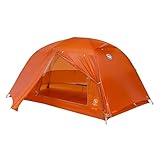 Big Agnes Copper Spur UL2Best OverallAll-round, couples, long trips29 sq ft3 lb$479.96
Evidence: GearLab, this exact model
 MSR Hubba Hubba LT 2Best Rectangular FloorAll-round, couples, three-season32 sq ft3 lb 6 oz$543.00
Evidence: SectionHiker, this exact model
 The North Face Stormbreak 2Best BudgetBudget, beginners, rough ground30.56 sq ft5 lb 14.2 oz$220.00 Prime
Evidence: GearLab, this exact model
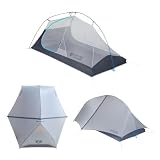 NEMO Hornet Elite OSMO 2PBest UltralightUltralight, thru-hiking, solo27.3 sq ft2 lb 1 oz$699.79
Evidence: Switchback Travel, this exact model
 NEMO Dragonfly OSMO 2PFlat-Roof FreestandingLightweight, freestanding, couples29.0 sq ft3 lb 5 oz$549.95
Evidence: GearLab, previous generation
 MSR FreeLite 2Best for Dry TrailsUltralight, dry climates29 sq ft2 lb 5 oz$375.89 Prime
Evidence: GearLab, this exact model
 MSR Elixir 2Best Value Wet-WeatherValue, wet weather, beginners30 sq ft6 lb 3 oz$339.95 Prime
Evidence: Live For The Outdoors, this exact model
 3F UL Gear Lanshan 2 ProBest Budget UltralightBudget, ultralight, trekking poles29.7 sq ft2 lb 4.5 oz in the box$214.99
Weight: 2 lb 4.5 oz in the box (3F website Gen2: 1,034 g incl. stakes and sacks; Backpacker: 2 lb 5 oz; Amazon listing: 915 g minimum trail)
Fly / floor rating; fly coverage: 5,000 mm (Amazon listing); 2,000 / 6,000 mm (3F website, Gen2); coverage not stated
Evidence: Backpacker, Lanshan 2 Pro with mesh (3-season) inner; generation not stated
How We Picked These Tents
How this guide was built
built from manufacturer documentation, published third-party reviews and owner reports; we have not tested these products ourselves. Specifications are the makers’ figures for the 2-person version each link opens, and each review says which evidence is an independent test, which is a spec sheet and which is an owner report.
The tests that decided the list
We started from the tents that recur across the pages ranking for this search and kept the ones that answer the questions two backpackers ask:
- Room for two pads. Two standard 20-inch pads need about 40 inches of floor width and two 25-inch wide pads need about 50. We list floor dimensions so you can check, and say where a floor tapers at the foot.
- Weight per person. A two-person tent is usually split between two packs. Packaged, packed or total weight is what the box weighs with stakes and sacks; minimum or trail weight leaves some of those out, so we name which one each maker gives.
- Weather protection. How far the fly reaches, and the fly and floor ratings in millimetres (hydrostatic head). Higher numbers resist more water pressure, but coverage, seam taping and pitch matter as much as the figure. Most makers do not describe their fly coverage, so each review says what testers found.
- Two doors and two vestibules. Every pick has them, so neither person crawls over the other at night.
- Amazon-stocked. Each pick is new and in stock in the 2-person size, sold by Amazon or its maker, fulfilled by Amazon at or below the maker’s list price, or sold by an authorised outdoor retailer at or below list (the Copper Spur UL2, from Backcountry, when we checked).
Whose testing we leaned on, what two-person tent owners say and why some well-known tents are missing
Whose testing we leaned on
Performance notes come from Switchback Travel’s backpacking tent tests and budget tent tests, GearLab’s backpacking tent review and its individual tent reviews, Live For The Outdoors’ backpacking tent group test, Backpacker’s ultralight tent tests and SectionHiker’s Hubba Hubba LT 2 review. Where a test covered an earlier version of a tent, the review says so.
What two-person tent owners say
The r/CampingGear thread that ranks for this search is from 2021, so the tents its owners describe are earlier versions, but its sizing advice still holds. Several owners recommended the MSR Hubba Hubba; one couple who thru-hikes with the 2-person version wrote that they would not carry a 3-person tent for two, while another reply suggested sizing up to a 3P because “most of these 2p = 1 person realistically”. An owner of a 2021-era NEMO Dragonfly liked its balance of sturdiness and packability and advised a ground cloth “since the floor is very thin material”. The pattern: check the floor width against your pads, and decide whether a few extra ounces for a bigger tent are worth it to you.
Why some well-known tents are missing
The Durston X-Mid, Zpacks Duplex and REI Half Dome are popular, but they are sold direct or through REI, so they are not in this Amazon-only guide. Big Agnes’s Tiger Wall UL2 and Kelty’s Late Start 2 were on Amazon through the outdoor retailer Backcountry when we checked on 20 October 2026; we left them out because the Tiger Wall overlaps the Hornet Elite as a semi-freestanding ultralight, and GearLab found the Late Start’s rainfly too small to keep the head and foot of the tent dry on a rainy three-day trip. We also left out the ALPS Mountaineering Lynx 2: it is roomy and inexpensive, but GearLab scored it 48 out of 100 overall in its 2017 test, one of the lowest scores in that review, and recommends it mainly for car campers.
The Best 2 Man Backpacking Tents: Detailed Reviews
Big Agnes Copper Spur UL2, Best Overall
Pairs who want one light, freestanding tent for long trips and can live with a tapered floor.
$479.96 from AmazonAs of Nov 29, 14:41 UTCVerdict
Switchback Travel’s top pick: freestanding, about three pounds in the box, with steep walls that make the most of a tapered floor.
Evidence: Independently reviewed, exact model. GearLab: Copper Spur UL2, current HyperBead version.
Specs (2-person, the version we link)
- Capacity: 2 people, two doors and two vestibules (9 + 9 sq ft)
- Floor: 29 sq ft, 88 x 52 in tapering to 42 in
- Peak height: 40 in
- Weight: 3 lb total, 2 lb 10 oz trail
- Waterproof rating: fly and floor 1,500 mm, HyperBead 15D nylon with 20D ripstop (Big Agnes; test standard not named)
- Fly coverage: not stated by Big Agnes (awning-style doors); GearLab saw some moisture seep in when rain lasted days
Switchback Travel ranks the Copper Spur UL2 first among backpacking tents, saying it “strikes the best balance of minimal weight, generous interior space, and ease of setup”, and GearLab tested the current HyperBead version and calls it a favourite for extended trips. GearLab’s testers found the boxy shape “especially spacious for a 2-person tent” with room to sit up, and that it kept them dry through storms and held up in wind once the guylines were tensioned, though its light DAC poles bent slightly on one particularly windy night and GearLab stresses pitching it carefully before a strong thunderstorm. Live For The Outdoors is cooler on weather: it names the Copper Spur UL2 its best two-person tent for summer, calls it “not the most wind-resistant option” and recommends it for spring and summer use. LFTO adds that the awning-style vestibules can be porched out with trekking poles, though it found the plastic TipLok hardware fragile-feeling and the inner-first pitch awkward in rain.
The compromises are fabric and price. The body, floor and fly are 15-denier nylon, which GearLab calls substantially thinner than many other tents it tested, and Big Agnes recommends a footprint (sold separately). GearLab saw some moisture get in during rain that lasted days, and found it comfortable for two only if you do not mind close quarters; the floor narrows from 52 to 42 inches at the foot. If you sleep on two wide pads, the rectangular Hubba Hubba LT 2 below gives more room at the feet for about six more ounces in the box (3 lb 6 oz packaged against 3 lb total).
Pros
- About 3 lb total for a freestanding two-door tent with steep, headroom-friendly walls
- Kept GearLab’s testers dry through storms; held up in gusts with guylines tensioned
- Awning-style vestibules and a large overhead storage bin
Cons
- Thin 15D fabrics need a footprint and careful site choice
- Light poles bent slightly on one windy night (GearLab); LFTO rates it a spring-and-summer tent, not the most wind-resistant
- Floor tapers to 42 inches at the foot, a close fit for two wide pads
- Premium price
Who should buy it
Pairs who want one light, freestanding tent for long trips and can live with a tapered floor.
MSR Hubba Hubba LT 2, Best Rectangular Floor
Pairs who backpack from late spring to early autumn and want a light tent with room for two full-size pads.
$543.00 from AmazonAs of Nov 29, 14:30 UTCVerdict
A light, rectangular two-door tent with the floor space and headroom to share comfortably, at about three and a half pounds.
Evidence: Independently reviewed, exact model. SectionHiker: Hubba Hubba LT 2, current one-pole version.
Specs (2-person, the version we link)
- Capacity: 2 people, two doors and two vestibules (16 sq ft total)
- Floor: 32 sq ft, 88 x 52 in, no taper
- Peak height: 40 in
- Weight: 3 lb 6 oz packaged, 3 lb minimum
- Waterproof rating: fly 1,200 mm, floor 1,800 mm (MSR; test standard not named)
- Fly coverage: MSR’s full-featured rainfly with two StayDry doors; Switchback found it leaves more of the tent body exposed at the base than the previous Hubba Hubba
The Hubba Hubba is the tent several Reddit owners in the ranking thread reach for, and the LT is its current lightweight version. SectionHiker reviewed this model, with its single hubbed pole, and found it fits two 25-inch-wide pads on a rectangular floor with about 40 inches of headroom at the centre. Switchback Travel names it its runner-up overall, praising the non-tapered floor and near-vertical walls.
For two people that rectangle is the point: the floor does not narrow at the feet, so two wide pads lie side by side without overlapping, where the Copper Spur narrows to 42 inches. The trade-off is weather. Switchback notes that the LT uses much more mesh than the previous Hubba Hubba, which helps airflow but lets in more wind and cold, and that the fly leaves more of the tent body exposed at the base; it had not yet been through a severe storm in their testing. For cold shoulder-season trips, the heavier Elixir 2 below is the more sheltered MSR.
Pros
- Rectangular 52-inch floor that fits two wide pads without overlap
- About 3 lb 6 oz packaged for a freestanding two-door tent
- Single hubbed pole and symmetrical layout, which SectionHiker found straightforward to pitch
Cons
- Mostly mesh inner is draughty in wind and cold, per Switchback
- Premium price
- Footprint sold separately
Who should buy it
Pairs who backpack from late spring to early autumn and want a light tent with room for two full-size pads.
The North Face Stormbreak 2, Best Budget
New backpackers and occasional weekenders who want a durable tent at an entry-level price and can share the weight.
$220.00 from AmazonAs of Nov 29, 13:22 UTCVerdict
A tough, roomy entry-level tent that gives up weight for durability and headroom.
Evidence: Independently reviewed, exact model. GearLab: Stormbreak 2.
Specs (2-person, the version we link)
- Capacity: 2 people, two doors and two vestibules
- Floor: 30.56 sq ft
- Peak height: 43 in
- Weight: 5 lb 14.2 oz total, 5 lb 5 oz trail
- Waterproof rating: fly 1,200 mm, floor 1,500 mm (The North Face; test standard not named)
- Fly coverage: not stated by The North Face; GearLab notes a solid polyester canopy under the fly as a backup if the fly leaks
GearLab calls the Stormbreak 2 “a great entry-level tent that outperforms its price point” and sums it up as perfect for anyone just getting into backpacking. Its 43-inch peak is the second-tallest in this guide, and GearLab’s testers found a 6-foot adult could sit up. The 75-denier polyester in the fly, canopy and floor is much thicker than the 10- to 20-denier fabrics of the lightweight picks, and GearLab gave the Stormbreak 2 and 3 its highest durability scores; Live For The Outdoors calls it “nearly indestructible”, though its testing was in clear weather. In heavier storms GearLab saw a little moisture come through the stitching in the middle of the fly and advises sealing the seams.
The North Face describes the Stormbreak 2 as a camping tent; GearLab and LFTO both tested it in their backpacking tent roundups, and it is the heaviest kind of tent we would carry. The cost is weight: nearly six pounds in total, which is manageable split between two packs but heavy for one. GearLab’s buyer’s guide also notes that two people sleep shoulder to shoulder in it, so it is snugger than its floor area suggests. The footprint is sold separately, though LFTO suggests the thick floor could get by without one.
Pros
- Thick 75D fabrics throughout, with the top durability score in GearLab’s test
- 43-inch peak height that lets most adults sit up
- Two large doors with twin-zip vestibules
Cons
- Nearly 6 lb total, heavy for one person to carry
- Shoulder-to-shoulder for two, according to GearLab
Who should buy it
New backpackers and occasional weekenders who want a durable tent at an entry-level price and can share the weight.
NEMO Hornet Elite OSMO 2P, Best Ultralight
Thru-hikers, solo hikers who want room for gear, and pairs who count every ounce and do not mind close quarters.
$699.79 from AmazonAs of Nov 29, 14:41 UTCVerdict
About two pounds packed for a double-wall, two-door tent, if two people do not mind a snug, tapered floor and a partial fly.
Evidence: Independently reviewed, exact model. Switchback Travel: Hornet Elite OSMO 2P.
Specs (2-person, the version we link)
- Capacity: 2 people, two doors and two vestibules (6.2 sq ft each)
- Floor: 27.3 sq ft, 85 x 50 in tapering to 42 in
- Peak height: 37 in
- Weight: 2 lb 1 oz packed, 1 lb 11 oz minimum
- Waterproof rating: fly and floor 1,200 mm OSMO ripstop (NEMO; test standard not named)
- Fly coverage: partial; Switchback notes some sections are protected only by the tent body
- Pitch: semi-freestanding
Switchback Travel picks the Hornet Elite OSMO 2P as its best ultralight backpacking tent for hikers coming from traditional tents: it pitches with a semi-freestanding pole set and color-coded parts, and Switchback found it more reliable in bad weather than many competitors, even with parts of the tent covered only by the inner body rather than the fly. At 2 lb 1 oz packed and 1 lb 11 oz minimum, it is the lightest tent here on both bases.
The compromises are space and fabric. The floor tapers from 50 inches at the head to 42 at the foot and the peak is 37 inches, the lowest in this guide, so Switchback calls it “a very snug fit for two”. NEMO told Switchback the OSMO fly and floor are around 10 denier, so choose campsites carefully and consider a footprint. For more floor at a few more ounces of packaged weight, see the FreeLite 2.
Pros
- About 2 lb 1 oz packed for a double-wall, two-door tent
- Semi-freestanding pitch that Switchback found easy, with color-coded parts
- More reliable in bad weather than many competitors, per Switchback
Cons
- Snug, tapered floor and 37-inch peak for two people
- Very thin fly and floor fabric that needs careful site choice
- Partial fly leaves some of the inner exposed
Who should buy it
Thru-hikers, solo hikers who want room for gear, and pairs who count every ounce and do not mind close quarters.
NEMO Dragonfly OSMO 2P, Flat-Roof Freestanding
Pairs who want a freestanding tent with NEMO's flatter crossbar roof (which NEMO says adds usable headroom; not yet independently tested) and a 45-inch foot, and will carry five more ounces than the Copper Spur.
$549.95 from AmazonAs of Nov 29, 14:43 UTCVerdict
A freestanding alternative to the Copper Spur with a flatter crossbar roof (NEMO says it adds usable headroom; not yet independently tested) and a 45-inch foot, for five more ounces in the box.
Evidence: Independently reviewed, previous generation. GearLab: Dragonfly OSMO 2P, version before the 2026 crossbar update.
Specs (2-person, the version we link)
- Capacity: 2 people, two doors and two vestibules (8.6 sq ft each)
- Floor: 29.0 sq ft, 88 x 50 in tapering to 45 in
- Peak height: 40 in
- Weight: 3 lb 5 oz packed, 2 lb 13 oz minimum
- Waterproof rating: fly and floor 1,500 mm OSMO ripstop (NEMO; test standard not named)
- Fly coverage: not stated by NEMO for the 2026 version; GearLab found the earlier version’s fly cut back
- Pitch: freestanding
Against our top pick, the Copper Spur UL2, the Dragonfly has the same 29 square feet and 40-inch peak and weighs five ounces more in the box (3 lb 5 oz packed against 3 lb total). What it offers instead is shape: its floor narrows only to 45 inches at the foot, against the Copper Spur’s 42, and NEMO updated it in 2026 with a crossbar that flattens the roof, which NEMO says gives “generous headroom throughout the tent, not just at the peak”, taller doors and a removable “Landing Zone” storage tub for the vestibule; the 2-person version we link is that update. That headroom claim is NEMO’s and has not been independently tested yet; our role name describes the design, not a measured win. GearLab found the earlier, pre-crossbar version offered “slightly less floor space and headroom than some similarly sized 2-person tents”, and the crossbar is what NEMO changed.
GearLab tested the earlier Dragonfly OSMO 2, without the crossbar, and called it “a fabulous lightweight tent great for extended backcountry trips”, with oversized storage pockets and a fly that sagged less than standard nylon in rain. Its testers also found the taper from 50 to 45 inches noticeable for two, and that the earlier version’s cut-back fly let water pool in a crease by the floor in a heavy storm. NEMO’s new design keeps the same floor dimensions, so expect the same width for two, while the crossbar’s effect on wet-weather performance has not been independently tested yet. An owner of a 2021-era Dragonfly in the Reddit thread recommends a ground cloth because the floor fabric is thin; that is an older generation, but the advice suits any light floor.
Pros
- Fully freestanding pitch at 3 lb 5 oz packed
- 2026 crossbar design for more headroom across the roof, per NEMO
- Floor narrows only to 45 inches at the foot, wider there than the Copper Spur
- Removable vestibule storage tub included
Cons
- Five ounces heavier in the box than the lighter, freestanding Copper Spur UL2
- Tapered floor is a close fit for two, per GearLab’s test of the earlier version
- The current version has no independent test yet
Who should buy it
Pairs who want a freestanding tent with NEMO’s flatter crossbar roof (which NEMO says adds usable headroom; not yet independently tested) and a 45-inch foot, and will carry five more ounces than the Copper Spur.
MSR FreeLite 2, Best for Dry Trails
Ultralight backpackers in dry climates who want more floor width than a tapered ultralight tent gives.
$375.89 from AmazonAs of Nov 29, 14:26 UTCVerdict
A rectangular-floored ultralight tent at 2 lb 5 oz packaged, best kept for dry climates because of its shortened fly.
Evidence: Independently reviewed, exact model. GearLab: FreeLite 2.
Specs (2-person, the version we link)
- Capacity: 2 people, two doors and two vestibules (15 sq ft total)
- Floor: 29 sq ft, 84 x 50 in, no taper
- Peak height: 39 in
- Weight: 2 lb 5 oz packaged, 2 lb minimum
- Waterproof rating: fly and floor 1,200 mm, 15D ripstop nylon (MSR; test standard not named)
- Fly coverage: shortened at the head end, with water-resistant fabric in the inner wall there (Switchback)
- Pitch: semi-freestanding
The FreeLite 2 weighs four ounces more than the Hornet Elite in packaged weight (2 lb 5 oz against 2 lb 1 oz) but keeps a rectangular floor, which Switchback Travel says gives more usable space for two side by side and avoids a “coffin-like” feel. To save weight, MSR shortened the rainfly at the head end and made the inner wall there water-resistant fabric.
That fly is the trade-off. Switchback found prolonged rain eventually got in through the shortened fly on the FreeLite 1 it took to Kenya, and GearLab writes: “Even though you can shave pounds by choosing a tent like the MSR Freelite 2, we wouldn’t recommend it for anyone camping in a rainy climate.” GearLab also rated it tight inside for two, though its vestibules are large for gear. In dry ranges and dry seasons, it is a light tent with a squarer floor than most.
Pros
- Rectangular 50-inch floor at 2 lb 5 oz packaged
- Large vestibules for gear, according to GearLab
- 15D fabrics keep the packed size small (18 x 4.5 in)
Cons
- Shortened fly lets in rain in prolonged storms, per Switchback and GearLab
- Tight inside for two, per GearLab
Who should buy it
Ultralight backpackers in dry climates who want more floor width than a tapered ultralight tent gives.
MSR Elixir 2, Best Value Wet-Weather
Pairs on a mid-range budget who hike in wet or windy places and value a sturdy tent over a light one.
$339.95 from AmazonAs of Nov 29, 14:41 UTCVerdict
A sturdy, roomy tent with a footprint in the box, for pairs who would rather carry weight than worry about weather.
Evidence: Independently reviewed, exact model. Live For The Outdoors: Elixir 2, current fabrics.
Specs (2-person, the version we link)
- Capacity: 2 people, two doors and two vestibules (15 sq ft total)
- Floor: 30 sq ft, 84 x 52 in, no taper
- Peak height: 41 in
- Weight: 6 lb 3 oz packaged, 5 lb 2 oz minimum
- Waterproof rating: fly 1,500 mm, floor 3,000 mm, 75D polyester (MSR; test standard not named)
- Fly coverage: not stated by MSR; LFTO found it weather-resistant in real-world wind and rain
- Included: footprint
Live For The Outdoors tested the current Elixir 2 (its fabric list matches MSR’s 75D fly and floor) and named it the best two-person tent for campsite comfort: what “the Elixir 2 lacks in minimalism, it makes up for in durability, stability and trail friendliness”. Its testers found it sturdy in high winds, with room for two full-size mats and enough headroom to sit up and sort gear. The 3,000 mm floor rating is the highest of any pole-supported tent here, and the footprint comes in the box.
It is the heaviest pick at 6 lb 3 oz packaged, and it pitches inner first, which LFTO notes is not ideal in rain. If you mostly hike in dry weather, the Hubba Hubba LT 2 saves almost three pounds of packaged weight; if you get rained on a lot, the Elixir’s thicker fabrics and part-solid inner walls are the reason to carry it.
Pros
- Thick 75D fly and floor with a 3,000 mm floor rating, the highest of the pole-supported tents here
- Footprint included in the box
- Rectangular floor and 41-inch peak, room for two full-size mats per LFTO
Cons
- Heaviest pick at 6 lb 3 oz packaged
- Inner-first pitch lets rain reach the inner tent during setup
Who should buy it
Pairs on a mid-range budget who hike in wet or windy places and value a sturdy tent over a light one.
3F UL Gear Lanshan 2 Pro, Best Budget Ultralight
Budget-minded hikers who already use trekking poles and want an ultralight tent without the ultralight price.
$214.99 from AmazonAs of Nov 29, 14:38 UTCVerdict
A trekking-pole tent of about two pounds for an entry-level price, if you will seam-seal it and learn its pitch.
Evidence: Independently reviewed, same series. Backpacker: Lanshan 2 Pro with mesh (3-season) inner; generation not stated.
Specs (2-person, 3-season mesh inner, the version we link)
- Capacity: 2 people, two doors and two vestibules
- Floor: 29.7 sq ft and 90.5 in long per 3F’s Amazon listing (3F’s website gives no area; Backpacker lists 26 sq ft of interior space)
- Peak height: 47-49 in; 3F’s Amazon listing gives both 120 cm (bullets, “Maximum Height”) and 125 cm (item dimensions), its website 125 cm, and Backpacker 49 in
- Weight: 915 g “minimum trail weight” per 3F’s Amazon listing, contents not stated; 3F’s website lists the Gen2 at 1,034 g “minimum trail weight” including stakes and stuff sacks; Backpacker lists 2 lb 5 oz
- Waterproof rating: 5,000 mm per the Amazon listing (fly or floor not stated); 3F’s Gen2 web page gives 20D silnylon fly 2,000 mm and 20D PU nylon floor 6,000 mm (3F’s own test; standard not named)
- Fly coverage: not stated by 3F; the outer fly and mesh inner pitch together
- Pitch: two trekking poles of 120-125 cm, not included
Backpacker names the Lanshan 2 Pro its best budget buy among ultralight tents, saying 3F UL Gear “is leading the way” in affordable, light shelters. Its testers used the version with a mesh inner, the 3-season version we link, and found the silnylon fly, mesh inner and 20D bathtub floor up to multi-day trips; Backpacker lists 26 square feet of interior space, less than the 29.7 on 3F’s Amazon listing, and a 49-inch peak. 3F now sells a second generation with waterproof zippers and titanium hooks; neither the Amazon listing we link nor Backpacker says which generation it is, so check the listing’s photos if that matters to you.
There are real chores. The silnylon seams are not taped at the factory, so 3F and Backpacker both say you must seal them yourself before the first trip. It needs two trekking poles to stand, the pitch takes practice (Backpacker calls it finicky), and testers reported some ventilation issues. In return it is light for the money: its listed 915 g minimum trail weight is close to the FreeLite 2’s 2 lb minimum, and in the box (3F’s Gen2 figure 1,034 g including stakes and sacks; Backpacker lists 2 lb 5 oz) it matches the FreeLite and is a few ounces heavier than the Hornet Elite.
Pros
- 915 g listed minimum trail weight at an entry-level price
- Tall 47-49-inch peak (3F gives 120 and 125 cm) and two doors and vestibules
- Uses the trekking poles you already carry
Cons
- Seams must be sealed by the owner before use
- Finicky pitch and ventilation issues, per Backpacker
- Generation not stated on the Amazon listing
Who should buy it
Budget-minded hikers who already use trekking poles and want an ultralight tent without the ultralight price.
Which Tent for Which Backpacker
Best waterproof 2-person backpacking tent
No tent is waterproof in every storm; coverage and pitch matter as much as the fabric rating. Of the picks here, the MSR Elixir 2 pairs thick 75D fabrics with the highest floor rating among the pole-supported tents, though it is the heaviest pick and pitches inner first; the Stormbreak 2 has a thick 75D fly and floor with a solid canopy underneath, though GearLab saw slight seepage through the fly’s stitching in heavier storms and advises sealing the seams. For wet regions, skip the FreeLite 2, whose shortened fly let in rain in testers’ prolonged storms, and think twice about the partial fly of the Hornet Elite.
Picks: MSR Elixir 2, The North Face Stormbreak 2
Best ultralight 2-person tent
If your priority is pack weight, the Hornet Elite OSMO 2P is the lightest tent here on like-for-like figures (1 lb 11 oz minimum, 2 lb 1 oz packed), and the Lanshan 2 Pro comes close (915 g listed minimum; about 2 lb 4.5 oz in the box by 3F’s Gen2 figure, and Backpacker lists 2 lb 5 oz) for far less money if you carry trekking poles. Both are snug or fussier than heavier tents, so they suit experienced hikers. The Copper Spur UL2 adds about a pound in the box for a freestanding pitch and steeper walls.
Picks: NEMO Hornet Elite OSMO 2P, 3F UL Gear Lanshan 2 Pro, MSR FreeLite 2
Best budget two-person tent
The entry-level picks are the Stormbreak 2 and the Lanshan 2 Pro. The Stormbreak is durable and roomy but weighs close to six pounds; the Lanshan is light but needs seam sealing and trekking poles. One step up, the mid-range Elixir 2 comes with its footprint.
Picks: The North Face Stormbreak 2, 3F UL Gear Lanshan 2 Pro, MSR Elixir 2
A 2-person tent with the most headroom
None of these is a stand-up tent; standing room in a backpacking tent costs pounds. The tallest are the Lanshan 2 Pro at 47 to 49 inches by 3F’s figures (at the pole tips, sloping away from them), the Stormbreak 2 at 43 and the Elixir 2 at 41, enough for most adults to sit up. For headroom spread across the roof rather than at one point, NEMO’s crossbar on the Dragonfly OSMO 2P is designed for that, though it has not been independently tested yet.
Picks: The North Face Stormbreak 2, MSR Elixir 2, NEMO Dragonfly OSMO 2P
Best for couples who share a tent every trip
Floor width matters most: two 25-inch pads need about 50 inches. The Hubba Hubba LT 2 and Elixir 2 both have 52-inch rectangular floors that take two wide pads without a taper at the feet; the Copper Spur UL2 is 52 inches at the head but 42 at the foot.
Picks: MSR Hubba Hubba LT 2, MSR Elixir 2, Big Agnes Copper Spur UL2
How to Choose a Two-Person Backpacking Tent
Floor width and taper
Measure your pads. Two regular 20-inch pads fit almost any 2-person floor; two 25-inch wide pads need roughly 50 inches of width along the whole length. A floor listed as “50-42 in” narrows to 42 inches at the foot, so wide pads overlap there. If you sleep on a wide pad, like many in our guide to sleeping pads for stomach sleepers, favour a rectangular floor.
Weight: packaged, trail and minimum
Makers quote different weights. Packaged, packed or total weight is normally everything in the box; trail or minimum weight leaves out stakes, sacks and sometimes guylines. Labels are not consistent: 3F’s website gives the Lanshan’s Gen2 “minimum trail weight” (1,034 g) including stakes and sacks, while its Amazon listing gives 915 g without saying what that includes. Compare like with like, and remember two people can split a tent: poles and stakes in one pack, body and fly in the other. Switchback Travel suggests two to four pounds as the sweet spot for three-season use.
Waterproof ratings and fly coverage
The millimetre figure is how tall a column of water the fabric resisted in the maker’s test before leaking. Floors carry higher ratings than flies because you kneel and lie on them. These makers do not name their test standard, so compare broadly: 1,200 mm flies are common on light tents, while 3,000 mm floors like the Elixir’s are built for wet ground. How far the fly reaches matters as much: partial or shortened flies, like the Hornet Elite’s and the FreeLite’s, save weight but leave parts of the inner exposed to wind-driven rain.
Freestanding, semi-freestanding or trekking-pole
Freestanding tents (Copper Spur UL2, Hubba Hubba LT 2, Dragonfly, Elixir, Stormbreak) stand on their poles and can be moved after pitching or set on rock. Semi-freestanding tents (Hornet Elite, FreeLite) need a few stakes to reach full shape. Trekking-pole tents (Lanshan 2 Pro) save the weight of poles but need stakes and some practice. For more on shapes, see our guide to types of camping tents.
Fabric thickness and footprints
Denier measures yarn weight: 10 to 20D fabrics save weight but snag more easily, while 68 to 75D fabrics are tougher and heavier. A footprint protects a thin floor; it is included with the Elixir 2 and sold separately for the others. Add it, stakes and a repair kit to your camping packing list.
Vestibules and doors
Two doors and two vestibules let each person get out at night and keep a pack dry on their own side. Every pick here has both; where makers publish it, total vestibule area runs from about 12 to 18 square feet.
Frequently Asked Questions
Q. Is a 2-person tent really big enough for two people?
For most pairs, yes, with standard pads and little gear inside. Tests often describe 2-person tents as roomy for one and snug for two, especially ultralight models with tapered floors. Check floor width against your pads: about 40 inches for two regular pads and 50 for two wide ones.
Q. Should two people buy a 3-person tent instead?
It depends on how much weight you accept. GearLab found the 3-person Copper Spur’s packaged weight is less than a pound more than the 2-person one’s, and the extra floor holds gear or a dog, which is why some owners in the Reddit thread size up; others who hike long distances keep the 2P to save weight.
Q. How much should a 2-person backpacking tent weigh?
By the full-package weight each maker lists (packaged, packed or total), the ultralight pole tents here weigh 2 lb 1 oz to 2 lb 5 oz, the all-round tents 3 lb to 3 lb 6 oz, and the durable budget and wet-weather tents about 5 lb 14 oz to 6 lb 3 oz. The trekking-pole Lanshan 2 Pro is about 2 lb 4.5 oz in the box by 3F’s Gen2 figure (1,034 g including stakes and sacks); Backpacker lists 2 lb 5 oz. Split between two packs, even the heavier ones are manageable for short trips.
Q. What waterproof rating do I need for a backpacking tent?
The tents in this guide use flies rated 1,200 to 2,000 mm and floors rated the same or higher. For wet climates, look for a fly that reaches close to the ground all round, taped seams and a higher floor rating, and pitch on ground that drains. The rating is one factor; coverage and setup matter as much.
Q. Do I need a footprint for a 2-person backpacking tent?
Not necessarily. Live For The Outdoors suggests a thick floor such as the Stormbreak 2’s 75D polyester could get by without one, while thin 10 to 20D floors benefit from a footprint or a cheap groundsheet. The Elixir 2 includes one.
Q. Can you stand up in a 2-person backpacking tent?
Not in any of these. Peak heights run from 37 to about 49 inches, enough to sit up in most of them. If standing room matters, you are looking at a camping tent rather than a backpacking tent; for family-size tents see our waterproof family tent guide.
Q. Freestanding or trekking-pole tent: which is better for two?
Freestanding tents are easier for beginners and pitch on platforms and rock; trekking-pole tents are lighter and often roomier for the weight but need staking and practice. If you do not already hike with poles, a freestanding tent is the simpler start.
Q. What should I sleep on in a backpacking tent?
An insulated sleeping pad rather than an air mattress, for weight and warmth on cold ground. Our sleeping pad vs air mattress guide explains the difference.
The bottom line
Final Verdict
For most pairs, buy the Big Agnes Copper Spur UL2 (check price): it is light (3 lb in the box), freestanding and Switchback Travel’s top pick, though Live For The Outdoors rates it best for spring and summer. If you sleep on two wide pads, the MSR Hubba Hubba LT 2 (check price) gives you a rectangular floor for about six more ounces in the box. On a budget, The North Face Stormbreak 2 (check price) is the durable, roomy choice if you split its weight. When ounces matter more than elbow room, the NEMO Hornet Elite OSMO 2P (check price) is the lightest tent here (2 lb 1 oz packed, 1 lb 11 oz minimum). Whichever you choose, check the floor width against your sleeping pads before you buy.
Product prices and availability are accurate as of the date/time indicated and are subject to change. Any price and availability information displayed on Amazon.com at the time of purchase will apply to the purchase of this product.