The short answer
The Zero Breeze Mark 3 for battery-powered cooling with an independent review behind it, the Cybertake S1 Pro for a small tent on a power station, and the Countrymod 5000 BTU for a powered site at the entry tier.
Our verdict
Top Picks for Camping Air Conditioners
A camping AC is a compressor air conditioner you can carry to a tent, van or small camper; it pushes heat out through a hose, so it cools the air rather than just moving it. We picked eight from six brands, all in stock and new on Amazon on November 27, 2026, with each maker’s cooling, power draw, power source, runtime claim, noise, weight, size and hoses.
Related guide: Best Car Camping Cots of 2026, Sized for Your Tent and Trunk
Finder
Find a camping AC
Pick your power and what you want to spend. The suggestion is our editorial starting point, drawn from the eight units below, not a test result.
Tiers are relative to the units in this guide; live prices are in the comparison table below.
Compare the picks
Compare the 8 Camping Air Conditioners
Maker figures for the linked unit (for GETUHAND, FO-KOKO and BAILIGO, the brand’s own Amazon listing); “not published” means none is given. Rated draw is the maker’s cooling input; noise is each maker’s own claim, with no shared method. Hose layout is in each review.
 Zero Breeze Mark 3Best OverallBattery, rooftop tents, vans5280 BTU22 lb$1,383.99
Evidence: WIRED, this exact model
 Cybertake S1 ProBest for Small TentsBattery, small tents, rooftop tents4100 BTU21.6 lb$499.00
Evidence: maker specs only, no independent test
 Cybertake S2 ProBest Cool and HeatBattery, heat, vans5100 BTU25.6 lb$899.00
Evidence: maker specs only, no independent test
 GETUHAND 5200 BTUDrain-Free Plug-InHookups, budget, campers5200 BTU33 lb$399.00
Evidence: maker specs only, no independent test
 FO-KOKO 6800 BTUMost Cooling PowerHookups, heat, family tents6800 BTU34 lb$459.99
Evidence: maker specs only, no independent test
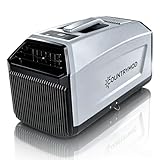 Countrymod 5000 BTUBest Budget Plug-InHookups, budget, small tents5000 BTU29.8 lb$349.00
Evidence: maker specs only, no independent test
 Zero Breeze Mark 2Lightest Published WeightBattery, solo tents, cars2300 BTU16.5 lb$901.57
Evidence: WIRED, this exact model
 BAILIGO 2900 BTUBest 24V DC Unit24V DC, truck cabs, small tents2900 BTUnot published$649.95
Evidence: maker specs only, no independent test
How We Chose These Camping AC Units
How this guide was built
built from manufacturer documentation, published third-party reviews and owner reports; we have not tested these products ourselves
What each unit had to show
- A compressor air conditioner with a hot-air exhaust, not an evaporative cooler.
- Cooling, rated draw, power source, runtime claim, noise, weight, size and hoses from the maker, or “not published”.
- In stock and new on Amazon, with the model in Amazon’s full title.
Sources, stock and what we left out and what campers say about AC in a tent
Sources, stock and what we left out
Specs come from Zero Breeze, Cybertake and Countrymod’s pages and from the brand-written Amazon listings for GETUHAND, FO-KOKO and BAILIGO. WIRED reviewed both Zero Breeze units; the other six rest on maker specs. Amazon’s product reader showed a check page, so identity, seller and stock came from Amazon’s data feed and listing pages.
EcoFlow’s Wave 2 and Wave 3, every BougeRV listing we found, Coolzy, IceCove and EENOUR were out of stock, and the one Wave 3 bundle listed showed no seller. Listings that showed as used or named no brand are out. Midea’s 5,000 BTU portable is a 50 lb room unit, so we left it out.
What campers say about AC in a tent
On r/overlanding, in a thread we saw only as a search snippet, a Mark 2 owner wrote: “The first night it did a great job cooling the tent with only two people in there. Any more and the body heat is just too much.” A Tundras.com owner whose 2,900 BTU unit lost to midday sun concluded: “So, I would say this is a night use air conditioner.” These are single opinions.
Detailed Reviews: 8 Camping Air Conditioners
Zero Breeze Mark 3, Best Overall
Rooftop-tent, van and teardrop campers who want battery cooling without a generator.
$1,383.99 from AmazonAs of Nov 29, 13:00 UTCVerdict
5,280 BTU in 22 lb, battery-ready, with an independent review behind it.
Evidence: Independently reviewed, exact model. WIRED: Mark 3 with its battery.
Zero Breeze’s Mark 3 page lists the figures below plus heat, IPX4 and a condensate pump. The linked listing is the bare unit; the 1,022 Wh battery is extra, and Zero Breeze rates one at 2 to 7 hours (the page also says up to 6 hours in Sleep Mode). WIRED got “just shy of five hours” at full blast and wrote that “at a reasonable 55 decibels measured 3 feet from the output fan, the Mark 3 felt far more comfortable to be around than previous iterations of the device.” On r/SolarDIY, in a thread we saw only as a search snippet, a commenter said a three-hour run on one battery “is correct, if you put it on the highest cooling mode.” At the time of writing it was sold by Midnight Autos.
Specs (linked: Mark 3, AC only, no battery)
- Cooling 5,280 BTU; heat 5,800 BTU; rated input 500 W, 150 W minimum
- Power: 48V DC from the Mark 3 battery (1,022 Wh, sold separately) or another 48V source
- Runtime claim: 2 to 7 hours per battery; noise 46 dB in Sleep Mode, 52 dB(A) rated
- 22 lb; 22 x 10 x 12 in; dual hose
Pros
- 5,280 BTU and heat in a 22 lb body built to run off-grid
- Self-draining pump and stackable batteries
Cons
- Premium price, and the battery costs extra
- WIRED’s first unit showed an error and was replaced
Who should buy it
Rooftop-tent, van and teardrop campers who want battery cooling without a generator.
Cybertake S1 Pro, Best for Small Tents
Couples in small or rooftop tents running a power station overnight.
$499.00 from AmazonAs of Nov 29, 13:00 UTCVerdict
The lowest maker noise claim here and a 100 W minimum draw.
Evidence: No independent test; maker specs. Source: Cybertake.
Cybertake’s S1 Pro page lists a Panasonic inverter compressor, a 480 W startup peak, IPX4 and 64 to 86 sq ft, so it suits a two-person or rooftop tent more than a cabin. It says Eco+ sleep “uses as little as 1kWh per 8 hours” and claims “As low as 38dB”. There is no battery. Popular Mechanics picked the earlier 3,300 BTU version from research, not a test. No independent test found. At the time of writing it was sold by Cybertake.
Specs (linked: S1 Pro, 4100 BTU)
- Cooling 4,100 BTU; rated input 400 W, 100 W minimum
- Power: 48V DC, wall adapter, power station; 12V or 24V with an extra converter
- Runtime claim: 8 hours per 1 kWh in Eco+ sleep; noise 38 dB sleep, 55 dB or less in Auto
- 21.6 lb; 18.1 x 9.5 x 13.0 in (manual); dual hose
Pros
- 38 dB sleep claim and a 100 W minimum draw for a night on a power station
- 21.6 lb with a carry handle
Cons
- Cooling only, with no heat mode
- A 12V or 24V battery needs a converter sold separately
Who should buy it
Couples in small or rooftop tents running a power station overnight.
Cybertake S2 Pro, Best Cool and Heat
Van and shoulder-season campers who want one unit for cooling and heat.
$899.00 from AmazonAs of Nov 29, 13:00 UTCVerdict
The S1 Pro’s bigger sibling, with cooling and heat.
Evidence: No independent test; maker specs. Source: Cybertake.
Cybertake’s S2 Pro page adds heat and 107 to 129 sq ft, and prints the weight as both 25.5 and 25.57 lb. Power comes from a 100-240V wall adapter, 12V or 24V vehicle power with a converter sold separately, or 48V DC; no battery is built in. For heat alone, see our tent heater guide. No independent test found. At the time of writing it was sold by Cybertake.
Specs (linked: S2 Pro)
- Cooling 5,100 BTU; heat 6,100 BTU; rated input 550 W, 100 W minimum
- Power: 48V DC, 100-240V wall adapter; 12V or 24V with an extra converter
- Runtime claim: 8 hours per 1 kWh in Eco+ sleep; noise 40 dB, 55 dB or less in Auto
- 25.6 lb; 18.9 x 10.2 x 14.0 in; dual hose
Pros
- Cooling and heat in one unit for spring and fall trips
- Wall, vehicle or 48V power
Cons
- Premium price for a unit with no battery
- About 4 lb heavier than the S1 Pro
Who should buy it
Van and shoulder-season campers who want one unit for cooling and heat.
GETUHAND 5200 BTU, Drain-Free Plug-In
Campers at powered sites who want strong cooling for less.
$399.00 from AmazonAs of Nov 29, 13:00 UTCVerdict
5,200 BTU on a 110V plug at the entry tier, with no drain needed in drier air, by the brand’s account.
Evidence: No independent test; maker specs. Source: GETUHAND Amazon listing.
GETUHAND’s Amazon listing, the only maker copy we found, lists a GMCC compressor, cool, dry, sleep and fan modes and up to 108 sq ft, and says “No drainage is needed in cooling mode when humidity is below 70%”. Its spec block gives 22.9 x 11.25 x 13.7 in against 22.4 x 11.2 x 13.8 in in its text, and it does not describe its hoses. No independent test found. At the time of writing it was sold by GETUOUTDOOR.
Specs (linked: 5200 BTU, 110V)
- Cooling 5,200 BTU; 400 W; 110V AC only, no battery
- Noise 46-50 dB in sleep mode; up to 108 sq ft
- 33 lb; 22.4 x 11.2 x 13.8 in; hose layout not published
Pros
- 5,200 BTU on a standard plug at the entry tier
- No drain below 70% humidity, by the brand’s account
Cons
- 110V only, so off-grid use needs a power station or generator
- No hose details or maker site
FO-KOKO Dual Hose 6800 BTU, Most Cooling Power
Verdict
The highest maker cooling figure of the eight, plus heat, on 110V power.
Evidence: No independent test; maker specs. Source: FO-KOKO Amazon listing.
FO-KOKO’s Amazon listing, with no maker site we could find, says it works with “1500W+ power stations” and includes a carry bag. No independent test found. At the time of writing it was sold by FO-KOKO.
Specs (linked: Dual Hose 6800 BTU)
- Cooling 6,800 BTU; heat 7,500 BTU; 550 W
- Power: 110V AC; power stations of 1,500 W or more, by the brand’s account
- Noise 45 dB in sleep mode
- 34 lb (15.4 kg); 22 x 13 x 12 in; dual hose
Pros
- 6,800 BTU, the highest maker figure here, for family tents
- Heat mode and a carry bag included
Cons
- The heaviest published weight here, at about 34 lb
- Specs come only from the brand’s listing
Countrymod 5000 BTU, Best Budget Plug-In
Budget campers at powered sites or with a large power station.
$349.00 from AmazonAs of Nov 29, 13:00 UTCVerdict
A dual-hose 110V unit with a maker spec sheet.
Evidence: No independent test; maker specs. Source: Countrymod.
Countrymod’s 110V dual-hose page gives the figures below, 240 CFM and a 2-year warranty. The Amazon listing disagrees on weight and size: one line says 35 lb and 23 x 21.1 x 13.6 in, another 30.8 lb, so check the box against your trunk. No independent test found. At the time of writing it was sold by Countrymod.
Specs (linked: 5000 BTU, 110V)
- Cooling 5,000 BTU; 450 W; 110V AC, no battery
- Noise 45 dB (maker); 240 CFM
- 29.8 lb (maker); 11.0 x 20.1 x 11.8 in; dual hose
Pros
- Dual hoses and a maker spec sheet at the entry tier
- 450 W suits a large power station’s AC outlet
Cons
- The listing’s weight and size do not match the maker’s
- 110V only; no heat
Zero Breeze Mark 2, Lightest Published Weight
Verdict
The lightest published weight and lowest rated draw here, but only 2,300 BTU and out of production.
Evidence: Independently reviewed, exact model. WIRED: Mark II.1 revision, with battery.
Zero Breeze’s Mark 2 page says it runs from “any 24 V battery supply” or its 840 Wh battery “for about 3-5 hours”; its FAQ, seen only as a search snippet, gives 40-50 dB(A). The page also says “Mark 2 is sold out with no further production planned”; the linked listing is the AC alone, and Amazon showed one left in stock on November 27, 2026. WIRED reviewed the 2022 update, “a Zero Breeze Mark II.1 release, with some minor cosmetic upgrades and a smattering of new features that improve its utility”; it ran over four hours at full power and was “still loud but maybe a bit quieter”. The listing names no revision, so the unit you get may differ from WIRED’s Mark II.1. At the time of writing it was sold by Resilient Consulting LLC.
Specs (linked: Mark 2, AC only, no battery)
- Cooling 2,300 BTU; 240 W rated (100-240 W range)
- Power: 24V DC battery or source, or its adapter
- Runtime claim: about 3-5 hours on the 840 Wh Mark 2 battery; noise 40-50 dB(A) (FAQ; spec sheet 52 dB(A))
- 16.5 lb; 20 x 10 x 11 in; dual hose
Pros
- 16.5 lb and a 240 W draw, the lightest published weight and lowest rated draw here
- WIRED reviewed this model
Cons
- Discontinued, with the battery sold separately
- 2,300 BTU, the lowest cooling figure of the eight
BAILIGO 24V DC 2900 BTU, Best 24V DC Unit
Verdict
A 250 W, 24V DC unit for a truck or a small tent on a power station.
Evidence: No independent test; maker specs. Source: BAILIGO Amazon listing.
BAILIGO’s Amazon listing lists “250W low power consumption”, 24V DC at 10 A from sources “such as portable power stations” and up to 60 sq ft, but no weight, and we found no maker site. No independent test found. At the time of writing it was sold by Chligo.
Related guide: Best Portable Chargers for Hiking of 2026: Light Picks for Day Hikes
Specs (linked: 24V DC, 2900 BTU)
- Cooling 2,900 BTU; 250 W; 24V DC only
- Noise under 50 dB; up to 60 sq ft
- Weight not published; 9 x 23 x 13 in; dual hose
Pros
- 250 W on 24V DC suits truck and power-station setups
- Dual hoses in a small unit
Cons
- No published weight or maker site
- 24V DC only, so it needs a 24V supply or a power station with a 24V output
Choosing an AC for Camping
Air conditioner or evaporative “air cooler”?
Many cheap “portable air conditioners” are evaporative coolers: a fan over a wet pad, with no compressor or exhaust hose. AirConditionerLab notes that “An evaporative cooler relies on water evaporation and works best in dry climates”, and Popular Mechanics says of one that “It won’t work very well in muggy conditions.” Every unit here is a compressor AC.
Related guide: Best Puncture-Resistant Air Mattresses of 2026 (No Air Bed Is Puncture Proof)
BTU output and tent size
BTU output is the heat a unit can pull from the air in an hour; every figure here is the maker’s or brand’s. Popular Mechanics suggests 2,000 to 4,000 BTU for a one- or two-person tent and 5,000 BTU or more for a family tent. The Tundras.com owner’s sunny 104°F tent came down only to the “lower to mid 90’s”, so cool at night, in shade.
Power: watts, watt-hours and runtime
Divide a battery’s watt-hours by the draw for a rough runtime, then allow for losses: 400 W empties 1,000 Wh in about two and a half hours, and sleep modes near 100 W are what make Cybertake’s 8-hours-per-kWh claim possible. Popular Mechanics suggests at least 1,000 Wh for short sessions and 1,500 Wh or more for longer use; our CPAP battery guide covers power stations sized for overnight loads.
Venting and hoses
Seven of the eight list dual hoses: one pulls in outside air, the other dumps heat outside. Route both through a window or port and seal the gaps, or put the unit outside and duct the cold air in, as WIRED describes for the Mark 3. WIRED’s 55 dB at 3 ft for the Mark 3 is the one independent noise reading here.
Power and Generator Safety at Camp
The CPSC says to “Never use portable fuel-burning camping equipment inside a home, garage, vehicle or tent unless it is specifically designed for use in an enclosed space”. Use an outdoor-rated cord matched to the load, keep plugs dry, and run the drain hose away from bedding.
Frequently Asked Questions
Q. What is the best air conditioner for camping?
Of the eight we compared on paper: the Zero Breeze Mark 3 for battery camping, the Cybertake S1 Pro for small tents and the Countrymod 5000 BTU for powered sites.
Q. Do portable air conditioners work for camping?
They can, if the hot exhaust goes outside, the tent is shaded and closed, and the power lasts. The Tundras.com owner above found night cooling far easier than midday sun.
Q. What is the best cooling system for tent camping?
With power, a compressor AC vented outside; without it, shade, airflow and timing, which our guide to keeping a tent cool walks through.
Q. How do you keep a camper cool in 100 degree weather?
Park in shade, pre-cool after sunset, close blinds and seal gaps around the hoses.
Q. How do you clean an RV or camping AC unit?
Clean the filter with the power off. EcoFlow’s RV AC maintenance guide gives Dometic’s Harrier schedule of “two months for full-time use and six months for seasonal use” and Dometic’s warning: “NEVER run the unit without the return air filter in place.” For a portable, follow its manual.
Q. Why is my RV AC so loud?
Wacko Products, a seller of RV AC silencers, lists “loose mounting bolts, worn rubber cushions that no longer dampen vibration, or even airflow “whistle” from gaps in the ducting”. A technician can check the rest.
The bottom line
Final Verdict
The Zero Breeze Mark 3 (check price) is our pick for battery camping: 5,280 BTU at 22 lb, with a WIRED review behind it. The Cybertake S1 Pro (check price) suits small tents and the Cybertake S2 Pro (check price) adds heat; the Countrymod 5000 BTU (check price), GETUHAND 5200 BTU (check price) and FO-KOKO 6800 BTU (check price) suit powered sites, and the Zero Breeze Mark 2 (check price) and BAILIGO 2900 BTU (check price) suit 24V setups. See more camp comfort gear for the rest of the setup.
Product prices and availability are accurate as of the date/time indicated and are subject to change. Any price and availability information displayed on Amazon.com at the time of purchase will apply to the purchase of this product.