The short answer
The Therm-a-Rest NeoAir XLite NXT Large is the light, warm, 25-inch-wide all-rounder, the Klymit Hammock V is the one pad here with wings cut for a gathered-end hammock, and the Therm-a-Rest RidgeRest Classic Large is the budget wide foam pad that has nothing to leak.
Our verdict
Hammock Sleeping Pad Top Picks
In a hammock your sleeping bag gets crushed flat underneath you, so the insulation under your back has to come from something your weight can’t compress: a pad or an underquilt. A pad is the cheaper, more versatile answer, and it also goes to the ground when there are no trees. The catch is fit. A pad that suits a tent floor can slide around, curl up at the sides or leave your shoulders hanging in cold air. This guide to camping and shelter gear compares eight pads on the things that matter when you hang: width, wings, grip, warmth and what happens when the pad rides a curved hammock instead of a flat floor.
Related guide: Best Sleeping Pads for Side Sleepers of 2026: Thick, Wide Picks
Pad finder
Find a hammock sleeping pad
Pick what matters most and what you want to spend. The suggestion is our editorial starting point from the eight pads below, not a test result.
Tiers are relative to the products in this guide; live prices are in the comparison table below.
Compare the picks
Compare the Hammock Sleeping Pads
Every figure is the maker’s, for the linked size; “not published” means we found none. R-values say whether the maker rates to ASTM F3340.
 NeoAir XLite NXT LargeBest OverallWide, cool nights, pad sleeve4.53 in$185.30 Prime
Evidence: CleverHiker, Regular; same series, not this Large
 Klymit Hammock VBest Winged Hammock PadWings, single layer, summer1.32.5 in$139.95
Evidence: Hammock Forums review of the insulated sibling; same 78 x 47 in shape, higher R-value
 Rapide SL Wide RegularMost Cushioned Wide PadWide, cool nights, side sleepers4.83.5 in
Evidence: CleverHiker, Rapide SL Insulated; size not stated
 Exped Ultra 3R MWBest Mid-Range Wide PadWide, cool nights, pad sleeve3.23 in$169.95
Evidence: SectionHiker, Ultra 3R Medium Wide, earlier version rated R 2.9
 RidgeRest Classic LargeBest Budget Wide FoamWide, foam, pad sleeve20.63 in
Evidence: owner reports, no independent test
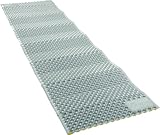 Z Lite Sol RegularBest Folding Foam PadFoam, layering, summer20.75 in$59.95 Prime
Evidence: CleverHiker, this exact model
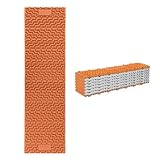 NEMO Switchback RegularTaller-Node Foam PadFoam, layering, summer20.9 in
Evidence: CleverHiker, this exact model
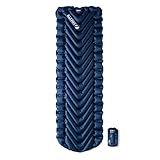 Klymit Static VBudget Air PadSummer, pad sleeve, ground1.32.5 in$54.12 Prime
Evidence: owner reports, no independent test
How We Picked Pads for Hanging
How this guide was built
built from manufacturer documentation, published third-party reviews and owner reports; we have not tested these products ourselves.
What a hammock pad had to offer
- Width, or a shape that wraps you. A 20-inch pad leaves your shoulders against the hammock fabric. Trekology, a pad brand, writes in its hammock pad guide that “a wider pad (25 inches or more) is a complete game-changer.” Six of the eight picks are 23 inches or wider, or winged; the 20-inch foam pads are here for layering and pad sleeves, and each review says so.
- A maker R-value for the linked size, with its basis named. Therm-a-Rest says that under ASTM F3340-18 “all of our pads have received new R-value ratings” (Therm-a-Rest); Big Agnes says its R-values conform to that standard (Big Agnes); Exped and Klymit label theirs ASTM on the product pages. The Klymit Hammock V figure dates from 2016, before the standard.
- Something that limits sliding: grip zones, a textured foam surface, or a size that fits a double-layer hammock’s pad sleeve.
- Maker specs we could read: size, thickness, weight and material as the maker lists them. None of the eight makers publishes a user weight limit on the pages we read.
- Stocked on Amazon in the exact size we link, new, with the seller named in each review.
Sources, shared models, unread reviews and what r/hammockcamping posters say
Sources, shared models, unread reviews
Six picks have a published review of the exact size or a close sibling: CleverHiker’s backpacking pad roundup covers the Z Lite Sol and Switchback in Regular, and the XLite NXT and Rapide SL in sizes other than the ones we link; SectionHiker reviewed the earlier Exped Ultra 3R in the same Medium Wide size; a Hammock Forums member wrote up the insulated sibling of the Klymit Hammock V. The RidgeRest and Static V rest on owner posts. GearJunkie’s and Trailspace’s reviews of the Klymit Insulated Hammock V blocked our reader, so we cite neither.
Klymit appears to have stopped selling the Hammock V: its product pages now redirect to the sleeping-pad collection, and the Amazon listing is old stock from a third-party seller. We kept it because it was the only winged hammock pad in stock in our Amazon searches (hammock, winged and brand queries for Klymit, ENO, Kammok and Gear Doctors); the Klymit Insulated Hammock V and the HangPad were out of stock. We say so in the review.
Several picks overlap with our other pad guides. The Z Lite Sol Regular here is the same Amazon listing as the Z Lite Sol in our sleeping pad guide for stomach sleepers, and that guide also picks the NeoAir XLite NXT (Regular Wide), the Rapide SL Insulated (Regular) and the Klymit Insulated Static V Lite, the same series as three pads here in other sizes or versions; it also picks the NeoAir XTherm NXT, a warmer NeoAir sibling. Our cold-weather sleeping pad guide picks the Exped Ultra 8R, a warmer pad in the same Ultra series as the Ultra 3R, and the NeoAir XTherm NXT. That guide is about winter ground camping; this one is about fit in a hammock.
What r/hammockcamping posters say
We could not load the Reddit threads, so these are Google search snippets. One poster in “Why don’t more people use a sleeping pad?” writes that a pad “helps spread it out tremendously and the extra R-value is insane.” In “Recommendation for Sleeping pad in a hammock”, one hammocker reports a NeoAir Regular Wide “worked really well, with the exception of the pad being too plush”. And in “Camping in hammock with Nemo Switchback pad”, a reply warns that the 20-inch Switchback “is not wide enough for a hammock and the sides of your shoulders are going to get very cold if you use it alone.”
Hammock Sleeping Pads: Detailed Reviews
Therm-a-Rest NeoAir XLite NXT, Best Overall
A hammock backpacker who wants one light pad for three seasons that also works on the ground.
$185.30 from AmazonAs of Nov 29, 16:22 UTCVerdict
A 25-inch-wide air pad with an ASTM 4.5 that packs small enough for any hammock kit.
Evidence: Independently reviewed, same series. CleverHiker: Regular.
The Large covers what the regular sizes leave out: Therm-a-Rest lists it at 25 x 77 in and 3 in thick, with an ASTM R-value of 4.5 and a weight of 1 lb 1 oz, packing to 11 x 4.6 in. That width is what keeps your shoulders on insulation when the hammock fabric rises at the sides, and 4.5 covers most three-season nights by Trekology’s rule of thumb (R 3-5 for 32-50°F). Therm-a-Rest’s spec table gives 30D ripstop nylon top and bottom and a WingLock valve that lets you let out air while lying on the pad; Trekology advises a softer pad in a hammock, because a hard one slips. CleverHiker names the XLite NXT its runner-up backpacking pad: “The Regular weighs 13 ounces and carries a 4.5 R-value.” Its review covers the Regular, not the Large we link; the two share construction and R-value, and the Large is 5 inches wider and 5 inches longer. One owner on r/Ultralight, per a search snippet, went back to foam after a NeoAir XLite (size and generation not stated) because of “my arms falling off” the pad; the Large is the width answer to that complaint. At the time of writing it was sold by Amazon.com.
Related guide: Best Extra Wide Sleeping Bags of 2026, Compared by Shoulder and Hip Girth
Specs (linked: Large, 25 x 77 in)
- 25 x 77 x 3 in; 1 lb 1 oz; packed 11 x 4.6 in (Therm-a-Rest)
- R 4.5, ASTM F3340
- 30D ripstop HT nylon; pump sack, stuff sack and repair kit included
Pros
- 25-inch width with an ASTM 4.5 at about a pound
- Packs to 11 x 4.6 in, per Therm-a-Rest
- WingLock valve makes small firmness changes easy once you are lying in the hammock
Cons
- Premium price for a pad you may slide around on
- Slick nylon on both sides; no grip zones listed
- Rectangular, so it does not wrap around your shoulders the way wings do
Who should buy it
A hammock backpacker who wants one light pad for three seasons that also works on the ground.
Klymit Hammock V, Best Winged Hammock Pad
A summer hammock camper with a gathered-end hammock who wants shoulder coverage without an underquilt.
$139.95 from AmazonAs of Nov 29, 16:22 UTCVerdict
The only stocked pad we found shaped for a gathered-end hammock, with wings at the shoulders and knees.
Evidence: Independently reviewed, same series. Hammock Forums review: Insulated Hammock V.
Klymit launched the Hammock V in 2016 as its first pad designed for hammocks. Its launch release gives 47 x 78 x 2.5 in, 26.2 oz, 20D polyester and a packed size of 4.5 x 9 in, with “side wings that offer wind protection, added warmth, and help spread the hammock” and non-slip regions. The same release gives two R-values, 1.3 in the text and 1.6 in its spec list, from before the ASTM standard; we use 1.3, and either way this is a summer pad. A Hammock Forums review of the insulated sibling, which shares the 78 x 47 shape, says the grip zones work well, “arresting nearly all of the typical shifting, slipping, and sliding that give sleeping pads in hammocks a bad name.” That reviewer also called the low R-value of this non-insulated original a dealbreaker for colder trips. The Amazon listing gives 27 oz and, elsewhere, 16 oz; Klymit’s figure is 26.2. Klymit no longer lists the pad on its own site, so stock may run out. At the time of writing it was sold by Peak Slumber, with 12 left.
Related guide: Best Sleeping Bags for Hammocks of 2026: Top Quilts Compared
Specs (linked: non-insulated)
- 47 x 78 x 2.5 in including wings; 26.2 oz; packed 4.5 x 9 in (Klymit)
- R 1.3 (Klymit 2016, method not stated)
- 20D polyester; non-slip regions on the pad
Pros
- Side wings that wrap the shoulders and help spread a gathered-end hammock
- Grip zones that hold the pad in place, per a forum review of its insulated sibling
- Small packed size for a 47-inch-wide pad
Cons
- Low R-value, warm-weather use only
- Klymit no longer lists it, and one third-party seller holds the stock
- A 47-inch width takes more tent floor than a rectangular pad
Who should buy it
A summer hammock camper with a gathered-end hammock who wants shoulder coverage without an underquilt.
Big Agnes Rapide SL Insulated, Most Cushioned Wide Pad
A side sleeper who hangs into the shoulder seasons and wants the most cushion and warmth in a wide pad.
View on AmazonVerdict
The highest R-value and thickest wide pad here, for cool nights and side sleepers.
Evidence: Independently reviewed, same series. CleverHiker: size not stated.
Big Agnes lists the Rapide SL Insulated at an ASTM R-value of 4.8, 3.5 in thick in the center with 4.25-inch outer chambers, two layers of heat-reflective film and offset I-Beam construction; the Wide Regular is 25 x 72 in. Big Agnes’s page prints a trail weight without naming the size, so we list weight as not published for the 25 x 72. Those raised side chambers keep you centered on the pad, which may help on the curve of a hammock as well as on the ground. CleverHiker calls it “a comfort-first three-season pad with a thick center, tall side rails, and a quiet, cradled feel.” Its review does not say which size it covered, so treat it as the same series, not this Wide Regular. Next to the XLite, it gives more cushion and a slightly higher R-value; it is also 5 inches shorter than the XLite Large. At the time of writing it was sold by MadAthlete and shipped by Amazon.
Specs (linked: Wide Regular, 25 x 72 in)
- 25 x 72 in; 3.5 in center, 4.25 in outer chambers (Big Agnes)
- R 4.8, ASTM F3340
- Two layers of heat-reflective film; Pumphouse inflation sack included
Pros
- Highest R-value here, 4.8, in a 25-inch width
- Taller outer chambers that cradle you in the middle of the pad
- Dedicated deflate valve and an inflation sack in the box
Cons
- Weight for this size not published by Big Agnes
- 72 inches long, shorter than the XLite Large
- Trekology warns an over-inflated pad turns rigid and slips in a hammock
Who should buy it
A side sleeper who hangs into the shoulder seasons and wants the most cushion and warmth in a wide pad.
Exped Ultra 3R, Best Mid-Range Wide Pad
A hammock camper who wants a wide insulated air pad for spring-to-fall trips at a lower list price than the XLite or Rapide SL.
$169.95 from AmazonAs of Nov 29, 16:22 UTCVerdict
A wide, synthetic-insulated pad for three-season hangs at a mid-range price.
Evidence: Independently reviewed, previous generation. SectionHiker: Ultra 3R Medium Wide, earlier R 2.9 version.
Exped’s spec sheet lists the Medium Wide at 72 x 25.6 x 3 in, 1 lb 3 oz and packed 10.6 x 4.5 in, with an ASTM R-value of 3.2 from recycled microfiber insulation welded to the air chambers, a recycled 20D polyester face and raised Comfort Cradle side rails. The Amazon listing gives 3.5 inches of thickness; Exped’s own sheet says 3 inches. SectionHiker reviewed the earlier Ultra 3R in the same Medium Wide size and wrote that the wide size “is nice because your arms don’t fall off the sides of the pad while you sleep”. That review covers the previous version, rated R 2.9; the current pad is rated 3.2. An R of 3.2 sits at the low end of Trekology’s three-season band, so treat it as a late-spring-to-early-fall pad on its own. At the time of writing it was sold by Ridgeline Insights and shipped by Amazon, with three left.
Specs (linked: Medium Wide)
- 72 x 25.6 x 3 in; 1 lb 3 oz; packed 10.6 x 4.5 in (Exped)
- R 3.2, ASTM F3340
- Recycled 20D ripstop polyester; Schnozzel Pumpbag UL included
Pros
- A 25.6-inch width with synthetic insulation at a mid-range price
- Microfiber fill rather than reflective film, which SectionHiker found quiet on the earlier version
- Schnozzel pump bag included
Cons
- R 3.2 is a three-season minimum, not a cold-weather rating
- Amazon and Exped disagree on thickness
- Only three left at this seller when we checked
Who should buy it
A hammock camper who wants a wide insulated air pad for spring-to-fall trips at a lower list price than the XLite or Rapide SL.
Therm-a-Rest RidgeRest Classic, Best Budget Wide Foam
A budget hammocker who wants a wide pad with no air to leak and doesn't mind strapping a roll to the pack.
View on AmazonVerdict
A 25-inch closed-cell foam pad at the lowest price tier, with no valve or air chamber to fail.
Evidence: No independent test; owner reports. r/hammockcamping thread: 25 in wide RidgeRest, Classic or SOLite not stated.
Therm-a-Rest lists the Large at 25 x 77 in, 0.63 in thick, 1 lb 3 oz and R 2, rolling to 25 x 8.5 in. Foam has one plain advantage in a hammock: there is nothing to adjust once you lie on it. The trade-off is stiffness: Trekology finds air pads conform to a hammock’s curve better than foam. It is also the bulkiest pick here, because it rolls rather than folds. In an r/hammockcamping thread on pads versus underquilts, one hammocker wrote, per a search snippet: “I definitely prefer a CCF pad (25″ wide Ridgerest) down to about 45° F.” The poster does not say whether it is the Classic or the SOLite. An r/Ultralight poster, also per a snippet, uses the RidgeRest Classic in a bridge hammock, size not stated. At R 2 it is a summer and mild-shoulder-season pad on its own, or a base layer under an air pad. At the time of writing it was sold by Backcountry.
Specs (linked: Large, 25 x 77 in)
- 25 x 77 x 0.63 in; 1 lb 3 oz; rolled 25 x 8.5 in (Therm-a-Rest)
- R 2, ASTM F3340
- Crosslinked polyethylene closed-cell foam
Pros
- 25-inch-wide foam at the entry price tier
- No valve or seams to fail
- Rolls flat with no firmness to set in the hammock
Cons
- Bulky roll that rides outside most packs
- Thin, firm foam for side sleepers
- R 2 alone is for mild nights
Who should buy it
A budget hammocker who wants a wide pad with no air to leak and doesn’t mind strapping a roll to the pack.
Therm-a-Rest Z Lite Sol, Best Folding Foam Pad
A hammock camper with a pad sleeve, or one layering foam under an air pad, who wants a cheap pad that also works on the ground.
$59.95 from AmazonAs of Nov 29, 16:22 UTCVerdict
The classic accordion foam pad: a pad-sleeve layer, sit pad and backup in one.
Evidence: Independently reviewed, exact model. CleverHiker: Regular.
Therm-a-Rest lists the Regular at 20 x 72 in, 0.75 in thick, 14 oz and R 2, folding to 20 x 5 x 5.5 in, with a reflective ThermaCapture coating; it also says the pad will “Add 2.0 R-Value and protection from punctures when you layer the Z Lite SOL under another sleeping pad.” The Amazon listing claims R 2.6; Therm-a-Rest’s current ASTM figure is 2. CleverHiker picks it as its budget foam pad: “The Regular weighs 14 ounces, unfolds in seconds”. At 20 inches it is narrow for a hammock on its own, so its best hammock use is in a double-layer hammock’s pad sleeve, under a narrow air pad, or folded under your shoulders as a booster. At the time of writing it was sold by Amazon.com.
Specs (linked: Regular, 20 x 72 in)
- 20 x 72 x 0.75 in; 14 oz; folded 20 x 5 x 5.5 in (Therm-a-Rest)
- R 2, ASTM F3340
- Molded closed-cell crosslinked polyethylene foam
Pros
- Folds flat and adds 2.0 R-value under another pad, per Therm-a-Rest
- No valve or seams to fail
- Doubles as a sit pad and shoulder booster
Cons
- 20-inch width leaves shoulders exposed in most hammocks
- Firm, thin foam
- Folded block still rides outside the pack
Who should buy it
A hammock camper with a pad sleeve, or one layering foam under an air pad, who wants a cheap pad that also works on the ground.
NEMO Switchback, Taller-Node Foam Pad
A hammocker choosing a folding foam pad who wants a bit more cushion than the Z Lite Sol.
View on AmazonVerdict
A folding foam pad like the Z Lite Sol, slightly thicker, for the same layering jobs.
Evidence: Independently reviewed, exact model. CleverHiker: Regular.
NEMO lists the Regular at 72 x 20 in, 0.9 in thick and 14.5 oz, folding to 20.0 x 5.0 x 5.5 in, with an R-value of 2 (its page does not name the test method), dual-density PE foam, a low-emissivity film and a lifetime warranty. CleverHiker picks it as its favorite foam pad and notes “the Regular weighs 14.5 ounces.” Against the Z Lite Sol, it is 0.15 in thicker and half an ounce heavier; NEMO says its taller, wider nodes add plushness and give 15% more heat-trapping space. In an r/hammockcamping thread, per a search snippet, one poster passes on another hammocker’s note that the “nemo switchback moved around less and was quieter”; that is second-hand, not the poster’s own trial. The same width caveat applies: one reply in a Switchback thread warns your shoulders will get cold using it alone in a hammock. At the time of writing it was sold by NEMO Equipment and shipped by Amazon.
Specs (linked: Regular, 72 x 20 in)
- 72 x 20 x 0.9 in; 14.5 oz; folded 20.0 x 5.0 x 5.5 in (NEMO)
- R 2 (NEMO, method not stated)
- Dual-density PE foam with low-emissivity film; NEMO lifetime warranty
Pros
- Taller hexagonal nodes for a little more cushion than the Z Lite Sol
- Lifetime warranty from NEMO
- No valve or seams to fail
Cons
- 20-inch width needs a pad sleeve or second layer in a hammock
- Heavier than the Z Lite Sol by half an ounce
- Bulky folded block
Who should buy it
A hammocker choosing a folding foam pad who wants a bit more cushion than the Z Lite Sol.
Klymit Static V, Budget Air Pad
A summer hammock camper on a budget who wants an air pad that also works on the ground.
$54.12 from AmazonAs of Nov 29, 16:22 UTCVerdict
A light entry-level air pad, 23 inches wide.
Evidence: No independent test; owner reports. r/CampingGear thread: Static V, version not stated.
Klymit’s current version of this pad is the Static V Base, which it lists at 72 x 23 x 2.5 in, 18.7 oz, 75D polyester and an ASTM R-value of 1.3, packing to 8 x 3 in and inflating in 10-15 breaths. The listing we link carries the earlier Static V part number. Its size, packed weight and fabric match Klymit’s Base page, but Klymit does not say the two are identical, so treat the ASTM 1.3 as the Base’s rating. Klymit says its V-shaped chambers minimize air movement, and the pad’s three extra inches of width over the 20-inch pads here help in a hammock, though it is still narrower than the 25-inch picks. One r/CampingGear poster wrote, per a search snippet: “I have been using my Klymit Static V for hammock camping but am always afraid to mention it”. At R 1.3 it is a warm-night pad. At the time of writing it was sold by Amazon.com, about 8% over Klymit’s list price for the Static V Base when we checked on November 26, 2026.
Specs (linked: Navy Blue)
- 72 x 23 x 2.5 in; 18.7 oz; packed 8 x 3 in (Klymit)
- R 1.3, ASTM F3340 (Klymit’s figure for the current Static V Base)
- 75D polyester; Klymit lifetime warranty
Pros
- Light air pad at the entry price tier
- 23-inch width, three inches more than the 20-inch pads here
- Tough 75D fabric for the price
Cons
- R 1.3 limits it to warm nights
- Narrower than the 25-inch picks
- Listing uses the older Static V part number
Who should buy it
A summer hammock camper on a budget who wants an air pad that also works on the ground.
How to Choose a Sleeping Pad for a Hammock
Width and wings
Width matters more in a hammock than on the ground, because the hammock wraps up around your shoulders. A 25-inch pad (XLite Large, Rapide SL Wide Regular, Exped Medium Wide, RidgeRest Large) covers more of that wrap; a 20-inch pad leaves gaps. The Klymit Hammock V solves the same problem with wings rather than a wider rectangle. If you own a 20-inch pad, Trekology suggests stuffing “a folded fleece jacket or even a small foam sit pad right where your shoulders rest.”
Foam or air
Foam (RidgeRest, Z Lite Sol, Switchback) has no valve to fail, needs no firmness setting and goes straight to the ground, but it is bulky and has an R-value of about 2. Trekology warns that a full foam pad is stiff and can sit in the hammock as “an awkward, unstable plank”, while one r/hammockcamping poster prefers a 25-inch RidgeRest down to about 45°F; a foam pad works best wide, in a pad sleeve, or as a short layer. Air pads pack small and reach R 3-5, but smooth nylon slides, and a pad inflated too firm turns into what Trekology calls “a rigid, unstable plank that will try to slip out from under you all night.” A short foam piece or folded fleece under the shoulders, Trekology’s fix for narrow pads, works on top of an air pad too.
R-value for hanging
Trekology’s guidance is R 1-3 for summer above 50°F, R 3-5 for 32-50°F and R 5 or more below freezing. Trekology says R-value is “just as critical in a hammock as it is on the ground,” because air moving underneath takes heat away, so plan on the same R-value you would use on the ground. Two pads add their R-values together; Therm-a-Rest says the Z Lite Sol adds 2.0 when layered under another pad. Our guide to cold-weather sleeping pads covers the R 5-plus pads for winter.
Stopping the slide
Lay diagonally, which flattens the hammock, and put the pad on the same diagonal. Inflate the pad once you are in the hammock, and let air out until it conforms. A double-layer hammock with a pad sleeve holds the pad in place; for a single layer, grip zones (Hammock V) or a foam surface help. Trekology also suggests a few lines of silicone seam sealer on the pad’s underside.
Pad or underquilt
An underquilt hangs outside the hammock, where your weight can’t compress it, and Trekology says “a good underquilt is generally going to be the warmer option.” A pad costs less and doubles as ground insulation when you have to sleep on the ground. For more on how pads compare with other camp beds, see sleeping pad vs air mattress, or our camping air mattress guide for car camping on the ground.
Frequently Asked Questions
Q. What is the best sleeping pad for a hammock?
For most hammock campers, a 25-inch-wide insulated air pad: the Therm-a-Rest NeoAir XLite NXT Large weighs 1 lb 1 oz with an ASTM 4.5. For a gathered-end hammock in summer, the winged Klymit Hammock V; on a budget, the RidgeRest Classic Large.
Q. Should I put a sleeping pad in my hammock?
Usually, yes, or use an underquilt. Your weight crushes the sleeping bag’s insulation underneath you, and Trekology says even on a 70°F night a breeze under the hammock can pull warmth away, so it suggests a light pad of about R 1-2 in summer.
Q. How to make sleeping in a hammock more comfortable?
Lie on the diagonal and use a pad wide enough for your shoulders, inflated a little soft. A small pillow and a foam piece under the shoulders help.
Q. What should I put under my hammock?
An underquilt goes outside under the hammock; a sleeping pad goes inside, between you and the fabric. A pad is cheaper and also works on the ground; an underquilt is generally the warmer option, per Trekology.
The bottom line
Final Verdict
Buy the Therm-a-Rest NeoAir XLite NXT Large (check price) for a light, wide, three-season pad; the Klymit Hammock V (check price) while stock lasts for wings in a gathered-end hammock; or the Big Agnes Rapide SL Wide Regular (check price) for the most cushion and warmth. On a budget, the Therm-a-Rest RidgeRest Classic Large is the wide foam choice, and the Z Lite Sol or NEMO Switchback fit a pad sleeve or layer under an air pad.
Product prices and availability are accurate as of the date/time indicated and are subject to change. Any price and availability information displayed on Amazon.com at the time of purchase will apply to the purchase of this product.