
The short answer
Put the Sawyer 20% Picaridin Insect Repellent on exposed skin, treat your camp clothes with Sawyer Permethrin Fabric Treatment (clothing and gear only, never skin), and run a Thermacell MR300 Repeller at the picnic table in calm air.
Our verdict
Top Picks: Camping Bug Repellents at a Glance
A camping trip puts you outside at the hours mosquitoes are busy, in brush where ticks wait, and around a fire where you sit still for hours. No single product covers all of that, so this guide sorts repellents into the three layers campers use: a repellent for exposed skin, a permethrin treatment for clothing and gear, and an area repeller for the campsite. Pack them with the rest of your kit from our camping checklist.
We compared ten repellents that Amazon stocks, from DEET, picaridin, IR3535 and oil of lemon eucalyptus sprays to a permethrin clothing spray and two Thermacell repellers. Each review names the active ingredient and its concentration as the maker states it, and the protection hours as the maker’s label or listing gives them. We do not rank those hours against each other: the EPA notes that protection times vary “because of differences in the testing conditions”.
Repellent finder
Find a bug repellent for your camp
Pick what you need it for and what you want to spend. The suggestion is our editorial starting point, drawn from the ten repellents below, not a test result.
Tiers are relative to the repellents in this guide; live prices are in the comparison table below.
Compare the picks
Compare the 10 Camping Bug Repellents
All ten side by side. The active ingredient and protection claim are the maker’s (its site, or its own Amazon listing where the maker’s site could not be read), unless the cell names another source. Protection hours come from different makers’ tests and are not comparable across brands.
 Sawyer PicaridinPicaridin Skin SprayTicks, backpacking, all-roundPicaridin 20%Pump spray$10.99 Prime
Evidence: Travel + Leisure, this exact model
 Sawyer PermethrinClothing and Gear TreatmentTicks, clothing, tentsPermethrinTrigger spray$15.70 Prime
Evidence: Section Hiker, this exact model
 Thermacell MR300Campsite Area RepellerCampsite, campfire eveningsD-cis allethrin 21.97%Fuel-powered device$23.88 Prime
Evidence: Family Handyman took the armored MR450 camping, not this MR300; same fuel-powered line, 12-hour cartridge and 4-hour mats
 Ranger Ready Scent ZeroTravel-Size PicaridinScent-free, backpacking, ticksPicaridin 20%Pump mist$13.99
Evidence: Wired, this exact model
 Ben's 100High-DEET Pump SprayHeavy bugs, backpackingDEETPump spray$15.28
Evidence: Travel + Leisure, this exact model
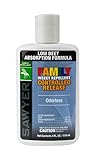 Sawyer DEET LotionSlow-Release DEET LotionLong days, sweatDEET 20%Lotion$8.49 Prime
Evidence: Wired, this exact model
 OFF! Deep Woods25% DEET AerosolCar camping, campfire eveningsDEET 25%Aerosol$7.39 Prime
Evidence: Travel + Leisure names the Deep Woods Insect Repellent V aerosol (25% DEET); the linked 6 oz listing does not print the V
 Coleman SkinSmartIR3535 AerosolDEET-free, ticks, car campingIR3535 20%Aerosol$12.20
Evidence: Wired, this exact model
 Repel Lemon EucalyptusLemon Eucalyptus SprayPlant-based, eveningsOil of lemon eucalyptusAerosol$8.47 Prime
Evidence: Section Hiker names Repel Lemon Eucalyptus at 30% without saying aerosol or pump; we link the 4 oz aerosol
 Thermacell BackpackerBackpacking Area RepellerCampsite, backpackingD-cis allethrin 21.97%Canister-powered device$44.95 Prime
Evidence: owner reports name the Backpacker without a generation; no independent test found
Which Repellent for Which Camp
Tent camping and campfire evenings
At a drive-in site you can carry more: a skin spray for everyone, a treated layer of clothing, and a repeller on the table. Thermacell rates its fuel-powered repellers for a 15-foot zone and says they “work best in calm to light wind conditions”; it also says its devices are for outdoor use only and must not be used inside a tent or other enclosed space, so set one up outside your family tent, not in it. Sawyer lists tents and sleeping bags among the gear its permethrin spray can treat; your air mattress and other inside-the-tent items are not on that list, so check the label before spraying anything else.
Picks: Thermacell MR300 Repeller, OFF! Deep Woods, Coleman SkinSmart
Backpacking
Weight and leaks matter more on the trail. Ben’s 100 and Ranger Ready come in 3.4 oz bottles, and Sawyer’s picaridin does not damage plastics or synthetic coatings, per Sawyer, which matters for a pack, a backpacking tent and sunglasses. DEET is the opposite: Ben’s label says to keep it off synthetics and plastics. Thermacell’s Backpacker runs on the same screw-on canister as many backpacking stoves.
Picks: Sawyer Picaridin, Ranger Ready Picaridin 20%, Ben’s 100, Thermacell Backpacker
Ticks and brush
Ticks usually find you at ankle level but can also climb bushes, Section Hiker notes, so campers often combine a treated layer of clothing with a skin repellent on exposed skin. The EPA says permethrin-treated clothing protects only the skin it covers and advises a skin repellent for “other exposed parts of the body”. Sawyer and Ranger Ready both list ticks among the pests on their picaridin product pages.
Picks: Sawyer Permethrin, Sawyer Picaridin, Ranger Ready Picaridin 20%, Coleman SkinSmart
Prefer a plant-based or DEET-free skin repellent
Oil of lemon eucalyptus (OLE) is one of the active ingredients the CDC lists for EPA-registered repellents, and picaridin and IR3535 are others. The CDC says not to use OLE or PMD products on children under 3.
Picks: Repel Lemon Eucalyptus, Coleman SkinSmart, Sawyer Picaridin
Detailed Reviews of the 10 Repellents
Sawyer 20% Picaridin Insect Repellent, Picaridin Skin Spray
Campers who want one picaridin spray for exposed skin on mosquito and tick trips that, per Sawyer, will not harm their gear.
$10.99 from AmazonAs of Nov 29, 21:18 UTCVerdict
A 20% picaridin pump spray for exposed skin, which Sawyer rates for up to 12 hours against mosquitoes and ticks and says will not damage plastics or synthetic coatings.
Evidence: Independently reviewed, exact model. Travel + Leisure: Sawyer Picaridin pump spray, bottle size not stated.
Sawyer rates this spray for up to 12 hours against mosquitoes and ticks and up to 8 hours against biting flies, gnats, chiggers and sand flies; those are the maker’s figures. Sawyer also says it will not damage plastics or synthetic coatings, which is the main practical difference from DEET for campers with nylon tents, packs and coated lenses. Sawyer lists it for use during pregnancy and on children as young as six months; follow the label for children.
Travel + Leisure names it the best overall bug spray in its guide. Its tester took the pump spray camping in Wyoming and Maine and reports that “While other people got bug bites sitting around a campfire, I did not have any bugs around me at all”; that is one tester’s experience, not a guarantee. The same tester found it needs rubbing in and liked the two caps that kept it from leaking in luggage. Wired also picks Sawyer’s picaridin spray, noting a mild rubbing-alcohol smell and a slightly greasy feel. Neither names the bottle size; we link the 4 oz pump. Sawyer lists it at $10.99.
Specs (SP544, 4 oz pump spray):
- Linked model: Sawyer SP544 Premium Insect Repellent, 20% Picaridin, 4 oz pump spray, sold by Amazon.com
- Active ingredient: picaridin 20% (Sawyer)
- Maker’s protection claim: up to 12 h mosquitoes and ticks; up to 8 h biting flies, gnats, chiggers, sand flies (Sawyer)
- Weight: 5.78 oz filled bottle (Sawyer)
Pros
- 20% picaridin that Sawyer says will not damage plastics, synthetic fabrics or coated gear
- Fragrance-free; Wired found the smell milder than the DEET sprays it tried
- Pump bottle with caps that did not leak in Travel + Leisure’s luggage
Cons
- Needs rubbing in to cover evenly, per Travel + Leisure
- Wired found it a bit greasy and sticky, though less so than DEET
Who should buy it
Campers who want one picaridin spray for exposed skin on mosquito and tick trips that, per Sawyer, will not harm their gear.
Sawyer Permethrin Fabric Treatment, Clothing and Gear Treatment
Campers in tick country who want treated pants, socks and shirts under their skin repellent.
$15.70 from AmazonAs of Nov 29, 21:18 UTCVerdict
A permethrin spray for clothing, tents and gear only, never skin, that Sawyer says stays on fabric for 6 weeks or 6 washes.
Evidence: Independently reviewed, exact model. Section Hiker: Sawyer Permethrin Spray, 24 oz.
Permethrin works differently from a skin repellent: you spray it on clothing and gear, let it dry, and wear the clothes. The CDC recommends clothing and gear treated with permethrin, calls it “an insecticide that kills or repels mosquitoes” and says: “Do not use permethrin products directly on skin.” Sawyer’s own safety notes say the same (“It is for clothing and gear treatment only”) and warn that it is toxic to cats until it has completely dried.
Sawyer says a treatment lasts 6 weeks or 6 washes on fabric and is odorless once dry, and that the 24 oz bottle treats five outfits at the EPA’s suggested 4.5 oz per outfit of shirt, pants and socks. Sawyer’s page and listing do not print the concentration in what we could read; Section Hiker describes Sawyer’s spray as “pre-mixed to the correct 0.5% concentration”. Section Hiker’s permethrin guide says its writer has used it on hiking pants, shirts, gaiters and socks for over a decade. The EPA adds that treated clothing protects only the skin it covers, so pair it with a skin repellent. Sawyer lists it at $18.49.
Specs (SP657, 24 oz trigger spray):
- Linked model: Sawyer SP657 Permethrin Fabric Treatment, 24 oz trigger spray, sold by Amazon.com
- Active ingredient: permethrin; concentration not printed by Sawyer in what we could read (0.5% per Section Hiker)
- Use on: clothing, tents, sleeping bags and other gear; not on skin (Sawyer, CDC)
- Maker’s durability claim: 6 weeks or 6 washes on fabric (Sawyer)
- Coverage: about five outfits at 4.5 oz each (Sawyer, citing the EPA)
Pros
- Treats clothing, tents and gear so the fabric itself carries the repellent, per Sawyer
- Odorless once dry and, per Sawyer, does not damage fabrics, synthetics included
- 24 oz covers about five outfits at the EPA’s suggested dose, per Sawyer
Cons
- Clothing and gear only: it does not replace a skin repellent on exposed skin
- Toxic to cats until fully dry, per Sawyer; treat clothes away from pets
- Needs re-treating after 6 washes or 6 weeks, per Sawyer
Who should buy it
Campers in tick country who want treated pants, socks and shirts under their skin repellent.
Thermacell MR300 Repeller, Campsite Area Repeller
Car campers who sit at one table or fire ring in the evening and want a mosquito zone around it.
$23.88 from AmazonAs of Nov 29, 14:38 UTCVerdict
A fuel-powered repeller for the picnic table or camp kitchen that Thermacell rates for a 15-foot zone in calm air, outdoors only.
Evidence: Independently reviewed, same series. Family Handyman: Thermacell MR450 (armored Fuel-ZoneGuard Extreme+).
The MR300 heats a repellent mat with a small butane cartridge. Thermacell lists the mat’s active ingredient as 21.97% d-cis allethrin, rates the device for a 15-foot zone of mosquito protection, and says it reaches full effect in 15 minutes; each fuel cartridge runs 12 hours and each mat 4 hours. Thermacell says its products are for outdoor use only and should not be used in enclosed spaces, a tent included, and that wind can shrink the zone. It lists the MR300 at $29.99.
We found no independent test of the MR300 itself. Family Handyman took the MR450, Thermacell’s armored version in the same fuel-powered Fuel-ZoneGuard Extreme line, on a June camping trip in Colorado and reports that “The MR450 covers about 15 feet in all directions and works best when stationary.” The tester found the mosquitoes came back as soon as he left the zone. The MR300 uses the same 12-hour fuel cartridge and 4-hour mats Thermacell lists for the line; the MR450 adds armor. In the r/camping thread on mosquito repellents, the top reply says Thermacell repellers “work really good actually as long as there isn’t lots of wind”, and another camper advises pairing one with a picaridin or DEET spray.
Specs (MR300G, olive green):
- Linked model: Thermacell Fuel-ZoneGuard Extreme MR300G, olive green, sold by Amazon.com
- Active ingredient: d-cis allethrin 21.97% in the repellent mats (Thermacell)
- Maker’s protection claim: 15-foot zone (about 15 x 15 ft) for mosquitoes, outdoors (Thermacell)
- Runtime: 12 h per fuel cartridge; 4 h per mat; includes one cartridge and three mats (Thermacell)
- Weight: 6.0 oz (Thermacell)
Pros
- A 15-foot mosquito zone around a table with nothing on your skin, per Thermacell
- Scent-free and silent, per Thermacell and Family Handyman
- Runs on small fuel cartridges, no batteries or cords
Cons
- Works only within its zone and in calm to light wind, per Thermacell
- Outdoor use only: never inside a tent or other enclosed space
- Needs ongoing fuel cartridges and mats
Who should buy it
Car campers who sit at one table or fire ring in the evening and want a mosquito zone around it.
Ranger Ready Picaridin 20%, Travel-Size Picaridin
Campers and backpackers who want picaridin without a scent in a small bottle.
$13.99 from AmazonAs of Nov 29, 13:28 UTCVerdict
A 20% picaridin mist in an unscented Scent Zero formula and a 3.4 oz travel bottle, for campers who dislike repellent smell.
Evidence: Independently reviewed, exact model. Wired: Ranger Ready Picaridin spray, Scent Zero; bottle size not stated.
Ranger Ready rates the 20% picaridin Scent Zero spray for 12 hours against ticks and mosquitoes and 8 hours against gnats, flies, fleas, chiggers and no-see-ums, and says it will not damage clothing or gear. Its Amazon listing says the formula is for adults and children 1 year and older and that the 3.4 oz bottle gives 30+ full-body applications. Ranger Ready lists the 3.4 oz bottle at $13.99.
Wired picks Ranger Ready’s picaridin spray and writes that “Despite its slightly sticky feel, this “scent zero” spray didn’t have an overwhelmingly strong insect repellent smell.” Its tester found it needed rubbing in. Travel + Leisure picks Ranger Ready for backcountry use, calls it “truly scent-free” and notes a lot comes out with each spray, so watch for drips. Neither names the bottle size; we link the 3.4 oz Scent Zero.
Both picaridin picks are fragrance-free per their makers. The trade-off is size and tier: Sawyer’s (pick 1) is a 4 oz pump at the entry tier, while this is a 3.4 oz bottle at the mid tier that Travel + Leisure notes sprays heavily.
Specs (Scent Zero, 3.4 oz):
- Linked model: Ranger Ready Picaridin Insect Repellent, Scent Zero, 3.4 oz, sold by Ranger Ready Repellents (brand storefront on Amazon)
- Active ingredient: picaridin 20% (Ranger Ready)
- Maker’s protection claim: 12 h ticks and mosquitoes; 8 h gnats, flies, fleas, chiggers, no-see-ums (Ranger Ready)
- Size: 3.4 oz / 100 ml, non-aerosol, 30+ full-body applications (maker’s Amazon listing)
Pros
- Unscented Scent Zero picaridin that testers at Wired and Travel + Leisure found low in smell
- 3.4 oz non-aerosol bottle sized for a pack or carry-on
- Ranger Ready says it will not stain or damage clothing or gear
Cons
- Sprays heavily, so it can drip, per Travel + Leisure
- Slightly sticky feel, per Wired
Who should buy it
Campers and backpackers who want picaridin without a scent in a small bottle.
Ben’s 100 Tick & Insect Repellent, High-DEET Pump Spray
Campers heading into dense mosquito or black-fly country who accept DEET's smell and care with gear.
$15.28 from AmazonAs of Nov 29, 14:38 UTCVerdict
A high-concentration DEET pump spray, which Ben’s calls “maximum strength”, in two 3.4 oz bottles for heavy bug country, if you can keep it off plastics and synthetics.
Evidence: Independently reviewed, exact model. Travel + Leisure: Ben’s Tick & Insect Repellent, 98.11 percent DEET; bottle size not stated.
Ben’s calls this its “maximum strength 100% DEET formula” and rates it for up to 10 hours against biting insects. Sources differ on the exact figure: Travel + Leisure’s spec line gives 98.11 percent DEET, and Section Hiker lists Ben’s 100 Max at 95%. Higher is not always better: Section Hiker writes that studies found “20%-30% DEET concentrations are just as effective as the 100% concentrations” but need more frequent application.
Travel + Leisure names it the best DEET pick in its guide, and its tester carried it in a pack hip-belt pocket: “While camping, I love the small design of the Ben’s Tick and Insect Repellent bottle, as it fits in my pack’s hip belt pockets and even hiking pants pockets for quick and easy access.” The tester also warns that DEET can stain clothing and gear and that you should spray it on your hands, then rub it on your face. Ben’s label says to keep it off synthetics, plastics and painted surfaces and that it may damage leather.
The linked 2-pack is sold by Pattern., a third-party seller on Amazon, at the time of writing. Ben’s lists a single 3.4 oz bottle at $11.49 on its site; its list price for the 2-pack was not published in what we could read.
Specs (3.4 oz pump spray, 2-pack):
- Linked model: Ben’s 100 Tick & Insect Repellent, 3.4 fl oz pump spray, pack of 2, sold by Pattern. (third-party seller on Amazon)
- Active ingredient: DEET; Ben’s says “100% DEET formula”; Travel + Leisure gives 98.11 percent
- Maker’s protection claim: up to 10 h (Ben’s)
- Label cautions: keep off synthetics, plastics, painted surfaces; may damage leather; eye irritant (Ben’s)
Pros
- High-concentration DEET formula, “maximum strength” in Ben’s words, rated by Ben’s for up to 10 hours
- Two 3.4 oz bottles that fit a hip-belt pocket, per Travel + Leisure
- Pump spray with no alcohol or other additives, per Ben’s Amazon listing
Cons
- High-DEET formula that Ben’s says to keep off synthetics, plastics and leather
- DEET’s smell and oily feel, which Wired and r/camping owners mention
- Sold by a third-party seller (Pattern.) at the time of writing
Who should buy it
Campers heading into dense mosquito or black-fly country who accept DEET’s smell and care with gear.
Sawyer Controlled Release 20% DEET Lotion, Slow-Release DEET Lotion
Campers who prefer a lotion and want a moderate DEET concentration for a long day outside.
$8.49 from AmazonAs of Nov 29, 13:28 UTCVerdict
A 20% DEET lotion that Sawyer encapsulates for slow release and rates for up to 11 hours against mosquitoes, for long days outside.
Evidence: Independently reviewed, exact model. Wired: Sawyer 20 Percent DEET Premium Family Insect Repellent Controlled Release; size not stated.
Sawyer encapsulates 20% DEET in a protein that dissolves slowly, which it says extends protection to up to 11 hours against mosquitoes; it describes the lotion as odorless, non-greasy and perspiration resistant. Those are Sawyer’s claims. Sawyer’s page header shows a different product code and size from the 4 oz bottle we link, so Sawyer’s list price for this bottle was not published clearly.
Wired picks it as its DEET lotion: “This product in particular contains DEET (at a 20 percent concentration) that’s encapsulated in a slow-dissolving protein, which means the DEET is released over a longer period of time, providing up to 11 hours of protection.” Its tester still noticed DEET’s smell but found the lotion less greasy than most sprays. Wired linked a 2-pack and did not name the size; we link the 4 oz bottle. Like any DEET product, keep it off synthetic fabrics and plastics.
Specs (SP520, 4 oz lotion):
- Linked model: Sawyer SP520 Premium Family Insect Repellent Controlled Release, 20% DEET lotion, 4 oz, sold by Amazon.com
- Active ingredient: DEET 20%, encapsulated (Sawyer)
- Maker’s protection claim: up to 11 h against mosquitoes (Sawyer)
- Form: lotion, odorless and perspiration resistant (Sawyer)
Pros
- Slow-release 20% DEET lotion that Sawyer rates for up to 11 hours against mosquitoes
- Lotion form that Wired’s tester found less greasy than most sprays
- Small 4 oz bottle at an entry-level price
Cons
- Still smells of DEET, per Wired
- DEET can damage plastics and some synthetic clothing and gear, per Wired
Who should buy it
Campers who prefer a lotion and want a moderate DEET concentration for a long day outside.
OFF! Deep Woods Insect Repellent, 25% DEET Aerosol
Car campers who want an inexpensive 25% DEET aerosol for evenings around the fire.
$7.39 from AmazonAs of Nov 29, 21:18 UTCVerdict
A 25% DEET aerosol at an entry-level price for quick coverage around camp, if you rub it in and keep it off gear.
Evidence: Independently reviewed, same series. Travel + Leisure: Off! Deep Woods Insect Repellent V aerosol, 25% DEET.
OFF!’s own site could not be read when we checked, so the figures come from the maker’s Amazon listing: the 6 oz Deep Woods aerosol is “formulated with 25% DEET” and lists mosquitoes, ticks, biting flies, gnats and chiggers among its targets. This listing gives no protection-hour figure, so we print none. OFF!’s list price was not published in what we could read.
In its list of other bug sprays it liked, Travel + Leisure writes: “Off! Deep Woods Insect Repellent V Aerosol: Made with 25 percent DEET, this is quite effective and a good choice for camping.” It adds that the spray is “quite wet, which makes it prone to spills”, so rub it in to keep it off clothing. OFF! sells this 25% DEET aerosol as Deep Woods Insect Repellent V; the Amazon listing we link does not print the “V” in its title, so we treat Travel + Leisure’s note as covering the same line rather than proof of this exact can.
Related guide: Best Bug Sprays for Chiggers: 8 Picks Compared
Specs (6 oz aerosol):
- Linked model: OFF! Deep Woods Insect & Mosquito Repellent, 6 oz aerosol, 25% DEET (model 611081), sold by Amazon.com
- Active ingredient: DEET 25% (maker’s Amazon listing)
- Maker’s protection claim: hours not published in what we could read
- Form: aerosol (maker’s Amazon listing)
Pros
- 25% DEET; Section Hiker cites studies finding 20-30% DEET as effective as 100%, with more frequent reapplication
- Travel + Leisure calls the Deep Woods V aerosol “a good choice for camping”
- Entry-level price tier
Cons
- Wet spray that Travel + Leisure found prone to spills
- No protection-hour figure on this listing
- DEET can damage some plastics and synthetic fabrics
Who should buy it
Car campers who want an inexpensive 25% DEET aerosol for evenings around the fire.
Coleman SkinSmart Insect Repellent, IR3535 Aerosol
Car campers who want a DEET-free spray that dries quickly and smells of very little.
$12.20 from AmazonAs of Nov 29, 14:38 UTCVerdict
A DEET-free IR3535 aerosol that dries fast, for campers who want something other than DEET or picaridin.
Evidence: Independently reviewed, exact model. Wired: Coleman Insect Repellent Spray (IR3535); size not stated.
Wired picks the Coleman SkinSmart spray as its IR3535 repellent and calls it its favorite of the sprays it tried, because it felt dry to the touch after a few minutes and was almost odorless; it found the spray pattern less even than it wanted. Wired also notes that IR3535, like DEET, can damage plastics.
Coleman’s product page could not be found, and its Amazon listing does not print the active ingredient or concentration. Consumer Reports’ product listing gives “IR3535 20%”. The maker’s Amazon listing says the tick protection lasts up to 8 hours and describes a twist-locking cap; it gives no separate mosquito figure. Coleman’s list price was not published in what we could read.
The buy box on Amazon is held by Sportco Wholesale, a third-party seller that ships the can itself, and Amazon showed limited stock when we checked.
Specs (6 oz aerosol):
- Linked model: Coleman SkinSmart DEET-Free Insect Repellent Spray, 6 oz aerosol (model 7476), sold by Sportco Wholesale (third-party seller on Amazon)
- Active ingredient: IR3535 20% (Consumer Reports’ listing; not printed on the maker’s Amazon listing)
- Maker’s protection claim: up to 8 h against ticks; mosquito hours not published (maker’s Amazon listing)
- Form: aerosol with twist-locking cap (maker’s Amazon listing)
Pros
- IR3535 aerosol that Wired found dry to the touch within minutes and almost odorless
- DEET-free option for campers who dislike DEET’s feel
- Twist-locking cap for packing, per Coleman’s listing
Cons
- Sold by a third-party seller with limited stock at the time of writing
- Coleman publishes no mosquito protection time on this listing
- IR3535 can damage plastics, per Wired
Who should buy it
Car campers who want a DEET-free spray that dries quickly and smells of very little.
Repel Plant-Based Lemon Eucalyptus, Lemon Eucalyptus Spray
Adults who prefer a plant-based repellent for evening mosquitoes and will reapply.
$8.47 from AmazonAs of Nov 29, 13:28 UTCVerdict
An oil of lemon eucalyptus aerosol that Repel rates for up to 6 hours against mosquitoes, for adults and children 3 and older who prefer a plant-based active ingredient.
Evidence: Independently reviewed, same series. Section Hiker: Repel Lemon Eucalyptus, 30% OLE; aerosol or pump not stated.
Repel’s own site could not be read when we checked. The maker’s Amazon listing says this 4 oz aerosol uses oil of lemon eucalyptus, repels mosquitoes for up to 6 hours, and is “Not to be used on children under 3 years”, which matches the CDC’s advice not to use OLE or PMD products on children under 3. The listing does not print the concentration; Wired says Repel’s Plant-Based Lemon Eucalyptus uses PMD and OLE “with a 30 percent concentration”. Repel’s list price was not published in what we could read.
Section Hiker writes that “Repel Oil of Lemon Eucalyptus (OLE), a natural insect repellent, is also quite effective in a 30% concentration”, and that OLE is effective for up to 6 hours at that concentration. Neither source says whether it tried the aerosol or the pump spray; we link the aerosol, which Amazon sells. Wired’s tester found the formula oily, with a strong eucalyptus scent that fades.
Specs (4 oz aerosol):
- Linked model: Repel Plant-Based Lemon Eucalyptus Insect Repellent, 4 oz aerosol (HG-94211), sold by Amazon.com
- Active ingredient: oil of lemon eucalyptus; concentration not on the maker’s listing (30% per Wired and Section Hiker)
- Maker’s protection claim: up to 6 h against mosquitoes (maker’s Amazon listing)
- Age guidance: not for children under 3 (maker’s listing; CDC)
Pros
- Plant-derived active ingredient that the CDC lists for EPA-registered repellents
- Section Hiker calls Repel OLE “quite effective in a 30% concentration”
- Entry-level price tier
Cons
- Maker’s protection claim is up to 6 hours, so plan to reapply on long days
- Not for children under 3 (maker, CDC)
- Oily feel and strong eucalyptus scent, per Wired
Who should buy it
Adults who prefer a plant-based repellent for evening mosquitoes and will reapply.
Thermacell Backpacker Repeller, Backpacking Area Repeller
Backpackers who already carry a stove canister and want a mosquito zone where they cook and sit.
$44.95 from AmazonAs of Nov 29, 14:38 UTCVerdict
A 4 oz repeller from the same Thermacell line as #3 that screws onto a stove fuel canister, for backpackers who want a mosquito zone at camp.
Evidence: No independent test; owner reports. r/camping thread on choosing a Thermacell: Thermacell Backpacker, generation not stated.
Thermacell builds the Backpacker to run on a pressurized, self-sealing 70% butane / 30% propane camping canister with an EN417 valve (not included), the same type many backpacking stoves use. It lists the weight at 4.0 oz, 21.97% d-cis allethrin mats that last 4 hours each, a 15-foot zone, about 90 hours of run time on a 4 oz canister, and “dependable performance up to an elevation of 7,000 feet”. Like the MR300, it is for outdoor use only, never inside a tent. Thermacell lists it at $44.99.
We found no independent test of the Backpacker. In an r/camping thread on choosing a Thermacell, one owner writes: “I like the Thermacell Backpack. Attaches to a small gas can, and each scented mat (that repels the bugs) goes for 4 hours.” Another owner of two Thermacells calls it the easier of the two to fuel, and a third points out the 7,000-foot limit for high-country trips. The kit includes four mats and a travel bag; the canister is extra.
Specs (MRBPR, starter pack with 4 mats):
- Linked model: Thermacell Fuel-ZoneGuard Backpacker MRBPR with four 4-hour mats and travel bag, sold by Amazon.com
- Active ingredient: d-cis allethrin 21.97% in the mats (Thermacell)
- Maker’s protection claim: 15-foot zone for mosquitoes, outdoors (Thermacell)
- Weight: 4.0 oz / 114 g; elevation up to 7,000 ft (Thermacell)
- Fuel: 70/30 butane-propane canister with EN417 valve, not included; about 90 h per 4 oz canister (Thermacell)
Pros
- Runs on a backpacking-stove canister, so no separate cartridges to carry, per Thermacell
- 4.0 oz device with a 15-foot zone, per Thermacell
- One r/camping owner uses it for car camping and in the backyard
Cons
- Thermacell’s rated performance stops at 7,000 feet
- Canister not included; needs an EN417 valve, per Thermacell
- No independent test found; evidence is owner reports
Who should buy it
Backpackers who already carry a stove canister and want a mosquito zone where they cook and sit.
Layering Protection at Camp
On your skin
The CDC recommends EPA-registered repellents with one of six active ingredients: DEET, picaridin, IR3535, oil of lemon eucalyptus (OLE), para-menthane-diol (PMD) or 2-undecanone. Check for an EPA registration number on the label. The CDC’s rules for use: follow the label, reapply as directed, do not apply repellent on skin under clothing, and if you wear sunscreen, apply sunscreen first and repellent second.
On your clothes and gear
Long sleeves and long pants cut down the skin you need to cover, and permethrin adds a treated layer. The CDC says permethrin-treated clothing “provides protection after multiple washings” and that permethrin should not be used directly on skin. The EPA says to wash treated clothing separately and not to treat certain clothing such as underwear.
Around the campsite
Area repellers like Thermacell’s are for outdoor air only. Both Thermacell product pages say the devices should not be used in enclosed spaces, a tent included, and Thermacell says wind can shrink the zone. Campers in the r/camping thread treat a repeller as an extra layer, not a replacement for a skin repellent.
With children
The CDC advises: always follow label instructions; do not use OLE or PMD products on children under 3; do not apply repellent to a child’s hands, eyes, mouth, cuts or irritated skin; and for the face, apply it to your own hands first. Age guidance on individual products in this guide (Sawyer picaridin, Ranger Ready, Repel) is the maker’s, as printed in each review.
How We Chose These Repellents
How this guide was built
built from manufacturer documentation, published third-party reviews and owner reports; we have not tested these products ourselves.
What each repellent had to show
- An active ingredient the CDC or EPA names for skin repellents (DEET, picaridin, IR3535, OLE), permethrin for clothing, or an EPA-reviewed area repeller, with the ingredient named by the maker.
- A maker’s protection claim we could read, or “not published” in the table; we print each maker’s figure and do not rank figures from different makers’ tests.
- Stocked on Amazon, new and in stock when we checked; where a third-party seller holds the buy box, the review names it.
- An independent review or owner reports for the product line, with the tested version named.
Where the evidence comes from, what campers on r/camping report and repellents we left out
Where the evidence comes from
Wired tried 27 repellents on hikes, runs and nights outside near Denver and picks by active ingredient; we cite it for Ranger Ready, the Sawyer DEET lotion, Coleman and Repel. Travel + Leisure used 19 repellents on camping and hiking trips and abroad; we cite it for Sawyer picaridin, Ben’s 100 and OFF! Deep Woods. Section Hiker covers Sawyer’s permethrin and Repel OLE, and Family Handyman took a Thermacell MR450 camping. The Backpacker rests on owner reports. Active-ingredient guidance comes from the CDC and the EPA. Each review’s Evidence line says which version a source covered.
What campers on r/camping report
In the r/camping thread that ranks for this search, the recurring advice is layering. One highly upvoted reply lists “Long sleeve shirts and full length pants”, permethrin on clothes and gear, and picaridin or DEET on skin, plus a canister Thermacell in camp; another camper writes that if Thermacell is your only layer of defense, “you are still going to get bites”, and recommends adding a picaridin or DEET spray. Several replies note that DEET can damage plastics and synthetic fabrics while picaridin does not, which matches the makers’ own labels.
Repellents we left out
Cutter Backwoods Dry (a Wired pick) duplicates the 25% DEET aerosol slot. Natrapel, Grand Tongo and Murphy’s Naturals are picaridin and OLE sprays picked by Travel + Leisure or Wired, but the picks above already cover those ingredients. Thermacell’s rechargeable E-series suits power at the campsite; Travel + Leisure found its E-55 “doesn’t last very long”. Essential-oil sprays without an EPA-registered active ingredient were not considered: the CDC says their effectiveness is not known.
Frequently Asked Questions
Q. What is the best way to keep bugs away while camping?
Combine layers: an EPA-registered repellent on exposed skin, long sleeves and pants (treated with permethrin if ticks are a concern), and an area repeller outdoors at the campsite. Pitch away from standing water where you can; Thermacell’s camping guide suggests setting up farther from the water’s edge.
Q. What can I spray in my camper or tent to keep bugs away?
Keep repellent sprays and area repellers out of enclosed spaces: Thermacell says its devices are for outdoor use only, and skin repellents are for skin and, where the label allows, clothing. Sawyer says its permethrin can treat tents and netting, applied outside and left to dry before use. For a camper, the CDC’s indoor advice is screens on windows and doors, repaired where torn.
Q. What is the best bug spray for backcountry camping?
Travel + Leisure picks Ranger Ready for backcountry use and Sawyer picaridin as its overall pick; both are 20% picaridin, which their makers rate for up to 12 hours against mosquitoes and ticks and say will not damage gear. For dense bugs, Ben’s 100 is the high-DEET option if you keep it off plastics.
Q. How do I not get bitten by mosquitoes while camping?
Use an EPA-registered repellent on exposed skin and reapply it as the label directs, wear long sleeves and pants at dusk, and sit inside a repeller’s zone in calm air. No repellent is a guarantee; Wired’s tester notes that a repellent that works for one person in one place may not work for another.
Q. Is DEET or picaridin better for camping?
The CDC lists both. Wired cites a Journal of Travel Medicine review that found “little potential difference between DEET and picaridin applied at the same dosage”. The practical difference at camp is gear: Ben’s label says to keep its DEET off synthetics and plastics, while Sawyer says its picaridin will not damage them.
The bottom line
Final Verdict
For exposed skin on most camping trips, the Sawyer 20% Picaridin Insect Repellent (check price) is a 20% picaridin spray that Sawyer says will not harm gear and that Travel + Leisure names its best overall. Treat your camp clothes with Sawyer Permethrin Fabric Treatment (check price) (clothing and gear only, never skin), and run the Thermacell MR300 Repeller (check price) outdoors at the table when the air is calm.
For picaridin in a 3.4 oz travel bottle, the Ranger Ready Picaridin 20% (check price) Scent Zero is the pick; the Sawyer picaridin is also fragrance-free, in a larger 4 oz pump at the entry tier. For dense bugs and a DEET preference, Ben’s 100 (check price) is the high-concentration option, and the Sawyer Controlled Release 20% DEET Lotion (check price) is the slow-release lotion. OFF! Deep Woods (check price) is the entry-level 25% DEET aerosol, Coleman SkinSmart (check price) the IR3535 alternative, and Repel Lemon Eucalyptus (check price) the plant-based choice for adults and children 3 and older. Backpackers who carry a stove canister can take the Thermacell Backpacker (check price) for a mosquito zone at camp.
Product prices and availability are accurate as of the date/time indicated and are subject to change. Any price and availability information displayed on Amazon.com at the time of purchase will apply to the purchase of this product.